
Zimbabwe Introduces a New Currency

Zimbabwe’s new currency is expected to begin trading at around 2.5 to the U.S. dollar. A decade after Zimbabwe scrapped its own currency to end hyperinflation and began using mainly the USD, the economy is back in free fall. Fuel, medicines and other basics are hard to come by and less than 10 percent of the workforce is formally employed.
The country has not had a local currency since 2009 when it abandoned the Zimbabwe dollar due to hyperinflation. To curb the inflation, Zimbabwe adopted a multi-currency system dominated by the US dollar.
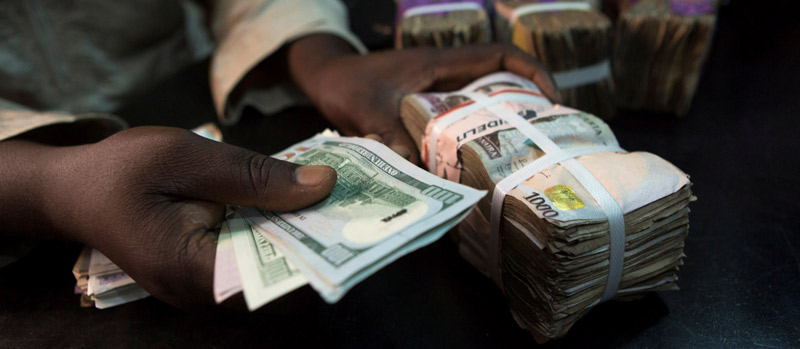
While the new currency regime initially helped stabilize prices, it also increased imports, curtailed exports and gave rise to a chronic shortage of banknotes. To fund government spending and help ease the liquidity crisis, the central bank printed bond notes theoretically pegged to the dollar, while most commercial transactions are conducted using an electronic currency known as RTGS$.
This combination of parallel systems has resulted in a convoluted system of exchange rates, with consumers charged different prices depending on how they pay for purchases, and the cash scarcity has only worsened.
Inflation in Zimbabwe
In 1990, the inflation rate in Zimbabwe was 17 percent. The following year it jumped to 48 percent, and then continued to climb over the next 17 years. The government tried a number of different methods to control inflation, such as instituting price caps, outlawing the use of foreign currency, and printing new denominations.
By the mid-2000s, inflation had increased to a rate so high that banknotes of Z$100,000,000 and higher were required for simple daily transactions.
 Zimbabwe devalued its currency three times in an attempt to control inflation. In 2006, it divided denominations by 1,000, striking three zeros from the currency. In 2008, it removed 10 zeros, and in 2009, it struck another 12 zeros from printed denominations. These three acts had the collective effect of making one new Zimbabwe dollar worth 10 trillion trillion old Zimbabwe dollars. Finally, the government gave up and stopped printing money altogether, allowing the economy to use a pastiche of foreign currencies.
Central bank says electronic bank savings and locally printed ‘bond notes’ were no longer exchangeable one-to-one for the dollar.
Zimbabwe abandoned its own currency in 2009 after it was wrecked by hyperinflation and adopted the greenback and other currencies, such as sterling and the South African rand.