
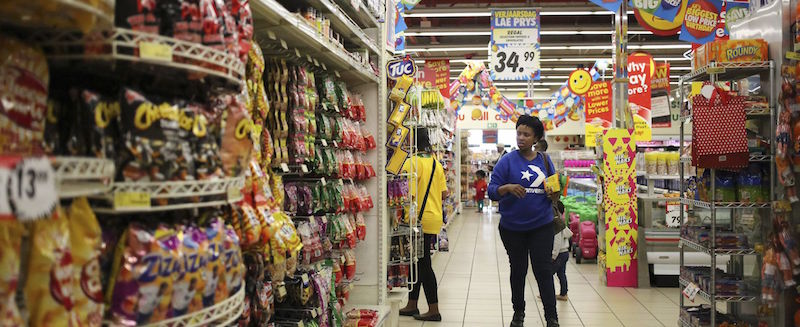
With a growing young population coupled with rapid urbanisation and fast-growing consumer expenditure, Africa offers attractive opportunities for entities wishing to expand into new frontier markets. Retailing contributions to GDP across the region continue to increase, indicating that the region is consumption-driven. Retail sales in the Africa amounted to over USD500 billion in 2019. Key retailing markets included South Africa, Egypt, Morocco, and Algeria. Although Africa is regarded as an emerging market, it is a different and complex one. The region is home to 55 independents states, which are characterised by diverse economies, and consumption patterns. It hosts a population of different income groups, religions, races, customs and languages. Furthermore, different countries are at different development stages. To develop a good and strategic market entry approach into the region, one needs to understand the diversity and dynamics that drive retailing. In addition, understanding how and where one’s product is consumed and purchased in the region is necessary for developing a route-to-market strategy. Africa is made up of a combination of traditional and modern retailing channels. These channels vary by market and are influenced by factors such as economy, state of development, consumer preferences and local culture. There are significant variations in the logistics costs and lead times required to access different African markets. The region is characterized by a multitude of retail channels, distribution networks, supply chains, marketing strategies, and different regulatory administrations. Underdeveloped infrastructure and complex distribution channels make it challenging for companies and products to reach consumers. Many consumer goods are imported from outside the region and thus demand an efficient supply chain. This comes with challenges such as volatile currency fluctuations and import duties. Partnering with local players that are connected along the value chain, coupled with creative, flexible approaches to supply chain and logistics can help companies overcome distribution challenges. Africa is on track to hit a predicted USD 2.1 trillion in consumer spending by 2025 These market dynamics indicate that Africa’s retailing landscape is diverse and increasingly expanding to suit the changing consumer demographics.
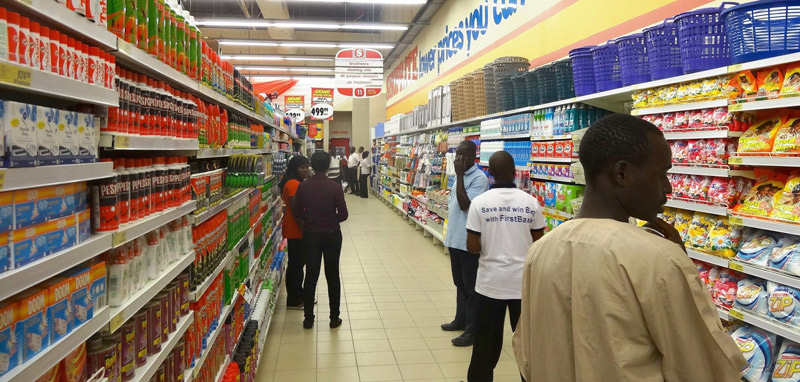
The Booming Markets In Africa
folder_open Business Outlook
Many African countries have been increasing their spending on infrastructure such as airports, cities, hotels, ports, roads, bridges, hospitals, and power plants. Both west and east African countries continue to implement major infrastructure projects such as the Trans-African Highway network. This project is comprised of a transcontinental road which aims at integrating the region’s transport corridors to meet the growing demand for road transport by an increase in Intra-regional trade. Recently, Kenya has unveiled a 280-million-dollar road rehabilitation project to improve its links with Tanzania and South Sudan. Moreover, Lamu Port South Sudan Ethiopia Transport (LAPSSET) Corridor is a 25-billion-dollar project — which will link Kenya with Ethiopia, Uganda, and South Sudan. This far-reaching project involves a railway, a highway, a crude oil pipeline and a fibre-optic cable connecting the four countries. The project will also include several airports, resort cities, an oil refinery, a 32-berth port in Lamu and other supporting infrastructure mini projects. Once completed, the LAPSSET railway will connect to West Africa’s Douala–Lagos–Cotonou–Abidjan Corridor, running through Cameroon, Nigeria, Benin, Togo, Ghana, and the Ivory Coast respectively. As these projects progress both the cost of mobility and production are falling — which is helping many small businesses have access to more inter-regional connected markets. Additionally, the advance in the telecommunication capabilities is enabling millions of young educated and digitally connected population to connect, buy and sell goods. In a few years, the proliferation of mobile phone networks has transformed communications in sub-Saharan Africa. It has also allowed Africans to jump right to the digital age skipping the landline stage of development. Many African non-oil exporting countries have impressive growth rates. Countries not dependent on natural resources are also progressing with economic reforms. These countries, which include Botswana, Ivory Coast, Ethiopia, Kenya, Mauritius, Morocco, Rwanda, Senegal, Tanzania, and Uganda, posted an average GDP growth of 5.8% a year between 2010 and 2018. While it is true that the business environment is still not fully developed, and that many countries still have to do more to reduce bureaucratic rules and to create stronger independent institutions, these existing challenges do not diminish business opportunities. Some global consumer companies, such as Samsung, Transsion, Nestlé, LG, and Colgate, have been able to overcome challenges and gain market share.
Ethiopia Opens Up Logistics Sector
folder_open Business Outlook , East Africa
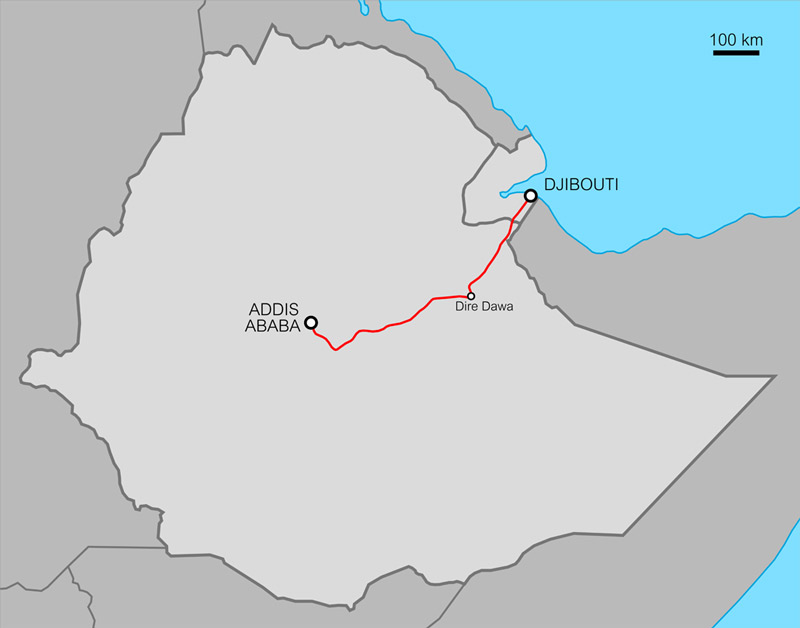
The Ethiopian government has opened up its logistics sector to foreign investors for the first time, in the form of joint ventures with local firms. The country wants to attract at least $120 million of foreign direct investment into the sector by 2021. Meanwhile, the state-owned Ethiopian Shipping & Logistics Services Enterprise (ESLSE) is to be part-privatised, and the state railway company, the Ethiopian Railway Corporation, restructured then fully privatised. Clearly, the government of Ethiopia has made improving logistics a top priority. A $2.5 billion, 750-kilometre railway connecting Addis Ababa with the port in Djibouti was launched in 2018 and should cut a three-day journey down to 12 hours. In an ambitious road-building programme flagship projects include a 200 kilometre expressway connecting Hawassa, home to the country’s largest industrial park, with the capital, Addis Ababa. Two years ago, the government signed a $150 million World Bank project to transform Mojo, a poorly equipped and heavily congested dry port near Addis Ababa that processes more than 70% of imported containers, into a state-of-the-art logistics facility. Meanwhile, Addis is helping a Dutch consortium, Flying Swans, to set up a cold chain along the railway to the coast. It also plans to increase to 90% the coverage of general cargo carried by ‘multi-modal’ transport – the theoretically more efficient system currently monopolised by the state-owned Ethiopian Shipping & Logistics Services Enterprise (ESLSE). As of now, to transport a 20-foot container of garments from Ethiopia to Germany costs 247% more than from Vietnam and 72% more than from Bangladesh. In 2016, Ethiopia scored 2.37 in the World Bank’s Logistics Performance Index – significantly lower than neighbouring Uganda, which is also landlocked. The country ranked 159th out of 190 in the World Bank’s Doing Business index in 2018; Uganda came 127th. Most of Ethiopia’s bulk imports like wheat, sugar and fertiliser currently pass through the port of Djibouti which is small and congested, especially when the Ethiopian government procures. The port is also 70% more expensive than other ports in the region. Ehtiopia has also signed a deal with Eritrea restoring Ethiopian access to the ports of Massawa and Assab. at will be most important to the Ethiopian economy. Ethiopia plans to invest in refurbishing the port with the help of investmetns from Saudi Arabia, United Arab Emirates and the World Bank.

The Business of Diamonds in Africa
folder_open Business Outlook
Diamond is undoubtedly the rarest and most precious mineral resource. It is very expensive and can only be afforded by the extremely rich, especially in its refined state. Diamonds are used to produce so many durable and beautiful and valuables including very fine and costly jewelries and ornaments. The affluent men of the society who are able to afford jewelries made of diamonds like showing them off in social gatherings to attract attention and esteem. So many countries of the world are blessed with this natural gem and African countries are not left out. Many of us would be able to mention some countries we know that produce diamond in commercial quantities but only a few may be able to tell who the largest producers are. There are generally 15 diamond producing countries in Africa. They are: Botswana, South Africa, Angola, Namibia, Congo, Zimbabwe, Guinea, Ghana, Congo, Lesotho, Liberia, Sierra Leone, CAR, Tanzania, and Togo. Now, the big question is: Which countries are the largest producers of diamonds in the African continent? However, the ratings of countries and their diamond production capacity is never stable and keeps fluctuating year-by-year. 1. Botswana Botswana is located in southern Africa bordering Zambia, Zimbabwe, Namibia and South Africa. Botswana is at the moment the largest diamond producing country both in Africa and the whole world. The first discovery of diamonds in Botswana was made by geologists in 1967. Botswana had insignificant production until 1970 and became one of the top producers in the mid-1980’s. Botswana has some of the highest yielding mines in the world and has been a leading producer of diamonds since 1999. The Jwaneng and the Orapa diamond mines in Botswana rank as the first and second biggest diamond mines in the world, estimated to produce $2.4B and $1.2B worth of diamond in 2015 respectively. That is, in terms of value and volume produced. The total estimated diamond by carats to be produced by Botswana this year is about 24 million carats. 2. South Africa Diamonds were discovered in the Namiba Desert in April 1908 near Lüderitz, when Zacharias Lewala, a former worker from the Kimberley diamond fields found a diamond by the railway. It immediately became a leading producer of gem-quality diamonds and held that position until the 1920’s when Zaire entered major production. South Africa has been a consistent producer for the past few decades with production volumes regularly ranging between 6 million and 7 million carats per year. South Africa has seven diamond producing mines of which Venetia, jointly owned by De Beers is the largest. South Africa is estimated to produce over 10M carats of diamond worth up to billions of dollars in 2015. South Africa is the second largest diamond producing country in Africa. 3. Angola Angola is situated on southern Africa’s Atlantic coast, bordering Namibia, the Democratic Republic of Congo and Zambia. Diamonds were first discovered in Angola in 1912. For the next 40 years, the industry was exclusively based on alluvial diamond mining (mining that extracts diamonds from deposits of sand, gravel and clay, which have been naturally transported by water erosion and deposited along either the banks of a river, the shoreline or on the bed of the ocean). Informal diamond mining first erupted in Angola on a very large-scale in September 1991, following the signing of the Bicesse Accords between the government and the National Union for the Total Independence of Angola (UNITA) rebels as well as an agreement to hold the country’s first general elections. Catoca diamond mine in Angola ranks as the fifth biggest diamond mine in the world. The Catoca open-pit located near Saurimo, around 840km east of Luanda, is estimated to contain up to 130Mct of mineable diamonds. Angola is currently the third largest diamond producing country in Africa. 4. Namibia The Orange River forms a geographic dividing-line between the nations of South Africa and Namibia. For the last hundred million years, the Orange river has been carrying eroded diamondiferous kimberlite material from its source on the Kaapvaal Craton, in central South Africa and Botswana. Diamond-bearing material was deposited in river bank gravels and alluvium as it traveled westward towards the Atlantic Ocean. Other diamondiferous materials were re-distributed by wind action, settling to form alluvial deposits in the desert sand.Namibia is the fourth largest diamond producing country in Africa at the moment, and is estimated to produce a total of 1 970 000 carats of diamond worth $937 million in 2015. 5. The Democratic Republic of Congo The Democratic Republic of Congo used to be one of the leading diamond producing countries not only in Africa but in the world. It produced 19.2 million carats in 2011 making it the second largest producer in Africa by volume after Botswana, which produced 22.9 million carats, according to the latest Kimberley Process (KP) data. The Congo is still the 2nd African country with the largest deposit of the hard rock, diamond. But it’s quite unfortunate that recently, other countries like South Africa, Angola and Namibia has taken its place in terms of value and volume produced. Currently, Congo has not been able to meet up with reasonable quality and quantity in Diamond production. One of the contributors to this decline is what is known as “blood diamonds”, as diamonds have funded brutal wars in many African countries which has resulted in the death and displacement of millions of people. Most of the diamond production in the country is from informal sources. This actually explains why about a third of the country’s diamond is smuggled out of the country and also accounts for the reason why Congo cannot be found in the list of top diamond producers if ranking is based on mines
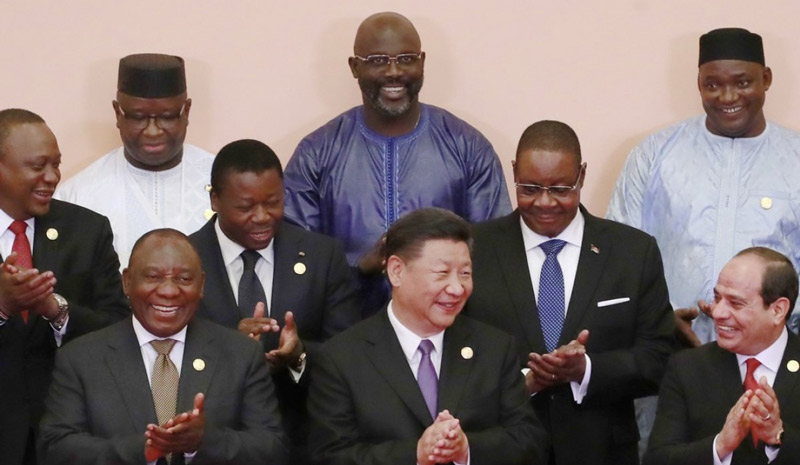
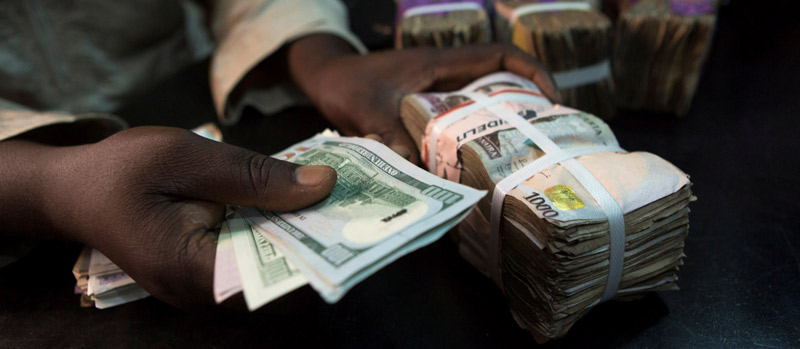
Chinese goods have been gaining increasing popularity in the African markets and Chinese companies are exporting in huge quantities of a wide variety of products directly into many African countries. In the last few years, China’s trade with Africa has been growing with leaps and bounds, as has Chinese investments into several African nations. In 2018, China-Africa trade reached US$204.2 billion, up 20 percent year-on-year, and China has emerged as Africa’s largest trading partner for 10 straight years. Price-sensitive markets in Africa are hungry for cheaper-priced Chinese goods. Wholesalers, traders and merchants in Africa have also been quick to meet the rising demand for Chinsese goods in Africa and are now sourcing a large portion of their requirements from China. By cutting out the middlemen and buying directly from Chinsese manufactures has also helped them increase profit margins. This trend of buying from China and selling locally and regionally is being repeated in almost all African countries and the result is clearly visible in almost all African markets that are now flooded with low-priced Chinese goods – whether it is tyres, automobile parts, stationery, perfumes, cosmetics, computer hardware, furniture or machinery, China has dominated the African markets in the last decade. The main products China exports to Africa are machinery and electronics, textile and apparel, hi-tech products and finished goods, while imports from Africa concentrate on crude oil, iron ore, cotton, diamond and other natural resources and primary goods. To help the countries in Africa expand exports, China has exempted import tariffs for certain commodities of these countries. China has also announced the names of over 25 African countries that enjoy zero tariff treatment and special preferential tariff rate for exports of some 190 products to China. In fact, Africa’s resource-rich nations are getting even more reliant on China for their exports. Chinese imports from Africa include crude petroleum from Angola and South Sudan, zinc and copper ore from Eritrea, cobalt from DR Congo, raw tobacco from Zimbabwe, besides iron and titanium from Sierra Leone. China has committed to set up a $10-billion special fund for development financing, showcasing a possible change from a resources-for-infrastructure model of financial engagement.
Business Opportunities In Africa
folder_open Business Outlook
Africa is the second largest continent and demand for consumer and capital goods is always high in the local markets. Most African economies rely on imports to satisfy the needs and requirements of their large population. If you want to export goods and products to Africa, good research and knowledge of the legal regulations are a must for your success. The IMF estimates that economic growth in sub-Saharan Africa will cross 6.5% in 2025. Africa hosts the majority of the top ten fastest growing countries in the world. The World Bank believes that most African countries will reach “middle income” (at least US$1,000 per person a year) by 2025 if current growth rates continue. Nearly 65% of the labour force in Africa is expected to have some secondary-level education by 2025. Africa has around 125 million people with household incomes exceeding $5,000 – meaning they can direct more than half of their income towards discretionary spending. It’s expected that this figure will cross 150 million by 2025. Exporting to Africa looks a much rosier prospect than in the past and already countries such as the US, Brazil, China and India have increased their business dealings with the African continent. Main Products Exported To Africa Demand for many consumer and capital goods has been growing steadily across many African markets. If you are looking to break into the African market, there are many norms that you should consider as an exporter. There are many products and services that are in demand in the African markets. Here, we will discuss the top products to export to Africa: Pharmaceutical Products Pharmaceutical products such as different medical drugs and vitamins as well as health supplements are in big demand in Africa. Since the industry of health and pharmaceutics is in constant development, investing in such goods is one of the best decisions to make nowadays. Also, African people suffer from a variety of conditions, especially in the rural environments where medical drugs are not so accessible. Iron and Steel When it comes to raw materials, exports of iron and steel which are much needed on the African market is indeed a profitable business. Africa can’t produce such metals due to lack of funds, and the demand is high especially in the urban areas of the continent. Automobile Spare Parts Automobiles and its components such as spare parts, tyres, batteries, lubricants and different mechanical pieces needed for repairs are also very much in demand in Africa. Many countries have been exporting a wide range of automobile spare parts to Africa and making a neat profit. Demand for automobile spare parts and accessories in Africa is expected to reach US$18.5 billion in 2025. Led by countries such as Kenya, Ethiopia, Tanzania, and Uganda. African demand for auto parts and accessories is growing 11 per cent year-on-year according to analysts Frost & Sullivan. There’re nearly 22 million vehicles on the continent’s roads today, creating demand for parts and accessories worth more than US$8 billion per year. It’s therefore become an increasingly significant market for global manufacturers of accessories and engine components such as bearings, brake pads, spark plugs and filters. Countries such as Nigeria, Kenya, Uganda, Ghana, have witnessed double digit growth in demand of parts in the past five years. Focusing on the tremendous opportunities of doing business in the fast-emerging African market, there are currently more than 21.6 million cars on the continent’s roads which make up for nearly 70 per cent of spare parts consumption. Cars Used cars are being imported into Africa from all across the world. However, exporting cars comes with a lot of new regulations and some of them keep changing. You have to consider the value of the car, the demand present on the market as well as the financial capabilities of African people. Used cars are also in big demand in African countries. The African market for passenger vehicles is emerging as one of the most important re-export markets, growing more than 11 per cent year-on-year, and estimated to be worth US$20 billion in 2018 and based on the double-digit growth of demand in key Sub-Saharan countries, the value of the Africa’s automotive market is likely to reach US$28 billion by 2022. Textiles Clothing One of the main exports to Africa is textiles and different clothing. Clothes will always be a must and a basic necessity which is why they are a great opportunity for those wanting to export to Africa. However, your best bet as an exporter is to supply clothes and textiles in urban areas of Africa because they will not sell so good in rural villages or undeveloped regions. Used clothing has diverse names in the various African countries. In Rwanda, it’s chagua, in Kenya, mitumba, and salaula in Zambia. The global trade of second-hand clothing has a long and rugged history. It became prominent due to its affordability and to the surge in liberalization policies in the early 1990s. Second-hand clothing provides work for millions of resellers, distributors and market stall holders in developing markets, particularly in East Africa. But the decision by some countries to cut its imports of second-hand clothing in order to encourage local textile manufacturing has brought forth charges of protectionism from developed country exporters. Rice Rice is being imported into African in increasingly large quantities in recent years. Countries like Nigeria are big consumers of rice, and there is never enough on the market. Imports keep coming to support the demand which is a great opportunity for foreign exporters. Even if Africa started producing their rice, the quality is still not the same as the imported rice. That is why many African people prefer to consume rice from other countries like India, China, Thailand, Pakistan and Malaysia. Local production of rice is also still very low due to lack of financial possibilities and no investments. Some rice producers decided to set up a rice farm in Africa to produce such goods locally. It helps them skip the entire import-export process which can be time-consuming and even unprofitable in some occasions. Rice is one of the basic goods consumed in Africa and mainly the white type of rice. But even so, some countries consume it more than others. While rice is also locally produced in Africa, it is never enough to supply for all the demand on the market. Rice production in Africa is constantly increasing, and the authorities try to find the funds to support this industry as well. Some African countries like Benin try to improve their rice production, but they are also exporting it to Nigeria. And the examples go on and on because this is a common practice within the African continent. Plastic Raw Materials Plastic raw materials are also a great category of goods to import in Africa because they are highly functional and tend to come at a fairly low price as well. The demand for plastic increased along with the urbanization process that took place in the past decades in Africa. More people live in cities, and the need for plastic materials and objects became a real struggle. Especially in countries like Nigeria where more than half of the population lives in urban areas. Even if other countries try to stay away from plastic since 2015, Africa still relies on this material mainly because it is affordable for all types of processes. Opportunities For Export To Africa There are enormous opportunities in Africa but you have to thoroughly research the market. If your business produces machinery and equipment, chemicals, petroleum products, scientific instruments or foodstuffs then exporting to Africa is a great idea. It’s important to have an agent who can travel to your target market on a regular basis and has established a network of customers there. This allows you to concentrate on supply and production. At some point though it’s important for you to get on that plane and travel to Africa. It’s important to meet people face-to-face and build proper relationships but make sure that you learn about their culture to avoid any potential embarrassing mistakes. Some countries such a Nigeria offer both complimentary and fee-based market research tools to help possible exporters from other countries to analyze the market and gain insight into specific sectors. Other advantages with Africa are lower salaries and rents, improving infrastructures and growth in those who have broadband. There are risks though as in any emerging markets. These include crime and corruption. Also in a country such as South Africa you have to respect laws that demand a certain percentage of employees, directors and shareholders are black. In Gabon there are strict rules that have to be adhered to. These protect the health, safety and environment of Gabon’s citizens from sub standard imported goods. Exporters need to provide a Certificate of Conformity for Customs clearance. Increased Trade With Africa Exports from Africa totaled US$476.6 billion in 2018. That dollar amount reflects an -11.3% drop since 2014 but a 12.8% year-over-year upturn from 2017 to 2018. In comparison, global exports from all countries worldwide equaled $19.228 trillion in 2018, rising 1.2% in value since 2014 and appreciating by 8.5% from 2017 to 2018. Africa’s exports represent an estimated 2.5 per cent of total world exports in 2018. Based on statistics from the International Monetary Fund’s World Economic Outlook Database, the total Gross Domestic Product (GDP) for Africa calculated on a Purchase Power Parity (PPP) basis amounted to roughly $6.813 trillion in 2018. Therefore, going by these figues exports account for about 7 per cent of Africa’s total economic output. Given Africa’s population of about 1.264 billion people, the total $476.6 billion in 2018 exported goods originating from continental Africa translates to roughly $375 per African resident. In conclusion, it’s important to break into a growing market as early as possible. Africa offers more than one option, and if you are planning to export to Africa you have many chances of success. Make sure you do your market research, employ reliable agents and distributors to keep a close eye on your investments and make sure that you comply with all the relevant laws in the country you are exporting to and exporting to Africa really can pay dividends.

With 54 countries, Africa is a large continent with tremendous economic growth, investment, and rapidly rising living standards. Today Africa offers a host of opportunities for entrepreneurs and businesses across the world as it marches towards a better economic future. All across the African markets, national and regional economies are steadily accelerating their growth and attracting foreign investors from all across the world. This drastic change is driven by a number of factors, including more democratic and accountable governments; economic policies which increasingly favour and facilitate international trade; a new generation of policy-makers and business leaders; innovative information and communication technologies; an emerging spirit of entrepreneurship; and a growing middle class of relative prosperity with a taste for modern consumer goods. As a matter of fact, six of the world’s 10 fastest growing economies are in Africa, and the ease of doing business in Africa is improving to the extent that a good number of countries (including South Africa, Ghana, Mauritius and Tunisia) now outperform China, India, Brazil and Russia. FDI inflows to Africa have also registered year-on-year growth since 2010 and now amount to US$ 50 billion. Forecasts by industry experts are leading to optimistic outlooks among those early movers who have already identified the huge potential of the African continent with its one billion people spread across 54 countries. It is time for enterprising businesses to seize the opportunity and look at the African markets seriously. Population and Demographics More than 50% of Africa’s population is under 20 years old, making it the world’s youngest continent – in comparison only 28 % of the population of China is under 20 years old Almost 40% of the global population growth will be in Africa by 2050 500 million Africans are between the age of 18 and 24. By 2040, the forecast is 1.1 billion — more than in China or India Markets and Consumers Urban African consumers spend the largest share of their budgets (45%) on food and groceries –more than the average consumer in the BRIC countries Consumer expenditure is set to rise from USD 600 billion in 2010 to nearly USD 1 trillion in 2020 More than half of all African households are projected to have discretionary income by 2020 – corresponding to almost 130.000 households Consumer-facing industries (retail/wholesale, banking, telecommunication and tourism) in Africa are expected to grow by USD 400 billion by 2020, with apparel, consumer goods and food accounting for $185 billion Economic performance Average annual return on capital of African companies was 65-70% or higher than that of comparable companies in China, India, Indonesia, and Vietnam GDP growth for the continent is forecast to grow at 5.4% in 2020 and 5.7% by 2025 6 of 10 of the world’s fastest growing economies are currently in Africa FDI inflows to Africa have increased by 13.6% and FDI outflows by 55.6% in the last two years. Doing business in Africa Transparency International’s Corruption Perceptions Index ranks Botswana, Rwanda, Namibia, Ghana, South Africa, Liberia and Tunisia better than China and India in terms of the perceived corruption levels of public institutions African Economies: Marching Ahead in 2020 Africa’s fundamentals appear strong, and the continent’s outlook remains positive. The belief remains unshakable among Africans that tomorrow will be better than today and that is the kind of infectious confidence in which investments thrive. Many African governments are now embracing the right reforms and economic restructuring, building the right institutions, growing resilient economies and making the right policy choices, including diversifying their economies away from oil earnings, gas and mining to the massive job-creating promise held by agriculture and small and medium-size enterprise and business creation. The global economy is to gain greatly from high-performing Africa that can be the next global growth pole and its next market. Global prosperity will expand if Africa grows and prospers. The message to any company or investor still not in Africa is that today is the day that business in Africa is made and it might already be too late tomorrow. Africa is the now, no longer the future. The Africa train has already left the station. You are either on it or you risk becoming irrelevant. The time to get into Africa is now.

Only a quarter of Africans have access to the Internet, but the region is seeing the strongest growth, according to latest statistics. For the first time, more than half of the world’s population is now using the Internet and it is estimated that 51.2% of the global population, or 3.9 billion people, are now connected to the Internet. However, the strongest growth is reported in Africa, where the percentage of people using the Internet increased from just 2.1% in 2005 to over 25% in 2019. In 2019, more people in Africa accessed the internet than did in Latin America, North America, or the Middle East. There were 525 million internet users in Africa, 447 million in Latin America and the Caribbean, 328 million in North America, and 174 million in the Middle East. One out of five African internet users is believed to come from Nigeria which has an internet population of 112 million. This is probably because this West African country has one of the cheapest mobile data prices on the continent. A recent study ranked Nigeria as the 11th African nation with an average price of $2.22 for 1 Gigabyte (GB). Out of 57 African nations, Rwanda came out on the top with the cheapest average price of $0.56 for 1 GB data. It takes an average of over seven hours to download a five-gigabyte file in HD in Nigeria and only eight minutes to download the same file in Taiwan. It is no surprise that Nigeria’s internet download speed is ranked 176th out of the 207 countries measured globally. Overall, there is only one African country on the list of the top 50 fastest-performing countries and 25 on the list of the world’s 50 slowest-performing nations. Clearly, Africa may have rapid internet growth but it still has a long way to go when it comes to speed. About 40 percent of all Africans are now online, but usage varies from country to country. In Kenya it was 83 percent; in South Africa, 56 percent; and in Nigeria, 60 percent. However, Nigeria is so much bigger in population than any other African country, its citizens comprised about 20 percent of all African internet users. Though Africa is behind only Asia and Europe in the absolute number of internet users, it lags behind every other region in the proportion of internet users. The good news, simply put, is that 40 percent of all Africans have access of some sort to the internet. On a continent in which, by and large, newspapers are expensive, telephone landlines are underdeveloped, authoritarian governments seek to manipulate the media, and most people have traditionally received news from the radio, often broadcasting in local languages, the internet provides access to a new and much bigger world. The downside, of course, is that the internet is unfiltered, with both wisdom and garbage. There are also fewer ways to verify internet stories than in other parts of the world where other forms of media are more developed. Internet penetration in Africa is likely to grow at a faster rate than elsewhere in the world, and the fact that there are already more than half a billion internet users in Africa raises the possibility of a greater number of profound social, political, and economic changes. Internet usage may be a sign that the African giant is awakening. More than 90% of the population in Sub Saharan Africa was covered by 2G networks at the end of 2017 and six new 4G networks launched in the first half of 2018. As such, GSMA estimates that there are presently 120 such networks in the region and they state that these new networks combined with the market of cheaper smartphones help drive the transition to mobile broadband in this region. Future projections are that 3G will account for 60% of all mobile connections by 2025. Smartphone and mobile Internet usage have, and will continue to, grow all across the globe. With smartphones being the primary source of connection to the Internet globally, the necessity of the devices will only become more demanding in years to come. In Sub-Saharan Africa, there are populations that are farther along in their adoption process than others, yet the process is moving rapidly. Africa is definitely a region to watch as the race to increase global mobile Internet penetration continues, especially as the youth in Africa come-of-age.

Business Ideas For African Market
folder_open Articles , Business Outlook
Africa is a highly resourceful continent with a great return on investments if you can be able to strategise and tap into the huge market. With a population that is almost equal to 1 billion people, your market cannot be bigger. The problem, however, being faced by a lot of people is knowing the right African business idea to invest in. It may be a bit more challenging for those who may not fully understand the African market to invest in but one thing that is more than certain is the huge opportunities the black continent offers to potential investors and marketers. We bring you some ideas you may want to consider if you want to do business in Africa Agricultural Support Platforms Africa is well-known for agriculture as most of the countries therein largely depend on agriculture as the major source of income and foreign exchange and any investment in this sector with a technological backbone has the potential to scale up and become highly profitable. Have a mobile food service that allows you move your restaurant to serve breakfast, lunch, snacks, sandwich and casual drink close to workers or a technological platform that allows you identify food availability. Investments in Banking and Financial Services Africa is currently perceived as a new land of opportunity by the world. The current fight for access to Africa by the west and the Chinese buttress this fact. Stocks in African companies are now seeing better investments from expatriates living in Africa are now better off investing their money in African banks or companies’ stocks than into their own banks and economies. Creating tools and services for this community to provide investment advice and personal financial planners to intending investors and those willing to learn the African market. This opportunity could be packaged in the form of a confidential investment newsletter, market research agency, investment boutique, index fund, index tracker agency. E-libraries and e-books study platforms for students The trend towards digital library is soon going to envelop the black continent. Africa will soon by-pass the area of huge physical libraries which require a lot of funding, logistics, and infrastructure and go directly to digital libraries where students and citizens could access millions of books and materials through mobile devices and tablets. Smart entrepreneurs may want to explore this opportunity to negotiate the deals, clear the path of adoption and build the necessary platforms that will support this revolution and start off a new trend of business in Africa. Investments in Housing Africa has a huge housing problem in all its urban areas especially as most people rather go to live in urban areas than in the rural areas. The government is overwhelmed by housing projects and integration with private investors in this area will meet the need of a lot of people who in return, will drop their cash. Field Data Collection Services If there is anything that lacks in Africa, it is access to valuable data. Independent projects monitoring and translating data is one of the sectors that is completely naive in Africa. To enable the international community fund their project adequately, they need access to such valuable and raw data. Currently, this job is done by hiring huge consulting firm in Europe and the west which spend a lot of money subcontracting it out to other smaller firms to gather and organise their data. An African company that will specialise in field services and data collection will be able to fill this gap and become a valuable resource to the international community. Procurement and Logistics Most African countries still lack a reliable and large-scale procurement outsourcing services providers in front a huge and growing demand either by local entrepreneurs, and administration or by international organisations, this presents a huge opportunity for entrepreneurs interested in procurement and logistics sector. This sector offers an amazing platform to serve the ever growing need to supply work equipment and bridge the gap between technologies in Africa. Energy Sector Here comes one of the biggest challenges faced in Africa. The secret of making profits is by providing the services that meet the needs of people and in return, they offer you money and if your price is competitively low, you have a lot of subscribers and you make more money. The energy sector is one sector that is promising. Any capitalised company with interest in African energy sector with the right connections would be able to break new ground. E-commerce E-commerce in Africa is still at its infant stage. While the biggest challenge faced by this sector is online fraud, anyone who comes out with a way to sanitise or limit the risks within the online environment will be able to reap the benefits of this huge market. A ready and customer-friendly service will help gain some trust for anyone trying to venture into this field. Intellectual Property and Patents Protection Services As seen in the developed countries, African businesses will gradually start to pay close attention to their brands and Intellectual Properties (IP). There would be a need for IP companies to structure the groundwork for monitoring and identifying breaches and taking actions against IP offenders. e-government or Mobile-Government The social media, internet, and mobile technology serve as a great empowerment tool in the hands of a concerned government. Building a platform that allows government-citizen interaction with a rating and shared ideas on implementation will go a long way in bringing about a transparent government and of course with proper backing and monetization strategies, a good return on your investment. These are a just a few of the business ideas that would work in Africa when pursued from the right angle. This too is an opportunity that is waiting to be tapped.
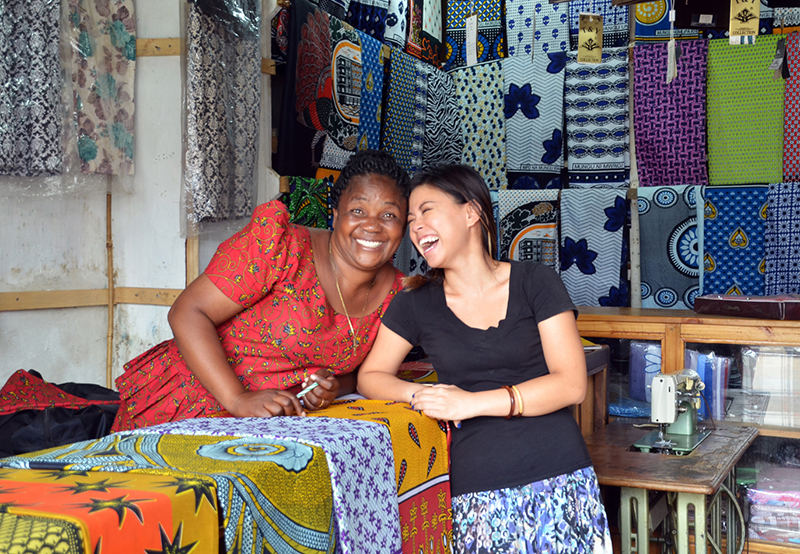
Tanzania has earned the distinction of being among the world's 10 fastest-growing economies. The east African nation grew at the rate of 6.8 per cent, according to the 2020 African Economic Outlook report. Other five African countries that have been making impressive growths are Rwanda (8.7 per cent), Ethiopia (7.4 per cent), Côte d'Ivoire (7.4 per cent), Ghana (7.1 per cent) and Benin 6.7 per cent. Not only did Tanzania achieve the highest growth rate among African countries, it’s inflation also fell to 3.3 per cent in 2019 due to improved food supply. The Tanzanian shilling also stood fairly stable in 2019, exchanging at an average of 2,290 to the dollar, compared with 2,263 in 2018. An impressive growth in the middle class of Africa has seen a steady rise in demand for consumer and capital goods all across Africa. The East Africa region has emerged as the continent's fastest-growing regions with an average growth estimated at five per cent in 2019; North Africa is currently the second-fastest, at 4.1 per cent, whereas West Africa's growth has been recoded at 3.7 per cent in 2019. The 2020 African Economic Outlook report predicts that Tanzania's growth will to be stable at 6.4pc in 2020 and 6.6 per cent in 2021. Overall, Africa's economic growth stood steady at 3.4 per cent in 2019 and is expected to pick up to 3.9 per cent in 2020 and 4.1 per cent in 2021.
Preliminary request for participation in the trade show
place
calendar_today
Preliminary request for visitor registration
Visitor Registration
place
calendar_today