
Ethiopia Opens Up Logistics Sector
folder_open Business Outlook , East Africa
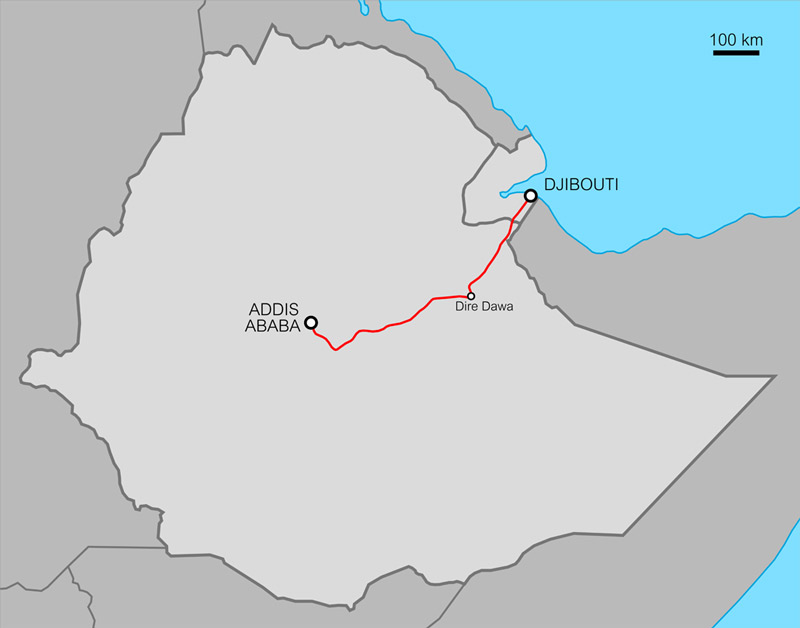
The Ethiopian government has opened up its logistics sector to foreign investors for the first time, in the form of joint ventures with local firms. The country wants to attract at least $120 million of foreign direct investment into the sector by 2021. Meanwhile, the state-owned Ethiopian Shipping & Logistics Services Enterprise (ESLSE) is to be part-privatised, and the state railway company, the Ethiopian Railway Corporation, restructured then fully privatised. Clearly, the government of Ethiopia has made improving logistics a top priority. A $2.5 billion, 750-kilometre railway connecting Addis Ababa with the port in Djibouti was launched in 2018 and should cut a three-day journey down to 12 hours. In an ambitious road-building programme flagship projects include a 200 kilometre expressway connecting Hawassa, home to the country’s largest industrial park, with the capital, Addis Ababa. Two years ago, the government signed a $150 million World Bank project to transform Mojo, a poorly equipped and heavily congested dry port near Addis Ababa that processes more than 70% of imported containers, into a state-of-the-art logistics facility. Meanwhile, Addis is helping a Dutch consortium, Flying Swans, to set up a cold chain along the railway to the coast. It also plans to increase to 90% the coverage of general cargo carried by ‘multi-modal’ transport – the theoretically more efficient system currently monopolised by the state-owned Ethiopian Shipping & Logistics Services Enterprise (ESLSE). As of now, to transport a 20-foot container of garments from Ethiopia to Germany costs 247% more than from Vietnam and 72% more than from Bangladesh. In 2016, Ethiopia scored 2.37 in the World Bank’s Logistics Performance Index – significantly lower than neighbouring Uganda, which is also landlocked. The country ranked 159th out of 190 in the World Bank’s Doing Business index in 2018; Uganda came 127th. Most of Ethiopia’s bulk imports like wheat, sugar and fertiliser currently pass through the port of Djibouti which is small and congested, especially when the Ethiopian government procures. The port is also 70% more expensive than other ports in the region. Ehtiopia has also signed a deal with Eritrea restoring Ethiopian access to the ports of Massawa and Assab. at will be most important to the Ethiopian economy. Ethiopia plans to invest in refurbishing the port with the help of investmetns from Saudi Arabia, United Arab Emirates and the World Bank.

Uganda To Export Oil By 2023
folder_open East Africa
Uganda plans to build a pipeline to export its new discovered oil through neighbouring Tanzania. The landlocked country situated in East Africa is currently inviting licence bids from interested investors and major international oil companies. Uganda has some of the biggest oil reserves in sub-Saharan Africa – 6-billion barrels – of which it has estimated 1.4-billion are recoverable. It canceled a plan in 2016 to jointly develop an export pipeline to Kenya’s coast in favour of a southern route through Tanzania. To export its oil, Uganda is looking to take a 15% stake in the planned 1,440km pipeline to Tanga on the Tanzanian coast. Tullow is considering a 10% share in the project, Tanzania may take a stake, and Total and CNOOCooc will probably share the rest. “There is a lot of money that needs to be invested into exploration and development before we go into production,” says Irene Muloni, Uganda’s Minister for Energy. “By the end of 2020, we should have new investors,” she said. International oil investors currently working in Uganda – including Total, CNOOC and Tullow Oil – have committed more than $3billion. The country has also held investor roadshows in London, Houston and Russia. Uganda issued production licences earlier in separate agreements. Final investment decisions with Total, CNOOC and Tullow have been delayed, and the government now expects them by the first quarter of 2020. Uganda also wants to improve electricity supply and distribution. Kampala is studying the feasibility of linking its power lines with South Sudan and the Democratic Republic of the Congo.

Uganda Starts Manufacturing Mobile Phones
folder_open East Africa
The Ugandan government recently launched a mobile phone and computer manufacturing plant in the Namanve Industrial Park. Heralded as a turning point in positive foreign direct investment, this move would also drastically reduce the cost of importation of technology and ensure job creation opportunities for Ugandans. The factory built by Chinese Electronics firm ENGO Holdings Limited will produce 2,000 mobile phones, 1,500 Smart phones and 800 mini slim laptops every day when it starts operating at full capacity in 2021. The phone models with dual SIM slots and a Memory card will collectively be known as S300 powered 1,400mAh capacity battery. They are enabled with JAVA for playing MP3/MP4 Audio-Visual files. They receive telecommunications signal using 2GSM and GPRS operating on two bandwidths in the range of 850 -1900. Ares Chow Yu Qing, the Executive Director of ENGO Holdings Limited says that the factory will in the future produce 2,000 chargers, 4,000 USB cables and 4,000 ear phones in the third phase of the development of the factory in October 2021. ENGO Holdings Limited is investing USD 15 million in phases over a period of five years to achieve optimal output from the initial one million electronic gadgets a year. Most of the parts currently being assembled were imported from China including mainboards, the 2.4 Inch screen, touch panels, battery, Cameras, speaker receivers and vibrators. The factory is expected to reduce the import bill by producing cheap phones for the East African nation. Financial investments from the Chinese is something that President Museveni encourages. In his speech at the launch of the manufacturing plant, the president stated that he believes the Chinese investors to be “very serious partners because they understand the importance of infrastructure,” and that he is “very happy” with their investments in the country. With plans to use the products manufactured in the government departments itself and even impose importation taxes on similar products brought into the country, it is obvious that Museveni will be taking the necessary steps to ensure that the products assembled in the factory are used
Ethiopia to export water to UK
folder_open East Africa
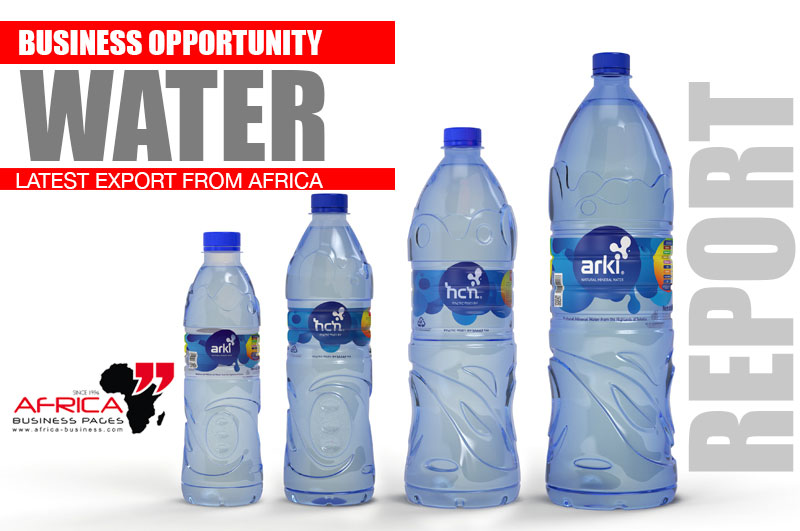
Garanba Bottling, a subsidiary of B&C Aluminum Plc that bottles South Spring Water in Ethiopia, has signed a deal with a UK-based company to export US$1m worth of bottled water to the United Kingdom. Garanba Bottling was established with an investment of US$12.5million in Aregobena Wereda of Sidama Zone. It operates with 310 employees and has the capacity to produce 16,000 bottles of water an hour. According to media reports, Garanga Botting will export 1,200 tonnes of bottled water as a trial before regular shipments are scheduled. The first shipment will take five 20-foot container load, which will constitute one million bottles. South Spring Water will mainly be delivered in 0.6 litre and 1.2 litre bottles. Before inking the deal, the two parties completed the testing and sampling process, which took close to three months. “Following the first round, we’ll seal a long-term agreement to ship 50 containers a month,” said Berhanu Getahun, board chairperson of Garanba Bottling. According to Berhanu, Garanba Bottling has also been negotiating with buyers for close to two months to start exporting its products to Saudi Arabia. “We’ve sent a sample to the company and currently we are working on the contract agreement,” he revealed. To encourage the export of bottled water, the Ethiopian Bottled Water, Soft Drink, Fruit & Vegetable Processing Manufacturing Industries Association (EBFSMIA) has sent a letter to the business diplomacy directorate of the Ministry of Foreign Affairs to facilitate the export of bottled water to neighbouring countries. Ethiopia is known by the water resources it possesses that provided it the nick name The Water Tower of Africa. Foreign investors and entrepreneurs are lining up to take advantage of this business opportunity by setting up water bottling plants across Ethiopia. As a result, foreign investments in bottling drinking water and mineral water bottling plnats has risen from six factories in 2011 to 97 in the beginning of the 2020. All these plants are producing around 100 milliliters of water per head per day when their total production is divided to the total number of population, which is estimated to 10 million USD according to some studies. Recently, a Turkish company has invested $6.5 million in Ethiopia to set up and bottled water plant. Avante Water, owned by the General Group Beverages (GGB), inaugurated its bottled water brand at a ceremony held in capital Addis Ababa. The factory sits on 4,700 square meters factory complex situated 110 kilometers north of the capital. The plant has three production lines including blowing, filling and packaging. It has a capacity of producing 30,000 liters of water an hour. The company uses the lightest plastic for the bottle which makes it compressible so it takes less space in the trashcan contributing to a cleaner environment. Origin Water, bottled by Origin Food & Beverage Factory located in Oromia Regional State, has been exporting bottled water since last year with Djibouti as its main destination. Since embarking upon the export of bottled water, Origin Water has shipped a total of 1.2 million tonnes of product, worth an estimated US$7 million. “Currently, there are some gaps in our export venture to the neighbouring country due to foreign exchange problems that limited us from importing more machinery to increase our production,” said Haymanot Anbesse, quality control manager of Origin Water. Currently, there are close to 97 bottlers operational in Ethiopia, with a total registered capital of $92.1 millions. The increasing competitiveness of the thriving industry compels the bottlers to stretch their reach to foreign countries.
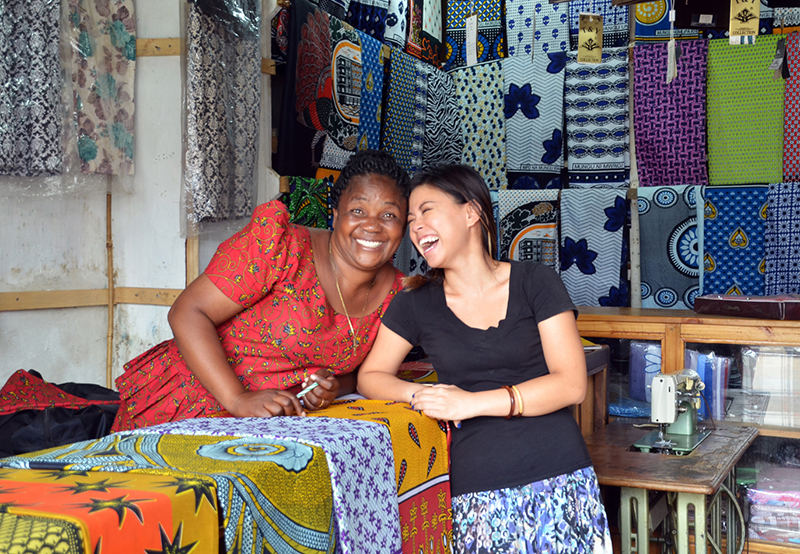
Tanzania has earned the distinction of being among the world's 10 fastest-growing economies. The east African nation grew at the rate of 6.8 per cent, according to the 2020 African Economic Outlook report. Other five African countries that have been making impressive growths are Rwanda (8.7 per cent), Ethiopia (7.4 per cent), Côte d'Ivoire (7.4 per cent), Ghana (7.1 per cent) and Benin 6.7 per cent. Not only did Tanzania achieve the highest growth rate among African countries, it’s inflation also fell to 3.3 per cent in 2019 due to improved food supply. The Tanzanian shilling also stood fairly stable in 2019, exchanging at an average of 2,290 to the dollar, compared with 2,263 in 2018. An impressive growth in the middle class of Africa has seen a steady rise in demand for consumer and capital goods all across Africa. The East Africa region has emerged as the continent's fastest-growing regions with an average growth estimated at five per cent in 2019; North Africa is currently the second-fastest, at 4.1 per cent, whereas West Africa's growth has been recoded at 3.7 per cent in 2019. The 2020 African Economic Outlook report predicts that Tanzania's growth will to be stable at 6.4pc in 2020 and 6.6 per cent in 2021. Overall, Africa's economic growth stood steady at 3.4 per cent in 2019 and is expected to pick up to 3.9 per cent in 2020 and 4.1 per cent in 2021.
Ethiopian Airlines Plans To Build New Airport
folder_open Articles , East Africa
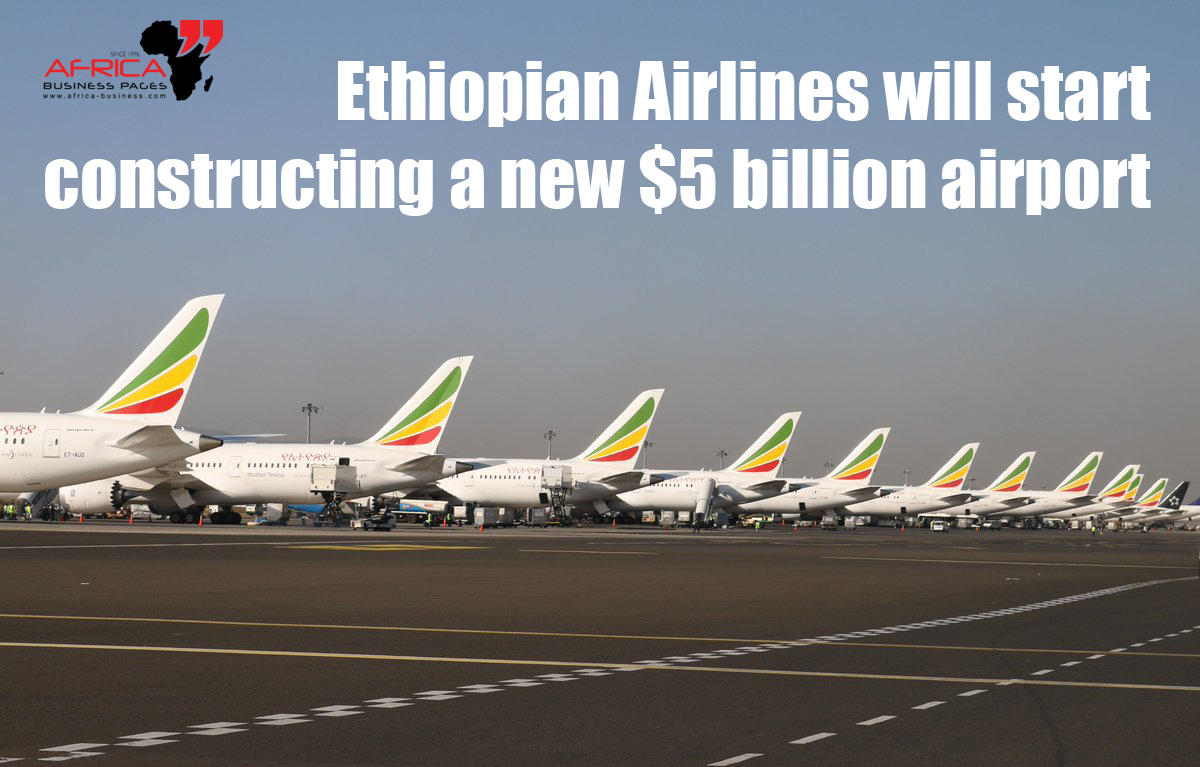
Ethiopian Airlines has announced that it will start constructing a new $5 billion airport later this year, its as the rapidly-expanding carrier outgrows capacity at its current base in Addis Ababa. The airport, which will cover an area of 35 square km, will be built in Bishoftu, a town 39 km south east of the capital, and have the capacity to handle 100 million passengers a year. Bole International Airport in Addis Ababa has a passenger capacity of about 19 million passengers annually. The state-owned Ethiopian Airlines, which competes with large Middle East carriers to connect long-haul passengers, has built a patchwork of African routes from its hub in Addis Ababa to fly customers towards expanding Asian markets. It has 116 aircraft in its fleet and its net profit rose to $260 million in its 2018/19 financial year from $207.2 million a year earlier. In 2018, Addis Ababa overtook Dubai as the top transit hub for long-haul passengers into Africa. In 2019 China funded the expansion of Bole Airport was, allowing it to accommodate 22 million passengers annually. Gebremariam has not said how the new airport — which will accommodate 100 million passengers — will be funded. In a region that has historically struggled in the aviation field, state-run Ethiopian Airlines is truly a success story, playing a key role in the country’s economic development and helping solidify its status as a tourist destination. A new airport takes it to the next level. The continent has been notoriously under-connected by air, and Ethiopian Airlines is changing that, with flights to more than 60 African cities. The company also owns stakes in several local airlines based in other countries. Ethiopian Airlines also has a special “Stopover Package” for passengers connecting through its Addis Ababa hub. The program officially launched in 2018 does not raise the cost of an airfare, caters to leisure travellers in order to promote tourism in Ethiopia.

21 September 2019, Dubai: The Dubai Chamber of Commerce and Industry (DCCI) led a business and government delegation to Ethiopia in order to explore new business opportunities to further expand bi-lateral trade and tourism ties between Ethiopia and Dubai. With a primary focus of exploring investment opportunities in Ethiopia's booming tourism and real estate sectors, the DCCI-led delegation met with their business counterparts in Ethiopia at a special B2B session organised at the Hyatt Regency Hotel in Addis Ababa. Organized jointly by the UAE Embassy in Addis Ababa and the Addis Ababa Chamber of Commerce, the two-day business forum brought together businesses from Dubai and Ethiopia for one-on-one discussions to further cement cooperation and networking among major stakeholders in the tourism, real estate and trading sectors. Dubai Chamber of Commerce & Industry (DCCI) has opened its office in Addis Ababa in 2014, making it the first office in the African continent. “We are seeking ways to further expand our bi-lateral trade ties with Ethiopia eversince we opened our office in 2014,” said Omar Abdulaziz Khan, Director of International Office under the International Relations of Dubai Chamber of Commerce “Now, there are lots of opportunities,” he said. “Tourism business business is booming in Ethiopia. The connectivity is already there, as we already have Ethiopian Airlines, Fly Dubai and Emirates. This is a beautiful place to visit, with diverse culture, people and food,” said Omar Abdulaziz Khan. “We represent around 90 million passengers annually and 75 million of these passengers go to destinations all across the world. So, we are looking at how we can bring some of those passengers to Ethiopia,” he said. During the opening session of the business forum, Ethiopia's State Minister of Trade and Industry, Misganu Arega said that Ethiopia has been working to use UAE’s enormous trade and investment potential, capitalizing on its wider business opportunities and geographic proximity. Misganu said that the government has formulated favourable investment policies and has allocated the bulk of its budget to infrastructural development, to facilitate conditions for investors who want to do business in the country. Representatives from the Ethiopian Investment Commission as well as the Ethiopian Industrial Parks Development Corporation presented the necessary business information, facts and data currently available in the Ethiopian investment and business environment. The two-day business forum is sure to play an important role in attracting investments from Dubai into Ethiopia's booming tourism and real estate sectors. On the other hand, it will pave the way in expanding Ethiopia's exports to Dubai in the coming years.
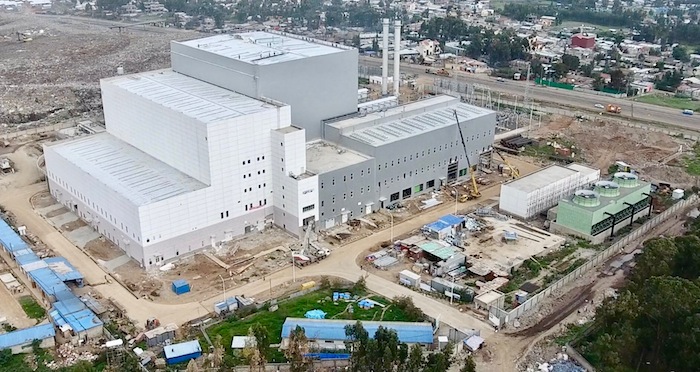
Ethiopia is planning to convert its garbage into energy through use of new technology. Koshe is the biggest garbage dump in Ethiopia and is located on the outskirts of the country's capital city, Addis Ababa. The Koshe garbage dump was in the news last year when 114 people died due to the pollutants emanating from the garbage dump – spread over an area approximately the size of 36 football fields. Ethiopia has since turned the site into a new waste-to-energy plant via the Reppie Waste-to-Energy Project which is the first of its kind in Africa. This forms part of efforts to revolutionise waste management practices in the country. The plant is designed to generate electric power from solid waste collected from the capital. Incinerating 1,400 tonnes of waste every day, the plant is capable of contributing 185GWh of electricity each year to the national grid. However, Reppie Waste-to-Energy Project fell flat due to disputes between Ethiopian Electric Power (EEP) and two contractors – Cambridge Industries and its partner, China National Electric Engineering Company – which finally led to the plant ceasing operations soon after its inauguration. Now, after hectic efforts to resolve the dispute, the Ethiopian Electric Power (EEP) is planning to restart operations of Reppie Waste-to-Energy power plant in three months and once again start generating electric power using the garbage at the Koshe rubbish dump. Waste-to-energy uses trash as a fuel for power generation. Similar to other power plants (just using trash rather than other fuels like coal, oil, or natural gas), the fuel is burned in an environmentally sustainable manner, in a combustion chamber to heat tubes of water in boiler walls. The water is heated until it turns into steam, which is then used to drive a turbine generator that produces electricity. "The hulking waste-to-energy power plant taking shape on the edge of Addis Ababa, Ethiopia’s capital, symbolises ambitions to convert the agrarian Horn of Africa country into an eco-friendly industrial powerhouse." wrote the Guardian newspaper. In about a year, green, cutting-edge Reppie will replace a vast rubbish dump picked over by hundreds of scavengers. Currently, toxic effluent from the landfill seeps into nearby rivers when it rains and methane perpetually drifts into the atmosphere. Constructing Africa's first major waste-to-energy facility fits perfectly with Ethiopia’s Climate Resilient Green Economy. The plant will eliminate over 80% of the Municipal Waste delivered to it, whilst at the same time maximizing energy recovery in order to deliver much-needed renewable power to the surrounding cities and towns.

Rwanda Investment Showcase in Sharjah Spotlights Investment Opportunities
folder_open Business Outlook , East Africa
The Rwanda Investment Showcase held on 23rd April 2019 introduced the GCC investors and private sector to exciting investment opportunities and prospects in Rwanda, one of the top 10 fastest growing economies in the world. Yasmin Dalila Amri, Chargé D'affaires of the Rwandan Consulate, commented: “Rwanda is constantly expanding incentives for GCC businesses to invest across all economic sectors, including the recent introduction of a double taxation agreement.” Recent major investments in Rwanda include a $50 million commitment by UAE-based Sheikh Rakadh Group in the Rwanda Smart City Master Plan, a vision for tech-centred development that mirrors the values of the UAE’s own Vision 2030. During the event, Isaac Kwaku Fokuo Jr., Founder of Botho Group also highlighted the longstanding ties between East Africa and the UAE across cultural, historic, and economic lines. This legacy holds particular resonance for the Emirate of Sharjah, which first hosted the Arab-Africa symposium in 1976 in Africa Hall, known today as the Africa Institute. Panellists, including Sanjeev Gupta from the Africa Finance Corporation, Stuart Fleming from Enviroserve UAE, and Uday Bhasin from Tradeways Investment, each spoke of their positive experiences working in Rwanda. Gupta noted, “Rwanda’s strategic position allows investors to manoeuvre throughout the African continent with ease. Rwanda’s landlockedness is not an impediment – if anything, it’s a big advantage.” Rwanda is uniquely positioned as a member of two major regional economic blocs, the East African Community (EAC) and the Common Market for Eastern and Southern Africa (COMESA), which make Rwanda a gateway to a collective market of over 560 million people. H.E. Abdallah Sultan Al Owai, Chairman of the Sharjah Chamber of Commerce and Industry, echoed these sentiments during his opening remarks when he lauded the UAE's efforts to establish strong and fruitful trade relations with African countries. “The volume of non-oil trade between the UAE and Africa hit AED 140.5 billion ($38.3 billion),” he said. “The UAE is the second largest Middle Eastern investor in Africa with a 12% share of total foreign direct investment, which is on the rise. Rwanda is carving a niche for itself in the COMESA community, and has repeated that it is open for business time and time again - it's time we listen.” Today, Rwanda has attractive investment opportunities extending beyond agriculture, the country’s largest sector. The nation now has a thriving infrastructure and construction sector, with promising new opportunities in other dynamic sectors such as technology and education with considerable support from its government. Over 95% of the country is now covered by 4G, making it home to one of the fastest Internet speeds in Africa.
Kenya Aims To Boost Meat Exports
folder_open Business Outlook , East Africa
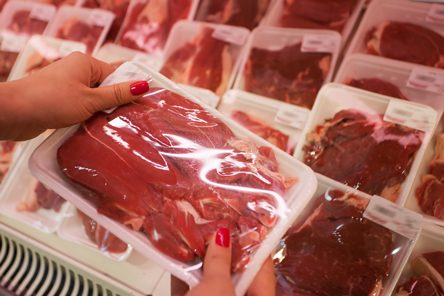
Kenya plans to boost its meat exports by investing in state-of-the-art slaughterhouses that meet international quality standards. This was announced by none other than President Uhuru at a recent meeting with government officials and business owners recently. “We will begin with the export of live animals but in two years, we should have our own export slaughterhouse. My vision is to revive this important sector,” said President Uhuru Kenyatta. Meat exports to Europe and the Middle East markets has been growing in recent years and the building of halal-certified slaughterhouses will certainly boost Kenya’s foreign exchange earnings though meat exports. “My main interest is that the farmer and herder of livestock get good prices for their animals,” said the President. President Kenyatta said livestock farming used to be a lucrative agribusiness in the 1970s but was brought down through mismanagement. “We used to do well in this livestock industry in the early 1970s. Unfortunately, due to mismanagement, it collapsed,” he said. Global Foods and Blue Mountain are two UAE-based companies that have been appointed to market Kenya Meat Commission (KMC) products in the Middle East with Dubai as the distribution point. KMC is also planning to set up distribution centres and cold storage warehouses in the Kuwait, Qatar, Saudi Arabia, the Democratic Republic of Congo (DRC), Sudan, and Egypt. “We want to directly take charge of the export market by doing away with middle men in our supply chain system. This will also help us convert agent commission fees into income,” said Patrick Mutemi, the deputy managing commissioner and head of finance and marketing at KMC. The Middle East is a prime market for small stock products — lamb, mutton, and goat meat — while corned beef is more popular in the African market and Saudi Arabia. Recently, a team from the United Arab Emirates visited Kenya to assess the capacity of Kenya Meat Commission to export meat to the Middle East country. The inspectors, mainly veterinary doctors, nutritionists and environmentalists studied how KMC meets international standards on food safety, health and sanitation, livestock disease control and meat handling. KMC is targeting the Middle East market to increase revenues and the company targets a 20 per cent profit at the end of this financial year. To enhance its capacity in meeting the market demand, KMC is constructing six satellite abattoirs in major livestock keeping areas countrywide, including Wajir, Samburu, Kajiado, Isiolo, Mandera, Garissa, Marsabit and Turkana counties. The European Union had banned the importation of Kenyan beef due to food safety concerns as a result of livestock diseases.
Preliminary request for participation in the trade show
place
calendar_today
Preliminary request for visitor registration
Visitor Registration
place
calendar_today