A-MAP launches promotional campaign in Ethiopia to promote ASIMCO auto parts
folder_open Automobiles Sector
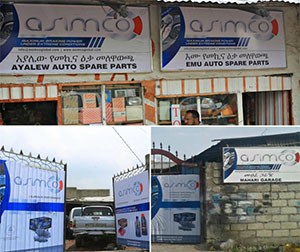
In an effort to further increase the popularity and reach of ASIMCO auto parts in Ethiopia, Al Muqarram Auto Parts (A-MAP) has launched aggressive promotional campaign in Ethiopia. An extensive advertising and marketing campaign to promote ASIMCO automotive spare parts in the Ethiopian market has been launched by A-MAP. As a result, ASIMCO shop boards and posters are now visible across Ethiopia in auto service centers as well as spare parts shops. Ethiopia is one of Africa’s fastest growing economies and has the continent’s second largest population. Asimco has established a precedence for developing and manufacturing premium friction products. Asimco is highly recognized for its excellent quality products since its introduction to the market in 2001. Products under its portfolio include brake pads, brake shoes, fuel pump, brake fluid, disc rotor and shock absorber. Over the years, Asimco’s quality supported the strong growth in market share and sold in almost 65 countries. Asimco Brake pads and shoes are designed to give drivers amazing brake feel with the longevity you expect from a premium brake product. Asimco product is sold as a kit when servicing a vehicle, it includes premium shims manufactured by MSC to reduce braking harmonics to almost an inaudible level. Where applicable hardware is provided and anodized to increase the life of accessory components to prevent rust and various road conditions from degrading the products life span. With over 15 years experience, A-MAP has emerged as a global market leader, specializing in the distribution of quality and reliable aftermarket automotive spare parts. A-MAP not only distributes products, it distributes excellence. A-MAP has a series of successful and well known trusted brands worldwide, among them being Solite Batteries, Sebang Batteries, Hyundai Xteer Lubricants, Asimco Brake Pads, Achilles Tyres and RBI Rubber Parts. With the headquarters operating in Dubai, A-MAP has a network of branches fully operational in China, South Africa and Qatar. The company aims to continuously expanding due to our perfection and quality of products.

Al Muqarram Auto Parts (A-MAP) has expanded its product range by obtaining the distribution rights of Eveready Batteries in the UAE. Eveready batteries are made to the highest quality standards in the Johnson Controls factory in Europe. These batteries are designed to deliver long battery life performance through optimized grid design using the most modern European manufacturing technologies. With over 15 years experience, A-MAP is a global market leader, specializing in the distribution of quality and reliable aftermarket automotive spare parts. A-MAP has a series of successful and well-known trusted brands worldwide, among them being Solite Batteries, Sebang Batteries, Hyundai Xteer Lubricants, Asimco Brake Pads, Achilles Tyres and RBI Rubber Parts. With the headquarters operating in Dubai, A-MAP has a network of branches fully operational in China, South Africa and Qatar. Our global network is continuously expanding due to our perfection and quality of products. Johnson Controls (JCI) Training Sessions A-MAP organizes regular highly interactive training and information sharing sessions with JCI Germany team at its QC Center. The recent training was conducted by the Product Marketing Manager, Florian Frantz of Johnson Controls Power Solutions EMEA. A-MAP Sales & Service teams actively participate in these programs, where there is mutual exchange of market related information, customer behaviour and expectations, trends in the International markets and Product Quality & field performance, benchmarking of different products & brands. EVEREADY batteries are made to the highest quality standards in the Johnson Controls factory in Europe. These batteries are designed to deliver long life performance through optimized grid design using the most modern European manufacturing technologies. A-MAP is an authorized Eveready car battery supplier.
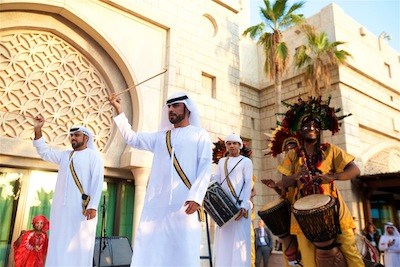
Dubai, UAE – The inaugural “Africa Live” event saw a strong turnout as it was held on the sidelines of the Dubai Chamber’s Global Business Forum on Africa 2017 on November 1 at Dubai’s Madinat Jumeirah. The live entertainment event offered attendees a host of artistic and cultural activities highlighting the strong relations and cultural similarities between the UAE and Africa. During the event, a special ceremony was held to honour Kuwaiti national Ali Al Zaidi, the winner of the “Next Generation Photography” contest. “Africa Live provided a broad platform for us to look into human and cultural exchange between the UAE and Africa,” said Hamad Buamim, President and CEO of the Dubai Chamber of Commerce and Industry. “It was an opportunity for us to look more closely at the many similarities our two regions share when it comes to lifestyle, society and art. These cultural traits are hallmarks of each region’s identity and heritage, and by familiarising ourselves with them, we are truly paving the way for solid, long-term ties with Africa – both cultural and economic,” he said. By hosting the unique event, he explained that Dubai Chamber aimed to look beyond the traditional communication channels, and tap into a more human rapport and strengthen cultural relations between the UAE and Africa. Commenting on the Next Generation Photography Award, Buamim said the contest was a joint effort with the esteemed Hamdan Bin Mohammed Bin Rashid Al Maktoum International Photography Award, which drew in more than 900 submissions from around the world. “The award established an interactive platform to build bridges of dialogue between different cultures and civilisations, while it also promoted creativity and fine arts. The contest succeeded in supporting the Forum’s mission to promote economic and investment ties between the UAE, Africa and the rest of the world,” Buamim concluded. A corner of the Africa Live exhibition was reserved for authentic handicrafts made by creative young innovators, such as Affiong Williams, Founder of Reel Fruits, from Nigeria and kathy Johnston, COO of Mirzam Chocolates, from the UAE. The event featured traditional handicrafts that boast old-timey charm with a modern touch, created by Emirati designer Khalid Shafar, along with Burkina Faso’s Hamed Outtara. In addition, Africa Live featured clothing designs that highlighted the visible impact of using locally sourced material and traditional techniques to create modern fashion with youthful ideas. Tamashee Co-Founders Mohammed Kazim and Muneera Al Tamimi from the UAE took part, along with Rwandan designer Matthew Rugamba, Chief Designer at House of Tayo. The two-hour event included musical performances entitled “The Language of Music”, which fused music with folklore. A number of talented musicians took part, including Hamdan Al-Abri (UAE), Victor Sitali (Zambia) and Kakembo Shariff (Rwanda).The programme included live food stations serving up traditional Emirati dishes prepared by the highly creative chef Faisal Naser (UAE). Meanwhile, Nigerian chef Gbubemi Fregene revealed the secrets of African folk cuisine. The Global Business Forum on Africa has become a reliable platform for exploring the continent’s economic outlook – both current and future – as evidenced by the high-profile attendees that have participated in the event since its inception.
Dubai, UAE: DP World is looking for new investment and expansion opportunities across Africa, as it pushes ahead with its long-term strategy focusing on the continent, the company’s Senior Vice President and Managing Director for the UAE Mohammed Al Muallem told delegates on Thursday at the fourth Global Business Forum on Africa in Dubai. “We want to be part of Africa’s progress. We see huge potential in Africa and we are looking to build on our success and the experience we’ve accumulated there to grow further,” said Al Muallem. He noted that DP World is already present on the ground and has grown to seven locations and ports on the continent covering the Mediterranean Sea, the Red Sea, the Atlantic Ocean, and the Indian Ocean. He spoke about the company’s aim to partner with landlocked countries and revealed that it has already ventured into Rwanda as part of its efforts to expand from marine operations to dry ports. “We want to be part of the entire supply chain and we are looking at any opportunity to invest into the supply chain and make it more efficient. Countries may have the ability to produce but lack ways to circulate their product: this is where we come in, sharing our knowledge and expertise,” said Al Muallem. Offering advice to African partners and stakeholders, Al Muallem said: “By removing red tape and introducing advanced technologies, we can make streamline operations and move things along faster. We can bring great value in that regard based on our experiences here in Dubai, where the government is heavily investing in the digital infrastructure. If we look at the UAE, it is the government that’s really moving things forward and building the necessary infrastructure.” Organised by the Dubai Chamber of Commerce and Industry, the fourth Global Business Forum on Africa, was held on November 1 and 2, 2017, at Dubai’s Madinat Jumeirah, under the patronage of H.H. Sheikh Mohammed bin Rashid Al Maktoum, Vice President and Prime Minister of the UAE and Ruler of Dubai. The high-level event is part of the Chamber’s Global Business Forum series, which focuses on Africa, Latin America, and the Commonwealth of Independent States (CIS). To date, the series has hosted 10 heads of state, 74 ministers and dignitaries, and 5,400 executives, as well as a host of influential decision makers from 65 countries around the world.
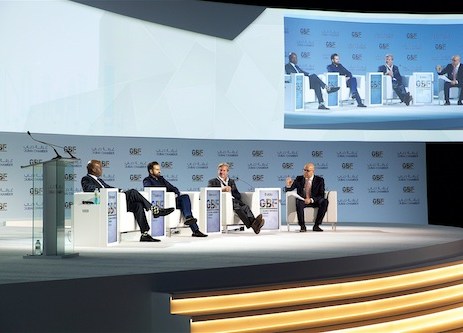
Dubai, UAE – Digital infrastructure and agriculture in Africa are key growth areas that are expected to attract a higher level of investment, a panel of financial experts said during the fourth Global Business Forum on Africa in Dubai. Addressing a panel discussion entitled, “Funding African Business – Deal Makers or Risk Takers”, Eghosa Omoigui, Managing General Partner of EchoVC Partners, Nigeria; Ashish J. Thakkar, Founder of Mara Group and Mara Foundation; and Rob Hersov, Founder and Chairman of Invest Africa, who presented unique and valuable insights on investment trends in Africa. Highlighting primary agriculture as a critical area for growth, Hersov noted that while everyone says Africa needs investments in power and infrastructure, the “most important thing is digital infrastructure because everything will be driven by a smartphone, and that is where we must be investing.” Hersov said that while London and Paris continue to be the key sources of capital for Africa, Dubai has a strong opportunity, as the emirate has the connectivity and innovative business environment that can serve as a platform for attracting investment into Africa. Thakkar said that while technology is going to change the continent dramatically, the digital opportunity is not being takenseriously enough, and called for a change to the “bandwagon approach.” “Digital infrastructure is the tip of the iceberg; it is the beginning (of the big change). We will have 700 million smartphones, which will change the way we live. From healthcare to education to agriculture to trade to truly enabling ecommerce, the impact of digitalisation will be game changing,” said Thakkar. To audience applause, Thakkar said that the key to attracting capital to Africa is for entrepreneurs to know that they are only answerable to themselves. “If we try to please others to come to our continent, it won’t work. If we are authentic and have a long-term ethical mindset, everyone will come, and those who later will kick themselves for not coming earlier,” he said. Omoigui said that the UAE and Dubai have shown their ability to innovate, and said that a lot more investment could be attracted by African countries if governments put more focus on cities and microeconomics as opposed to countries and macroeconomics. “While small and medium enterprises are the engine of growth, there is a complete mismatch when it comes to private equity support. A lot of these companies are not willing or capable of absorbing huge capital infusion, so it is important that we grow the companies – scaling up not just the business but also people,” said Omoigui. The fourth Global Business Forum on Africa, orgainsed by the Dubai Chamber of Commerce and Industry, was held on November 1 and 2, 2017, at Dubai’s Madinat Jumeirah. The high-level event was held under the patronage of H.H. Sheikh Mohammed bin Rashid Al Maktoum, Vice President and Prime Minister of the UAE and Ruler of Dubai.
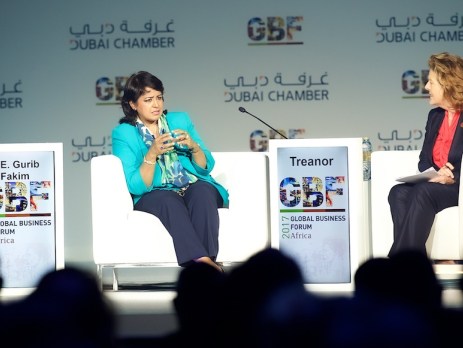
President of Mauritius says investment in Africa should be used to educate youth
folder_open Articles
H.E. Ameenah Gurib-Fakim addresses Global Business Forum on Africa 2017 in Dubai during a session entitled ‘Reversing the Brain Drain – Unleashing the Potential of Africa’s Youth’ Dubai, UAE: H.E. Ameenah Gurib-Fakim, President of Mauritius, led a conversation session during the fourth Global Business Forum on Africa entitled “Reversing the Brain Drain – Unleashing the Potential of Africa’s Youth” where she called for more focus on investing in education and training for the continent’s youth. She pointed out that Africa’s resources are too often the main focus of investment that comes into the continent and said that this mindset needs to change. She stressed the importance of educating young girls and bringing African women into the workforce. “It might be a bit too ambitious to talk about reversing the brain drain and attracting people to Africa, but we can talk of brain circulation. What that is essentially is to have successful people who have made it in the West or China or elsewhere to come to Africa and mentor the youth, or, vice-versa, we can take the young abroad to meet them,” said H.E. Gurib-Fakim. She went on to state that Mauritius is now an upper-middle-income country, explaining that this transition “didn’t happen overnight” and “took years and carefully enacted policies to achieve that goal, most important of which was providing free education.” Mauritius’ President described technology as a great enabler for brain circulation and noted that more needs to be done to prepare youth to help them to realise their full potential. In her view, entrepreneurship is the way forward for Africa as it can create enough jobs for fresh graduates in a way that government cannot. Concluding the session, H.E. Gurib-Fakim said the role of government is to improve countries’ performance on all flagship indicators, such as corruption and ease of doing business. “Mauritius ranks first in Africa and 25th globally in ease of doing business. Corruption is a tax on the poor; for every corruptor there is corruptee. We need to tackle the whole system and we’ve already started by digitising a wide range processes and transactions,” she said.
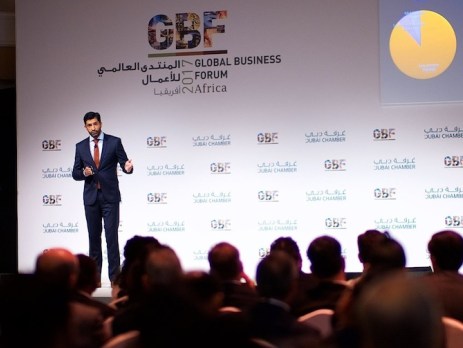
Under the patronage of H.H. Sheikh Mohammed bin Rashid Al Maktoum, Vice President and Prime Minister of the UAE and Ruler of Dubai, the 4th Global Business Forum on Africa was held November 1 and 2, 2017 at Dubai’s Madinat Jumeirah. The event was organised by the Dubai Chamber of Commerce and Industry. Dubai, UAE: With its forward-thinking vision, capital and strong expertise, Dubai is serving as a strategic partner in driving Africa’s digital transformation, according to a panel of fintech experts who spoke at the 4th Global Business Forum on Africa in Dubai. Their comments came during a high-level session entitled, “Africa-Dubai Dialogue: The Future of Money”, which revealed that African countries have realised the value of fintech and blockchain, and are now aiming to create an enabling environment for these emerging industries and technologies. The session saw the participation of Arif Amiri, Chief Executive Officer of DIFC, UAE; Louis Antoine Muhire, Founder and Chief Executive Officer of Mergims, Rwanda; and Tayo Oviosu, Founder and Chief Executive Officer of Paga, Nigeria, who spoke about the impact of new technologies on Africa’s finance industry, as well as Dubai’s progress with regards to fostering an ecosystem that drives innovation its fast-growing fintech sector. “When you look at the future of money, innovation is going to be the core. In the Middle East, North Africa and South Asia region, the penetration of [online] financial services is at about 30 per cent. That is a huge upside highlighting inclusive growth and inclusive finance. There is no doubt that everything is going to go digital, and we have global banks, organisations and government collaborating to make it happen,” said Amiri. According to Oviosu, the UAE has the potential to be one of the first countries in the world to go completely digital in the near-future. He noted that the shift toward digitalisation is also happening in Africa, but pointed out that more education is needed to expand access to digital services on the continent. Muhire reiterated that the future of money will be digital but shared his view that “people will determine if you go digitally or not.” He stressed the importance of simplifying the process for making online transactions, adding that financial players in Africa cannot afford to wait until computer literacy reaches the same levels as Western countries. Underlining the fact that more governments in Africa are now receptive of innovative technologies in the financial sector, the panellists shared the view that embracing blockchain technology and fintech services will help reduce the cost of capital, which in turn will drive economic growth on the continent. Under the patronage of H.H. Sheikh Mohammed bin Rashid Al Maktoum, Vice President and Prime Minister of the UAE and Ruler of Dubai, the 4th Global Business Forum on Africa was held November 1 and 2, 2017 at Dubai’s Madinat Jumeirah. The event was organised by the Dubai Chamber of Commerce and Industry.
Dubai Chamber invests AED 100 million to promote trade and investment opportunities in Africa
folder_open Articles
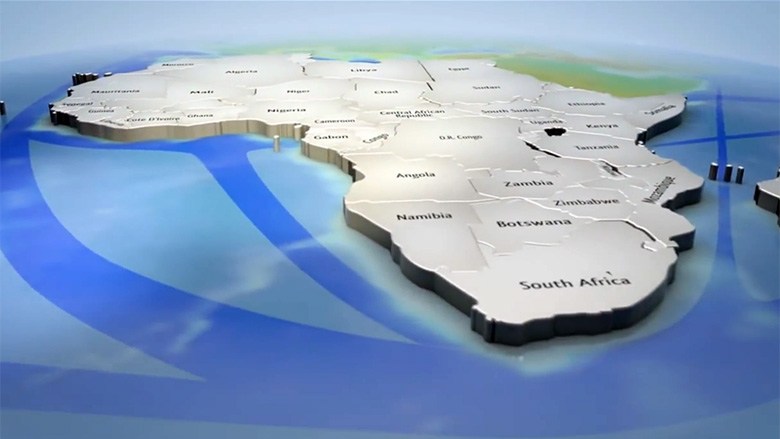
Dubai, UAE: The Dubai Chamber of Commerce and Industry has announced that it has invested AED 100 million to raise awareness of trade and investment opportunities in Africa, and promote Dubai as an attractive business hub for companies on the continent. Over the last five years, the Chamber has stepped up its efforts aimed at strengthening economic ties between Dubai and Africa by opening four representative offices on the continent and organising the Global Business Forum on Africa in Dubai. Other activities carried out by the Chamber in recent years include organising frequent trade missions to African countries, conducting specialised research and studies, and developing the Africa Gateway app to expand is members’ access to opportunities opening up in the fast-growing market. Hamad Buamim, President and CEO of Dubai Chamber, revealed that Dubai’s non-oil trade with Africa has grown to exceed AED 700 billion in the last five years, while 10,000 African companies have joined Dubai Chamber over the same period, bring the total number of African businesses registered with the Chamber to over 17,000. The Global Business Forum on Africa, organised by Dubai Chamber, is the largest event of its kind that is hosted outside of the continent, while it remains one of the most high-profile international forums dedicated to exploring investment opportunities in fast-growing African markets. This year’s forum, held under the theme “Next Generation Africa”, examined the role of young African entrepreneurs who are stimulating economic growth, and building relationships and partnerships with companies around the world. In addition, sessions focused on how technology and digitalisation are reshaping African economies and meeting the demand of a growing middle class.

Dubai, UAE – The Dubai Chamber of Commerce and Industry’s efforts in backing small and medium enterprises in Africa have led to further Gulf Cooperation Council (GCC) investment in the continent, concluded the Economist Intelligence Unit (EIU) report, “New Horizons: Next generation Africa-GCC business ties in a digital economy”. Sponsored by the Dubai Chamber and launched in preparation for the 4th Global Business Forum on Africa “Next Generation Africa”, the report investigates the prospects of building relationships between young entrepreneurs and investors in Africa and the GCC in order to determine the challenges to overcome, as well as the future opportunities to benefit from. The report reveals that the UAE and Saudi Arabia were the second ($11billion) and fifth ($3.8billion) largest investing countries, respectively, in Africa by capital investment in 2016, according to fDI Intelligence, a division of The Financial Times. This serves as a great indicator to the future of economic ties between the GCC and Africa. The study also explores the approach to entrepreneurship and investment, delving deeper into sectors of interest such as retail, financial services and renewable energy. Hamad Buamim, President and CEO of the Dubai Chamber of Commerce and Industry, noted that Africa and the GCC are witnessing this rise of a need breed of entrepreneurs who are addressing regional challenges and charting a new course to drive economic growth and development on the continent. “Dubai is well-positioned to serve as a gateway for African companies that are looking for growth opportunities and easy access to expand their footprint in the GCC, Asia, and Europe. Dubai Startup Hub, an initiative of Dubai Chamber, is an ideal platform to assist innovative startups and SMEs from Dubai and around the world, including African entrepreneurs who are keen to collaborate and explore new business prospects,” Buamim added. Moreover, the study indicates that there is room for growing business ties between the two regions; Africa has proven consistently resilient and aspirational with the younger generation catalysing an entrepreneurship revolution across the continent, expanding the demand for consumer goods, technology and services in the process. Young businesspeople in GCC countries, on the other hand, are continuously seeking investment opportunities beyond the Middle East. As GCC start-ups mature, entrepreneurs and investors are starting to see the value of business links and expansion to Sub-Saharan Africa. Additionally, young business leaders in the GCC and Sub-Saharan Africa both want flexibility and freedom in how they work; entrepreneurship is an increasingly attractive career for millennials. During a study of nine African countries, only two showed a dip below 25% in the number of youth engaged in some form of entrepreneurial activity. Even employed millennials exhibited an entrepreneurial streak and strived to do business differently, eschewing hierarchy, and favouring flexibility and empowerment. Furthermore, the report discovered that growing self-confidence boosts the potential for home-grown solutions and south-south collaboration. Young business leaders in Africa and the GCC no longer only look to the West for inspiration and brands to import. Increased access to the latest technologies enables them to develop products and services that meet the needs of the local and regional markets. On the same note, the study reveals significant room for growth for Africa-GCC business links. Africa remains, on the whole, the third phase of growth after the Middle East and Asia for GCC-based companies. Gulf private equity investment in Africa is likewise a niche activity, dominated by a handful of funds. However, awareness around the massive potential of an Africa-Gulf cooperation is on the rise, experts claim. As private capital from Europe and North America into Africa has consistently sought to exit the continent over the past decade, more opportunities open up for Gulf investors. Elsewhere, the report indicates that consumers are powering the growth of several sectors in Africa. With consumer spending forecast to reach $1.4 trillion annually by 2020, long-term consumption trends make Africa an enticing prospect for young business leaders. The continent’s emergent middle-class is the key driver behind interest in sectors such as retail (particularly, e-commerce), financial services, healthcare and education. Technology is now a primary gateway to get goods and services into new hands. The room for growth is vast: e-commerce accounted for just 1% of overall retail in South Africa last year. Financial technology (fintech) is another promising sector poised to boost the fortunes of the continent’s small businesses. Lastly, the report found that African entrepreneurs are turning to the GCC for more than just capital. While the region was largely viewed as a source of capital for African start-ups, Gulf investors and businesses have a lot more to offer by way of knowledge-sharing on operational and legal strategies. The Gulf is also increasingly becoming a destination for African products and services, particularly in the retail and food sectors. In conclusion, the report suggests that the shift in the economic landscape in Africa and the GCC reflects the evolution of the next generation of business leaders. The growth of the middle class has driven a demand for consumer-focused products and services in a diverse set of sectors including retail, food, finance, education, healthcare and energy. This creates a host of new opportunities for regional investors, particularly from the GCC.
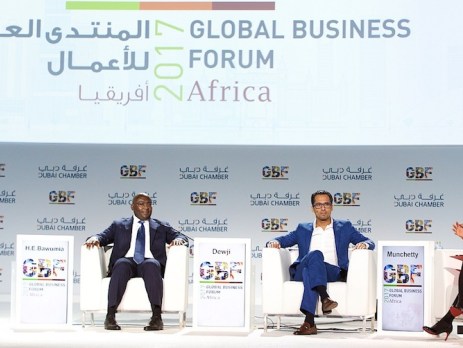
New generation of leaders driving Africa’s next phase of growth
folder_open Articles , Business Outlook
A new generation of leaders is driving Africa’s next phase of growth, says Ghanaian Vice President Dubai, UAE: A new generation of leaders is playing a key role in driving change and economic growth in Africa, H.E. Dr. Mahamudu Bawumia, Vice President of Ghana told delegates during the Global Business Forum on Africa 2017 in Dubai. The high-level forum, organised by the Dubai Chamber of Commerce and Industry, took place on November 1 and 2, 2017 at Dubai’s Madinat Jumeirah. The event was held under the patronage of H.H. Sheikh Mohammed bin Rashid Al Maktoum, Vice President and Prime Minister of the UAE and Ruler of Dubai. “There is a lot of room for growth in terms of industry in Africa. Only 11 per cent of the continent’s combined GDP comes from industry, which is quite low when compared with Asia or Latin America,” said H.E. Bawumia during a session entitled, “Industrialisation – The Path to Growth?”. Ghana’s Vice President stressed his view that developing Africa’s industrial sector is key to driving economic growth, while he lauded the progress that has been achieved so far. Mohamed Dewji, CEO of Tanzania’s METL Group, also participated in the session and highlighted Tanzania as a great example of an African country that has expanded its industrial sector over the last few decades, noting that the country today has 41 different industries. “The government paved the way by putting in place policies to incentivise manufacturers. These included imposing more tariffs on the import of finished goods than on raw material. This, among many other policies, helped industrialise the country over the years, ” said Dewji. METL Group’s CEO went on to identify some of the major challenges which African governments must address to ensure growth, including the need for more developed infrastructure to support the movements of goods, lack of access to high-quality power, corruption and regulatory restrictions, adding that Tanzania could potentially grow at 10% per year once these obstacles are removed. H.E. Bawumia provided an overview of projects and initiatives that are being implemented in Ghana with the aim of developing the country’s industrial sector. He revealed that the Ghana is shifting toward high-tech solutions such as the biometric IDs and digital addresses for the population, which will help facilitate commerce and trade. “We are moving to a paperless port to remove human interference and minimise corruption. We’ve also adopted a policy of only investing in renewables, which we think will spark a new wave of growth for industry in Ghana,” H.E. Bawumia continued. Ghana’s Vice President highlighted the need for Ghana to formalise its agriculture industry, a move that he says would unlock huge growth potential. He concluded the session by making his point that a stable macroeconomic environment is needed to encourage investors and manufacturers to invest and develop Africa’s industrial sector.
Preliminary request for participation in the trade show
place
calendar_today
Preliminary request for visitor registration
Visitor Registration
place
calendar_today