
Cryptocurrency: The Start of an African Economic Renaissance
folder_open Articles , Business Outlook
Cryptocurrencies and blockchain assets are the newest and potentially most promising new asset class. Cryptocurrencies are gradually being discovered in Africa. In countries like South Africa, Ghana, Kenya, Botswana, Zimbabwe and Nigeria, there is a semblance of digital currencies, primarily bitcoin, taking roots. Blockchain or DLT (Distributed Ledger Technology) can be seen as the solution for Africa’s current problems and future growth. Bitcoin, based on blockchain, could be the engine for African growth, and could fuel the continent's great leap forward. Cryptocurrencies are classified as a subset of digital currencies and are also classified as a subset of alternative currencies and virtual currencies. Bitcoin became the first decentralized cryptocurrency in 2009. Blockchain is another important concept that needs to be defined. As such, blockchain is a continuously growing list of records, called blocks, which are linked and secured using cryptography. Investment returns in cryptocurrencies in recent times have by far outperformed traditional assets such as global stocks and bonds. However, public opinion and investors’ minds on cryptocurrencies are divided and it often comes down to a philosophical and even emotional debate. This is also true about African policymakers and their official stance on cryptocurrency. High volatility and unexplained falls, risks of hacking attacks and ransom with the subsequent sensational media headlines are reasons why many investors still shy away from cryptocurrencies and merely think of it as “magical internet money.” The biggest fallacy many casual observers and some government officials have, is that they say they like blockchain, but they do not like cryptocurrencies like Bitcoin, Ether and Litecoin, etc. That argument is the same as people in 1994, before the introduction of the Internet web browser, arguing that they do not like the public censor-free Internet (it is not regulated and not “owned” by anybody etc.), but rather have a privately controlled intra-net. A private blockchain without a trustless and distributed consensus-based crypto-currency is nothing more than a shared database or intra-net. Proponents of cryptocurrencies are of the firm belief that blockchain could soon give rise to a new era of the Internet even more disruptive and transformative than the current one. Blockchain's ability to generate unprecedented opportunities to create and trade value in society via cryptocurrencies will lead to a generational shift in the Internet's evolution, from an Internet of Information to a new generation Internet of Value. Any government that embraces cryptocurrencies is going to benefit so much by owning the money that is native to the internet. In a similar fashion, in this case the Internet of money, one can see the disruption potential of cryptocurrencies. Just like the Internet took out Hollywood with Netflix, Spotify took out the music business, and Google and Facebook took out advertising and media businesses, cryptocurrencies will take out the finance industry as we know it. The Case for Cryptocurrencies in Africa There is high potential for Africans to leapfrog some of the existing financial services, in the same way that many Africans skipped the part of owning a cumbersome and expensive landline and went straight to owning a mobile phone. In the “old” or “traditional” system, traditional bankers in suits were the miners of the old generation, getting paid in the currency of the central bank run by un-elected officials. That system is also characterised by fiat currency being mined by the fractional reserve banking system, bank bail-outs and large costs to ordinary tax payers, amid the rise of populism. The new central bankers are the cryptographers. The new owners of the financial infrastructure are the holders of the cryptocurrency coins, which is or could be everybody. While cryptocurrency has been hailed for its potential in the financial sector of the developed world, one of its greatest applications has been virtually overlooked. In nations that lack dependable economic systems or governance, digital currency may offer hope. Access to finances, security and privacy of funds, and faith in a common medium of exchange, can aid many across the African continent. Several African countries have exchanges and start-ups in the crypto space, and their businesses are recognizing the significance of cryptocurrencies in fostering cross-border trade and payment. Moreover, the infrastructure for the take-off of digital tokens is solid. Telecommunication liberalisation across the continent has enabled Internet accessibility remarkably. Figures from GSMA indicate that half of Africa’s population is subscribed to mobile telephony. Also, the statistics indicate that for the past two years, smartphone usage in the continent has doubled to reach 226 million. The new finance industry will settle on where the innovation will be for smart contracts and cryptocurrencies. It is Silicon Valley’s replacement for the old infrastructure of finance and Africa’s chance to leapfrog the old system. It will position the economies of Africa for the future of finance. With Africa not having a strong legacy system in place, as is the case with the developed world, is suddenly a great advantage. Still, too many adult people in Africa do not have access to bank accounts. This wretched situation denies countless numbers of people financial freedom. Bureaucratic tenors and economic exclusion, amongst others, have paved the way for this situation. A recent study of 10 African nations with unusual inflationary ratios, indicated that South Sudan had a huge inflation rate of 295%. Egypt had the lowest rate with 12.30%. High inflation and weak African currencies allow Bitcoin and cryptocurrencies to offer African consumers a stable store of value and an inflation hedge. African nations have lagged in traditional banking, but the phenomenal success of Kenya’s Safaricom M-Pesa shows that this is and can be an advantage in the coming blockchain economy. Safaricom’s success has shown that Microsoft Founder Bill Gates’ adage of “Banking as a function is necessary, Banks are NOT”, holds very true. What Safaricom’s M-Pesa achieved on a country scale, cryptocurrency can achieve on a pan-African scale. Cryptocurrency remittance services in Africa have sprung up as an alternative to Western Union, and international organizations have employed blockchain technology to assist refugees. Still, it appears that many of the communities most desperate for this innovation have yet to embrace the monetary haven. Africa’s wide adoption of crypto-currency would further progress themove to the democratization of financial services. Kazakhstan became the second country in the world, after Japan, to recognize the need for the development of the cryptocurrency market system at governmental level. The development of the digital currency market, based on the Astana International Financial Centre, is the first step towards the creation of a fully-fledged ecosystem for the digital economy. Forward-looking governments in Africa should try to emulate the developments in Japan and Kazakhstan. Practices and Challenges of Cryptocurrency in Africa Large scale adoption in Africa, however, is still slow. Awareness, education and user experience are some reasons why the take-up is taking time. Switzerland and Singapore are both successful countries with strong currencies, and as such have nothing to lose by embracing fintech and cryptocurrency. Countries with high inflation and currency controls in place seem to be paranoid about the rise of cryptocurrency. However, similar to the Internet, it is difficult to ban and/or control. In recent times, the African market has seen the emergence of more than 10 Bitcoin exchanges seeking to provide cheap and efficient trading services to African consumers. Some exchanges have expanded their services and have established an office in Africa to serve the new market and observe the demand of Bitcoin in several African countries. In East Africa, local innovators have introduced cryptocurrency systems to support cross-border transactions, as exemplified by initiatives like BitPesa. In South Africa, cryptocurrencies are becoming particularly popular. In Nigeria, local traders and activists believe this new money presents an opportunity to democratize the economy. This is propelled by the fact that people in Nigeria have been failed by conventional money. The Central Bank of Nigeria, which oversees an inflation rate of 14%, making it the 6th highest inflation rate in the world, recently announced that they cannot stop Bitcoin. Their statement read: “Central bank cannot control or regulate bitcoin. Central bank cannot control or regulate blockchain. Just the same way no one is going to control or regulate the Internet. We don’t own it.” This is very sensible and the correct and forward-looking approach. While several exchanges offer conventional payment methods, such as bank transfers and account top-ups, a few platforms, like BTCGhana, provide local users and the underbanked population simpler methods of purchasing and selling Bitcoin. On the BTCGhana platform, users can make Bitcoin purchases through established exchange platforms and can, within minutes, send the payment to local remittance platforms, including TigoCash, Airtel Money and MTN Mobile Money. This service allows African users to pick up cash at local remittance outlets with ease, without having to deal with complex withdrawal and deposit methods The African market has seen the emergence of more than 10 Bitcoin exchanges seeking to provide cheap and efficient trading services to African consumers. Conclusion Africa has lots to offer Bitcoin and other cryptocurrencies, simply because Africa needs an alternative to the weak and not–always–available nor reliable local African fiat money. All products of cryptocurrencies will be well-embraced if promoted in Africa. The current vacuum for alternative means of payment in Africa is obvious. Cryptocurrency is not just a solution to the plight of the “unbanked.” Rather, it is a method for allowing economically or politically subjugated populations to control their own wealth. Non-fiat digital currency can bring millions of people into a secure and person-driven global economy. The intangible nature of digital currencies means that a government cannot physically remove the wealth of a citizen. This paradigm shift is a monumental step forward in the social contract, providing an additional layer of security to individuals. All populations, especially those that are disadvantaged, need a way to maintain access to their wealth from anywhere in the world. Imagine if a refugee could access a bank account even after being displaced from their home country. This could help maintain the refugee’s dignity and hopefully diminish the extreme poverty caused by this terrible upheaval. This is the unrealized potential of virtual currency. In a nation where political activists are jailed, or inflation runs rampant, a non-fiat virtual currency may offer an escape. Cryptocurrency is humanity’s greatest iteration on the aphorism that there is strength in numbers. For many, a virtual currency could become the next step in the social contract – a world that lives, breathes, and functions outside the boundaries of a government. For the first time, open minded early adopters can make a Silicon Valley venture capital style bet on the future of money and finance and the development of African economies Like any other investments, cryptocurrencies carry risks. However, not owning or embracing the native money of the Internet is even riskier. Cryptocurrency is a fast-evolving, complex phenomenon that in my view will have a major impact on power distribution in the global economy and on the African continent. The intangible nature of digital currencies means that a govern-ment cannot physically remove the wealth of a citizen. This para-digm shift is a monumental step forward in the social contract, providing an addi-tional layer of security to indivi-duals.
DP World to Build and Operate New Logistics Hub in Mali
folder_open Articles , Business Outlook , West Africa
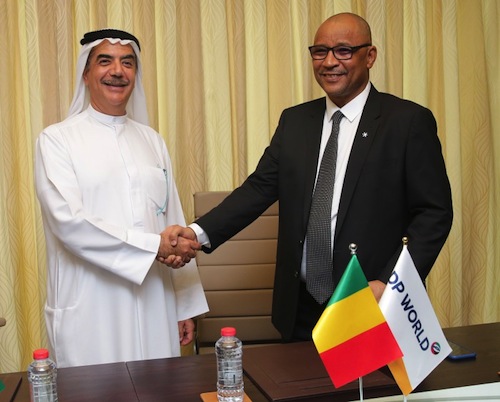
Mali Logistics Hub to fuel trade in west Africa with simplified procedures and paperless transactions Global trade enabler DP World has signed a 20-year concession with an automatic 20-year extension with the Republic of Mali to build and operate a 1000-hectare modern logistics hub outside of Bamako, the capital and largest city of Mali. The multimodal logistics platform, Mali Logistics Hub (MLH), will have inland container depots (ICD) and Container Freight Stations (CFS) that will facilitate the import and export of goods. The Mali Logistics Hub will be located on the main road corridor from Dakar, Senegal to Bamako and close to the Dakar - Bamako rail line and will be capable of handling 300,000 TEU (twenty-foot equivalent unit), 4 million tons of bulk and general cargo. The first phase of the project, with an estimated initial investment of $50 million, will support the growth of the Malian economy by streamlining the import and export of goods. Construction is expected to start in 2019 and is to take approximately 18 months to complete. DP World will also provide the Republic of Mali with three locomotive trains to boost cargo & passenger traffic along the Bamako-Dakar rail system. Furthermore, the Mali logistics hub will significantly reduce processing times for products entering the Malian market as part of efforts to reduce obstacles to trade and economic development. DP World will also implement its online paperless facilitation platform to accelerate the movement of goods as part of the agreement. The concession agreement was signed in Dubai on Monday by Suhail Al Banna, Chief executive Officer and Managing Director, DP World Middle East and Africa and Moulaye Ahmed Boubacar, Minister of Equipment and Transport, the Republic of Mali, in the attendance of Malian and DP World officials. DP World Chairman and CEO Sultan Ahmed Bin Sulayem, said: "The Malian market is expected to grow over the next two decades and is driven by a robust economic and population growth. Thus, the Mali Logistics Hub is much needed and will provide the country with a logistics platform that aims to facilitate the import and export of goods via the Port of Dakar, which is operated by DP World. "DP World's investment will significantly cut processing times for goods and thus facilitate trade. We are committed to enabling trade in the region and helping local businesses and people prosper, and look forward to working together." Republic of Mali Minister of Equipment and Transport Moulaye Ahmed Boubacar said: "We are excited to partner with DP World on this project. The Mali Logistics Hub will dramatically improve the cost and time of trade for Mali. The project will provide us with a first-class logistics facility comparable to global standards and will be the largest in terms of capacity". "We are confident that with DP World as a partner we will be able to meet the expectations of our people, traders and exporters to have access to more markets and to bring more efficiency and cost effectiveness to international trade. The project also gives the Republic of Mali the opportunity to be connected to global trade lanes, and to speed up access and transport in and out of the country."

Per capita, South Africa's private security industry is the fourth largest in the world and South Africans spend more than $4bn a year protecting themselves and their homes. However, despite the growth of the industry, and an increase in the number of active security officers between 2016 and 2017 (472,097 to 498,435) – not all categories of security are equal. The number of security providers in South Africa has increased from 8,830 in 2016 to 8,995 in 2017 – an addition of 165 new SPs. In terms of registered security businesses, however, there has been a marked decreased – moving down from 35,150 in 2016 to 31,470 in 2017. This decline of 3,680 registered businesses is across the board, with all but four business categories showing a drop. The only increases were seen in cash-in-transit guards, reaction services, alarm installers, and dog trainers. Massive potential for the security industry in Sub-Saharan Africa Sub-Saharan Africa is a huge potential market for the security industry. Many of the issues around the region are the result of years of conflict, disease and instability, caused by a lack of real society within modern state boundaries as the traditional social anchors of tribal nations have been almost destroyed by European colonial powers. Other factors, such as the legacy of conflict in countries like Angola, the rise of extreme terrorist organisations such as Boko Haram in Nigeria and Al Shabaab operating into Kenya from Somalia, political reform such as we have seen with the demise of apartheid in South Africa and the ongoing legacy caused by Robert Mugabe in Zimbabwe, have all added to the challenges to this part of the world. However, the opportunities on offer are not caused by “problems”. The wealth in Sub-Saharan Africa, primarily through natural resources gives it a unique position in many markets so Philip Ingram looks at its potential. The business case Some of the natural resources coming out of the region bring their own unique security problems, like diamond mining, rare earth metal extractions and, of course, oil. Looking at this part of the continent from a business perspective, the security sector in Africa is all set for an unprecdented boom. There was a time when UK exported more goods to Sub-Saharan Africa than to China and India combined. Seven of the world’s 10 fastest growing economies are predicted to be from Sub-Saharan Africa in the coming five years. Many African Governments are looking to diversify their economies away from commodity reliance. A rapidly growing African middle class with disposable income has created huge demand for consumer goods. Putting this together with the diversity of potential threats shows that the challenges for the security market are substantial. However, where challenges exist, so do opportunities for progressive, forward-thinking companies expanding into developing African markets. Nigeria Nigeria is an area with high-profile opportunity for growth. As Africa’s most populous nation and one of the continent’s largest economies, the country continues to gain a reputation as an emerging market for a range of industries. Nigeria has similar needs to those in South Africa from a private security company (PSC) perspective. The Department of International Politics at the University of Wales, Aberystwyth, examined the private security sector in Nigeria concluding that “Nigeria suffers from extreme inequality, rising crime, corrupt and abusive state security organisations, and conflict in the oil-rich Niger Delta. It is in this context that Nigeria’s private security industry has experienced rapid growth in recent years, becoming a major part of the Nigerian economy.” The law in Nigeria (The Private Guard Companies Act [1986]) requires that PSCs in Nigeria be registered, licensed and Nigerian-owned, and prohibits the use of firearms by PSCs. The reality is that many PSCs have an armed police component seconded to their operations. This has resulted in a degree of ‘privatisation’ of the public security forces. In the oil sector, the privatisation of public security is so extensive that it can be difficult to distinguish public policing from private security. Military forces are increasingly used to protect oil operations, and are maintained by oil companies. The reality of the law, however, is that there are no required standards of training, which varies widely across the sector as a result. Wages and working conditions are generally low and often exploitative, leading to a low level of commitment and service from guards. There is little monitoring, regulation or oversight of standards in the sector. A key exception is frequent inspections of international PSCs, but this is serves the purpose of intimidation and control rather than to uphold standards. The use of public security forces integrated into private security has the potential to undermine the concept of security for the public good. The willingness of public security forces to resort to force raises ethical issues for international companies. This becomes more of an issue with the difficult security situation in the Niger Delta. The Nigerian state’s reliance on PSCs may involve them in increasingly dangerous and complex political and ethical situations. But one thing is certain, a continued and expanding role for PSCs is likely to remain. Kenya Kenya is developing a reputation as an African leader in the emerging technology sector. The video surveillance market has benefited from the Kenyan technological boom with an increasing amount of video surveillance equipment being deployed. A major driver in Kenya is effort by the government to improve confidence in the country’s security reputation, which has suffered following incidents of terrorism and piracy in and around many of its resorts, especially close to its North East coast. Additionally, Kenya’s position in East Africa means it is a gateway to the smaller markets of Ethiopia, Tanzania and Mozambique. However, confidence in its security situation is essential before this can be fully exploited. Surveillance The video surveillance market in Africa is a prime example of a market where full potential has yet to be realised. Experts estimate that in 2018 the total African market for video surveillance equipment is forecast to be worth over $300 million, a small piece of the estimated $16 billion global market. However, as regulation increases globally the potential in Africa can only grow. The South African market was worth approximately $100 million in 2017 and is the largest and most mature market for video surveillance equipment within Africa, but its growth is forecast to slow. Nigeria has a growing video surveillance market through projects in the utilities industry and public sector city and highway monitoring. These have proved lucrative for some multinational vendors of video surveillance equipment, yet business in Nigeria is not without its challenges. Concerns over corruption, lack of payment and poor security distribution channels linger. Despite various ambitious government plans for video surveillance in different countries across the region, there is a common consensus that the market is still hugely underdeveloped. Cybersecurity Sub-Saharan Africa has a small but burgeoning cybersecurity market, which is set for dynamic growth over the next 5 years. In ABI Research’s Cybersecurity Strategies for Critical Infrastructure Market Research it is predicted that regional revenues will hit $120 million in 2018. The region is experiencing soaring Internet growth, boosted by tremendous mobile connectivity. This has outpaced any models experienced in the past by developed economies. The uniqueness of the market not only means that thousands of people will connect to the Internet for the first time in their lives, but also that they are extremely vulnerable online. As fledgling digital economies take off in Kenya, South Africa, and Nigeria, local cybercriminals have emerged and are organising themselves to take advantage of regional financial services including the emerging and highly popular mobile money industry. National support for cybersecurity across the region is poor and the market is primarily dependent on foreign security vendors to offer basic online protection. And yet, the potential to provide cybersecurity services is significant. Both public and private organisations in the region are demanding training, servicing, and consulting services in cybersecurity. Ebola Of course, the region is also affected by a unique security issue that needs to be resolved – Ebola. As outlined by former US President Obama when discussing Ebola, “This is an epidemic that is not just a threat to regional security. It’s a potential threat to global security, if these countries break down, if their economies break down, if people panic. That has profound effects on all of us, even if we are not directly contracting the disease.” Across all security vertical and horizontal markets, the African market offers lots of untapped potential for manufacturers and distributors of security equipment. The size of its individual country markets may be small at the moment, and the market itself can be described as being in its infancy, but establishing a presence in these regions early will be strategically important to take advantage of future growth. How to penerate the secuity market in Africa There are a few easy ways for dealers and manufacturers of secuiry hardware and equipment to make their presence felt in the markets of Africa. For traders of CCTC cameras, fire detectors, surveillance cameras, body scanners, secuity gates, electrical fencing, Africa is indeed a very lucrative market. Those dealing in products manufactured in the Far East (China, Korea, Thailand, Malaysia etc) will find a ready market for their products as Africa is by and large a very price-sensitive market. It is a well known fact that African customers prefer cheaply priced goods from the Far East rather than the expensive ones from Europe and America. You can promote your products and/or services in Africa through many mediums: The growing use and influence of the Internet can also be harnessed to promote your business in the African markets. By posting your business proposals on the Africa Business Classifieds. Post your message and wait for the results. Simple! You can also download the Africa Security Directory that lists almost all major security from in over 15 countreis in Africa and contact your potential business partners directly. The Africa Secuity Directory is now availbale as an instant download in Excel format and has proved to a useful tool in helping firms to establish direct B2B contacts with their business counterparts in Africa – even find agents and distributors for their products and services. Last, but not least, add your company to the Advertising Section of the Africa Business Pages. The Advertising Section will carry a full page editorial about your company as well as two pictures of your company's products. In addition to this, your company will also be provided with a direct link in the Business Links section. By promoting your company on the Africa Business Pages you can reap rich dividends. An absolute essential for those targetting the African market. Browse through some samples
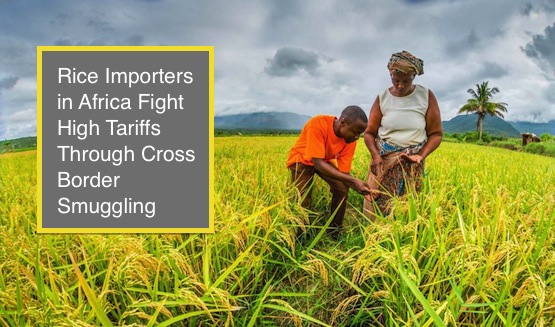
According to industry reports, Africa imported 17 million tonnes in the last five years. Many African rice importers import a significant amount of rice for local consumption and regional distribution. However, the relatively small country of Benin has emerged as one of the leading rice importers in Africa. At Nigeria’s border post of Seme, goods are often smuggled into Africa’s biggest economy from its smaller neighbor Benin. However, the Seme border post between Nigeria and Benin wears a deserted look these days. The slowdown in the movement of goods between Benin and Nigeria is a result of import restrictions and tighter border policing as President Muhammadu Buhari seeks to diversify the oil-dependent economy by boosting agriculture, especially rice production. Two years ago, Buhari set 2018 as a target to end Nigeria’s status as the world’s second-largest importer of the grain after China and become self-sufficient. He’s since overseen investments of almost $1 billion in farming and milling, virtually banned rice importers from buying foreign exchange, raised tariffs to as high as 60 percent and pushed the central bank to lend to farmers. Confident his administration is making progress, he told growers recently that “our policies are working.” Thai Rice Imports to Africa But the numbers tell a different story: they suggest smuggling is rife because local producers are unable to meet growing demand in the nation of 180 million people, where rice is favored over traditional staples such as yams and cassava by an increasingly urbanized population. Nigeria grew 3.7 million metric tons of rice in 2017, a 4 percent increase from a year earlier. At the same time, imports rose 19 percent to 2.5 million tons. Many imports are smuggled in from Benin, which despite a population of 11 million – barely 5 per cent of Nigeria’s population – is now the world’s biggest buyer of rice from Thailand, the number two exporter globally. Official shipments to Nigeria have plummeted by more than 95 percent in the past four years, while those to Benin have surged, according to the Thai Rice Exporters Association. Rice consignments are being smuggled to Nigeria from Benin through the many unofficial border crossings between the two countries. With its far lower tariffs and better-run ports, Benin has a long history of smuggling goods to Nigeria, from frozen chicken to tomatoes and cars. It is estimated that 90 percent of Benin’s rice is bound for its bigger neighbour. Smugglers offload Thai and Indian rice from the port of Cotonou and take most of it to Nigeria’s largest city, Lagos, which sits just across the Seme border in the south. Some even truck it as far as Niger, where they collude with customs officials before taking it to northern Nigerian cities such as Kano. “A text message comes saying: ‘Go!,”’ says George, local guide. “And they drive through. The border gates are open and the guards are looking in the other direction. The evidence is very clear that smuggling is continuing on a large scale. It’s a massive problem.” Once it enters Nigeria, traders often repackage and sell it as local rice. While the government touts the decline of official imports as evidence that Nigeria is producing more rice, smuggling fills the gap between demand and supply, according to Ade Afeko, a member of the nation’s main manufacturing body. “It seriously needs to be curbed,’’ Afeko said from Kano, which he says is “swamped’’ with foreign rice. While smuggling from Benin and Niger has increased, it’s still feasible to end rice imports this year, said Olukayode Oyeleye, a spokesman of the Ministry of Agriculture. George at Ecobank thinks the powerful smuggling industry will be difficult to curb. “There are so many vested interests in the smuggling of rice and there’s so much demand,” he said. The Rice Market in West Africa Nigeria isn’t the only country in West Africa that’s trying to be self-sufficient: Senegal and Ivory Coast have raised rice output, too. But Nigeria faces a tough task reviving its agricultural sector, which went into decline when oil was discovered in the 1950s. Farmers battle with a host of problems: poor-quality seeds, a dearth of financing to buy or borrow equipment such as tractors, bad roads and a lack of warehousing. Most farmers harvest their crop by hand on an average 0.4 hectares (1 acre) of land, which makes it difficult to achieve economies of scale, according to Dimieari Von Kemedi, managing director of Alluvial. Alluvial is buying crops in central and southeastern Nigeria with the aim of supplying half a million tons of rice a year to millers by 2020. It’s targeting yields of 4 tons per hectare, almost double what growers currently achieve, but still only half what efficient Asian farmers produce. “We need to get better yields,” said Von Kemedi. “If you don’t, it’s hard to make money. It’s why, despite the tariffs and currency restrictions, you can’t keep foreign rice at bay.” Other companies moving into large-scale rice farming include Dangote Group, controlled by Africa’s richest person, Aliko Dangote, Singapore-based Olam International Ltd. and TGI Group, a local conglomerate. Dangote Investments Enters Rice Market Dangote is investing almost $300 million this year to boost production and set up processing plants in the north, targeting a million tons annually by 2020. To achieve that, it needs to help farmers get access to cheap loans and good seeds, improve their irrigation systems and mechanize production, according to Robert Coleman, a former tobacco planter in Zimbabwe who oversees Dangote’s rice operations. “We see smuggling of rice through our borders as a real threat to local production and we are counting on the government to mitigate this threat,” said Coleman. Growers need to “transition from being subsistence farmers to successful small businessmen. Once you can achieve this, there will be an agricultural revolution.” Fanu, the customs agent at Seme, says the government is right to increase local production, but he isn’t convinced import restrictions are the way to go. “Almost everyone eats rice -- it’s the common man’s food,” he says. “The issue is whether we can grow enough at the moment.” The Route from Benin to Nigeria Benin importers list is very complex – as most rice importing companies in Africa also import other goods and hence it becomes very difficult for international exporters to identify their target audiences and potential buyers. Some of the leading rice importers in benin are Senaigroup SARL, Global Reseau, Hermann Haver Co. Limited and Maxworld. With a population of over 10 million people, Benin is one of the leading importers of all kinds of foodstuff in Africa. As local rice producers are not able to meet the rising demand for rice, importers of rice have been buying for overseas suppliers to meet the rising demand for rise amongst African consumers. Popular types of rice grown locally in Benin are Paddy rice, Brown rice, Semi/wholly milled rice and broken rice. However, broken rice with a percentage of 87% remains the most popular rice type consumed in Benin. There are plenty of non-basmati rice importers in Africa, especially in the Sub Saharan Africa. Even if importing rice is not the cheapest investment to make, it remains a profitable option for everyone. Companies make a profit based on such high demand. And Africans get the taxes and fees that they need to support their economy and industrial life. Companies pay significant taxes when they import rice in Africa and especially in such a high demand country like Benin. When it comes to importing rice, this is a process made in several ways. The percentages of imported rice are 20% bulk, 24% container and 56% break-bulk. These percentages vary across the continent, but almost everywhere, the break-bulk is the preferred one. Maize is seen as the central grain in Benin, but net imports of rice increased in the past years. In Benin, the rice mill is not so developed. And the paddy rice production is used to supply rice demand for bigger countries like Nigeria. These agricultural strategies leave little amount for locals. That is why; importing rice is the best choice in this state. The import of rice in Benin had a positive impact not only on the local economy but also on the general health of the urban population. While maize is easier to grow and harvest, not the same can be told about rice. Rice Importers in Africa Since rice became so demanded in many African countries, the authorities had to relax some of the norms. Companies can import rice now in an easier way and larger quantities. The bureaucracy has been reduced in the past years, and the entire import process became accessible to more producers worldwide. Because the rice market became so popular both for the Africans and importers. Africans get the rice they need for a healthy diet and companies sell large quantities of it which brings them more profit. It is a win-win situation, and it seems to become even more profitable as time goes by. To import rice in Africa, all companies need to do is follow some minimal regulations. Since rice is seen as a priority and a security food for countries like Benin, companies worldwide rush to explore this opportunity. There are even certain partnerships developed to stabilize the supply of rice for Africa in areas like Benin. Countries located in South Africa tend to be more prolific when it comes to growing their rice. But in Benin, growing enough to supply for the population remains a struggle. The partnerships made between Africans and different rice suppliers are sustained by farmers, authorities and the community. Continuo rice importers are trying to break into the African market and distribute their products for the long run. And this is the case for many Asian countries that are welcomed to bring this valuable grain to the continent. Business Opportunity in Benin Rice Farming With such a big demand for rice, Benin also considered new ways to grow their own. Even if for now, this is not a reliable option, they are trying to develop their domestic rice market. Even if West African countries such a Benin have enough land and water to cultivate rice as they do with other grains, the problem resides in the financial aspect. The main struggle is attracting long-term investors to support the farming industry of the country. Benin would need support when it comes to growing rice, storage and processing the goods after they are harvested. Even if rice is relatively cheap to grow, there is a long process from growing it to selling it and cooking it. And local African market can’t sustain this process, at least not in the long run. Benin’s population tends to prefer white rice, but they are cultivating other types because they have to export it to the neighbor countries. Such a strategy is not one that will allow Benin to develop their domestic rice market. However, if foreign investors would explore its land, this country would be much more profitable. Foreign companies can supply the rice demand in Benin, or they can invest in the country and develop farms to grow it. It is a long process that might take several years. And in all this time, Benin remains one of the largest rice importers in Africa. Investing in Benin’s farming system would be profitable for both foreign companies and locals. On the one hand, the companies would access cheaper working force to grow the rice and process it. And on the other hand, Benin’s local market would be able to have their rice production at a lower price. In time this could be a great source of rice for the neighbouring countries as well, and the advantages could continue! Many people would get jobs as well so the entire local economy would be blooming in just a matter of years. It is possible considering that half of Benin’s population lives in rural areas. Africa Business Pages Facilitates Rice Imports For those who are not sure how to start importing rice, Africa Business Pages has launched a special initiative called Business Matchmaking. Any importer can enjoy the services of Africa Business Pages new initiative which will facilitate the importing process significantly. By registering a free account on Africa Business Pages, importers are provided advantages such as a personalized import plan based on their needs. Our internal business matchmaking system also helps importers to get qualified quotation from suppliers of rice from all across the world. as well as add the right insurance to their goods. This helps importers of rice in Africa to help verify the goods, plan the best shipment process and also provide the right import documents. Importers of rice in Africa also use the Africa Business Pages to contact the most trusted suppliers of rice from all across the world – thereby providing a perfect bridge between the global and African markets. The internal systems of Africa Business Pages in every registered user's dashboard can be used for any kinds of imports when it comes to food, automobile spare parts, electronics, tyres etc. About Benin: Benin officially named the Republic of Benin is a country situated in West Africa. Benin is a neighbor with Niger, Burkina Faso, Togo, and Nigeria. The country has a population of 10,448,647 from which half live in the urban area. It is a very well developed area of Africa with a wide economy. And rice is one of the most commercial foods that can be found in Benin.
Top 10 Imports of Africa
folder_open Articles
Africa has emerged as an attractive market for export-oriented companies and manufacturers across the world as demand for consumer and capital goods in Africa has been growing at a steady pace in the last few years. The emergence of an affluent middle-class with disposable incomes in many African companies has contributed largely in the increased trade to Africa. If you are targeting the African buyers in new and emerging African markets, here is a list of 10 major African imports based on current Africa import and export statistics: Automobiles The automobile industry provides innumerable lucrative opportunities in this rapidly growing continent. The high rate of economic growth and urbanization has led to a subsequent rise in income levels. This implies that more and more people are now able to purchase vehicles both for personal and commercial purposes as they move from low income status and into the upwardly mobile middle class. However, the continent boasts very little output in terms of automobile manufacture. Additionally, the major import firms in Africa focus their business on high-end buyers who are in a position to afford expensive, brand new vehicle models. This leaves a gap in the market for inexpensive used vehicles for the bigger percentage of buyers. For a long time, Japan and Korea dominated this niché market but in more recent years, the US and China are also making inroads to grab a piece of the pie. The market is still ripe and opportunities are endless considering the fact that the percentage of vehicle ownership is still very low in most African markets. Computers and other IT Products Another vastly unexploited export opportunity to Africa is in the sale of IT products. This has largely been the result of an ongoing computerization trend that has taken a hold throughout the continent. Even though there a few manufacturers of IT equipment in Africa, they have been unable to keep up with the level of demand in the market and as a result most traders are forced to import. Africa has one of the highest rates of growth in the market for IT products worldwide. As a result, multi-national manufacturers have concentrated their efforts on the market, producing in great quantities items specifically targeting the African market. South Africa’s computer market for instance is valued at more than $1 billion. One of the factors behind the growth in the sector is the fact that many organizations are changing from the traditional desktops to the more personal and portable laptops and ultra-books. Furthermore, the rapid pace at which innovations are being introduced to the sector and the inversely proportional price reductions have also boosted demand. The UAE has the lion’s share of this market thanks to its strategic position relative to the African continent that implies low transportation costs. Furthermore, the regulatory requirements governing the trade over both countries have served to favour the cycles of demand and supply. There is very high competition in the IT business in this region and as a result, the prices are rated among the cheapest globally. Automobile Spare Parts Most of the African buyers are buying substantial quantities of automotive batteries, tyres, spare parts, ball bearings, water pumps and a host of automobile spare parts from overseas markets for selling them at a profit in their own countries. In addition to automobile spare parts, a major import to many African countries in recent years has been tyres, batteries and lubricants. Clothing and Fashion Accessories The fashion and textile industry provides another booming opportunity for export to Africa. New imported clothes have gained popularity as a status symbol and are a reserve of the continent’s wealth. In a bid to keep up with the ever evolving trends in the fashion world they do not spare a dime in purchasing the most exclusive labels from the world’s top fashion hotspots. Countries like China provide cheaper options of clothing for the general populace by taking advantage of its high levels of industrialization as well as the availability of cheap labor in the production process. Secondhand clothes are also in great demand in Africa amongst the low-income earners. The United States is the largest used clothing exporter globally selling almost $700 million annually – a large portion of which is exported to Africa. However, the used clothing business has encountered its share of challenges with some African countries planning to ban the importation of used clothes. Pharmaceuticals The world is ever in search of more affordable drugs and Africa is no exception to this rule. Healthcare is a big concern with a majority of Africans who are unable to afford expensive medical care. Moreover, there is a huge gap in the demand and supply chain as African does not have any major bulk manufacturers of pharmaceuticals. Pharmaceutical products constitute a big bulk of Indian exports to Africa. This is largely due to the fact that India has emerged as one of the world’s biggest manufacturing hubs for generic drugs India's pharmaceuticals trade with Africa is worth over $17 billion annually. Mobile Phones The African mobile revolution has taken the world by storm with the continent having the second biggest market for mobile devices after China. Africa has more mobile device users than land lines. By 2020, the number of devices in use in the African continent is projected to reach about 1.8 billion. Subsequently, the sale of mobile phones has been on a consistent rise every year with the figures soaring to unimaginable levels as manufacturers consistently introduce improved models into the market. Considering that the current use of mobile phones mostly centers on making calls and sending short messages, the figures are expected to continue rising as the cost of using the internet becomes lower in most African countries. For the past five years, the annual rate at which the number of mobile users increases has been about 65%. This makes Africa the ideal market for international traders looking to secure viable export opportunities in Africa. Nigeria is once again the continent’s leader in the mobile handset market followed closely by South Africa. However, even in less developed war-torn countries like Somalia the mobile telecoms industry continues to thrive. Mobile money platforms have particularly made a significant contribution to this growth by offering most of the services that were previously the reserve of banking institutions. The huge unbanked population in the continent now enjoys these features from the convenience of their mobile handsets. There is still so much potential for growth in this market creating an ideal investment opportunity for exporters. Stationery Enterprising traders have found a large market for stationery items in Africa. This rise in demand has been a result of the increased number of academic institutions and the importance African attach to education. Since there is a shortage in the manufacturing capabilities for these products, the demand for stationery in Africa is being met by overseas companies. Dubai has come to the fore as one of the most reliable suppliers in this sector giving competitive prices and a suitable environment for import export trade. Foodstuff While Africa was once a major exporter of agricultural products to other countries, there are a number of factors that have created a turn of events and it now accounts for a huge market share of the food importation market. These include the ever-expanding population, poor infrastructure, mismanagement of local agricultural industries, and the emergence of the middle class. While this may spell doom for its population, it is the best news an international trader would want to hear. With the middle-class expected to continue growing, the African food import market is bound to continue to grow for a while since there is a shortage on laborers to work in the agricultural sector. As always, Nigeria and South Africa take the lead in the region’s top importers and together with Angola, they account for almost half of all the imports made into the continent. Electronics The African market has not yet been able to achieve self-sustenance in the electronics sector and relies on external players in the industry to fill its growing need for home appliances and electronics. Electronic products from Asia have gained increasing popularity in the African markets thanks to their well-equipped production and assembly facilities as well as competitive pricing. Unlike European and American manufacturers, Asian manufacturers have easy access to electronic components and hence are able to provide cheaper prices. Machinery & Engineering Products Africa lacks the strong and diversified base that is necessary for the production of most engineering products. These refer to all materials needed for the manufacturing of other products. They form the base for such strong manufacturing countries as China and India and have turned these into the biggest exporters of the products into Africa. This is another important product on the list of items that can be imported into Nigeria by virtue of the dynamic nature and rapid rate of urbanization of the country. It has therefore worked out favorable bilateral trade agreements with these major manufacturers in order to maximize the opportunities for trade. Chemicals The demand for chemicals in the African market has exceeded its supply capabilities by far. The current rate of industrial growth and the general demand for products by its growing population necessitates the importation of these products. The agricultural sector is one of the areas of the African economy that has created a great need for the products. There is a growing trend in the use of modern agricultural methods that utilize organic chemicals to a greater degree than ever before. The cosmetics industry is also growing rapidly and there is increased need for raw material to manufacture soap, colognes, make up and various toiletries. How to Penetrate the African Market Reaching the right African buyers is a challenge for most international companies. The dearth of information and the unorganised nature of business in many African countries is indeed a challenge for those wanting to export to Africa. Buy the African Importers Database Africa Business Pages, the leading B2B portal connecting African buyers to international suppliers since 1996, has compiled a database of African companies. The database of African importers has helped many international companies identify potential business partners in new and emerging markets in Africa. Available for download from Africa Business Pages, the database of African companies lists importers in Africa and is available for download in excel format at https://importers.africa-business.com. Featured Listing on Africa Business Pages Many international companies have been able to find buyers in the African markets by listing their companies in dedicated African B2B portals like the Africa Business Pages. By listing your company under the relevant trade sector, many global suppliers have been able to generate useful sales leads from African importers. Advertise in Africa - Print & Digital Marketing in Africa Advertising has always been the preferred medium for reputed manufacturers, traders and suppliers to reach their target audiences around the world. By advertising in print magazines like Africa Business Pages you can get your company noticed amongst African buyers and importers. Digital marketing plans offered by Africa Business Pages have also been producing good results for advertisers. The digital marketing plan includes Email marketing to African buyers, banner advertising, content marketing, lead generation, business matchmaking as well as social media advertising.

African Business Email List | Africa Business List | Africa Business Database | Now available for download
folder_open Articles
Email marketing to reach African customer and African buyers is gaining popularity as more and more businesses look to expand in the African markets. However, there are very few reliable and authentic database providers that are able to provide accurate and authentic email marketing database for Africa. B2b marketing lists for Africa are mostly not as good as they claim to be. It is therefore a challenge for exporters across the world to find high-quality, authentic and authenticated email marketing lists for Africa. B2B marketing lists are easily available for most countries but not for most African countries. Reealising this, the Africa Business Pages, one of the leading B2B portals dedicated to African businesses, has released new email database of companies in Africa that it has collected since its inception in 1996. As one of the specialised B2B portal dedicated entirely to the African market, the email marketing database of Africa sold by the Africa Business Pages has helped many exporters, manufacturers, traders, service providers and merchants connect with their business counterparts in the African markets. The Africa Business Pages has now gone a step further and compiled all this useful data into well-organised Excel sheets that are easy to update and easy to distribute. Customers and now easily download the email lists database for Africa directly from the African Business Pages portal. This has come as welcome news by those businesses that were looking to export to Africa. By having access to authentic email database of companies in Africa, international businesses can now connect with importers in Africa, appoint agents in Africa and send their brochures and proposals to potential business partners in Africa. Email Marketing Database of Importers in Africa The Africa Business Pages has made available email marketing database of companies in Africa for the following countries: Algeria B2B Database - Complete email database with Company Name etc. Angola Importers Database - Email marketing database listing with emails etc. Benin Business Database - Authentic email database for Benin. Botswana B2B Email Database - Verified and registered email marketing list. Burundi Business Database - Full B2B email database for B2B email marketing. Burkina Faso Importers Database - Email marketing in Africa made easy. Cameroon B2B Email Database - Perfect email marketing list for email marketing. Cape Verde Email Database - Comprehensive B2B email marketing list for Africa. Chad B2B Email Database - For those looking for African email marketing database. Congo B2B Database - Email marketing list and database of importers in Africa. Djibouti Business Database - Database of companies in Africa for exporters. Egypt B2B Database - Export to Africa using this email marketing list for Africa. Ethiopia B2B Email Database - Email marketing list to reach importers in Africa. Gabon Business Email Database - The perfect way to launch your email marketing campaign. Ghana B2B Email Database - Useful B2B email marketing list and email database. Kenya Business Email Database - Business listings of companies in Africa in this database. Libya Business Database - List of importers in Africa with email addresses. Madagascar Email Marketing Database - Buy this authentic email database of importers in Africa. Malawi B2B Email Database - Buy this email database of importers in Africa. Mali Business Database - Contact list of companies in Africa for email marketing. Mauritania Email Marketing Database - Email database of companies in Africa for exporters. Mauritius Email Listings - African companies database for email marketing. Morocco B2B Email Database - B2B email database. Perfect for email marketing. Mozambique Email Database - List of companies in Africa with email addresses. Namibia Importers Database - Email marketing list of companies in Africa. Nigeria B2B Email Database - Business listings of importers in Africa. Rwanda B2B Email Database - Database of email addresses for email marketing. Senegal B2B Email Database - Buy email marketing lists to reach importers in Africa. South Africa B2B Email Database - Email database plus database of companies. Sudan B2B Email Database - Buy email database of companies in Africa. Somalia B2B Email Database - Database of companies in Somalia. Email database. Tanzania Email List - Tanzania business database for email marketing list. Uganda B2B Email Database - Email marketing list of importers in Uganda, Africa. Zambia B2B Email Database - Buy database of importers in Zambia, Africa. Zimbabwe B2B Email Database - Companies database of importers in Zimababwe. Each database is reasonably priced starting as low as $150. You can also buy the B2B email database of importers in Africa in bundles at discounted prices. Available for instant download at: https://importers.africa-business.com

John Deere will lease up to 300 tractors to about 100,000 farmers in the Niger Delta region of Nigeria The global tractor maker John Deere has partnered with Alluvial, a Nigerian company which works with smallholder farmers, a move that aims to turn agriculture into a more successful commercial business Under the terms of the agreement, John Deere will lease up to 300 tractors to about 100,000 farmers in the Niger Delta region of Nigeria through Alluvial. John Deere will supply the tractor through the distributor Tata Group. Commenting on the deal, Dimieari Von Kemedi, founder of Alluvial, said that farmers could produce more than US$300mn worth of rice a year. The deal aims to provide the Nigerian smallholder farmers with a greater access to advanced mechanisation options to produce more quality yields and explore new business opportunities. A number of smallholder farmers in Nigeria struggle to purchase tractors for agri-production. With the new deal, the farmers will be able to have tractors form their use. In addition, it is also expected to create employment in the Niger Delta region. This is in line with the Buhari government’s ambitious aim to boost up agricultural production in the region, which, in turn, will improve the standard of life of many smallholder farmers, thus improving the socio-economic situation in the African nation. John Deere is an American corporation that manufactures agricultural, construction, and forestry machinery, diesel engines, drivetrains (axles, transmissions, gearboxes) used in heavy equipment and lawn care equipment.

Africa's internet problems: Google releases new search app for slow Internet connections
folder_open Articles
Google has released a new search app called Go in 26 African countries that would allow users to search the web faster, even with slow Internet connections. It will partner with pan-African wireless carriers such as MTN Group Ltd. and Vodacom Group Ltd. to preload the app on some of their low-end devices. The internet giant has also adapted the voice function to work better on slow connections, even as basic as 2G networks, according to Google Africa Chief Marketing Officer Mzamo Masito. “Weak data connectivity, high data costs and low storage space often make it hard for people to get the most out of the internet,” he told reporters on Thursday. “Google Go is built to handle these challenges.” U.S. tech giants see Africa as a relatively untapped market for smartphones and services such as web search and social media. Over the last few months, Google has been releasing lightweight operating “Go” systems of its popular apps for less capable phones including Gmail and Google Assistant. Last year, it launched YouTube Go in Nigeria, an “offline first” version of the video sharing platform, allowing users to preview and download videos, rather than stream, and essentially save on data costs. The app’s release is part of a recognition of how high data costs, inadequate digital infrastructure, geographical locations, and scarcity of content in local languages keep many Africans offline. By 2020, there will be 535 million unique mobile subscribers in sub-Saharan Africa, up from 420 million in 2016, according to the GSM Association – a subscriber base that is growing faster than any other region globally. Internet bandwidth capacity is also growing fast while mobile broadband connections are set to reach half a billion by 2020, becoming the driving force behind innovation, financial inclusion, and access to services ranging from solar power to education, and insurance. Younger consumers in sub-Saharan Africa are increasingly demanding quicker internet speeds and cheaper phones to go about their business, while MTN and Vodacom see the digital space as their fastest-growing market. The new app will be available in 26 countries in sub-Saharan Africa and will be pre-installed on all Android Oreo devices. The company also plans to make it available in other emerging markets, including India, Brazil and Indonesia.

Senior Government and Business Leaders from Africa and North America will gather in Toronto from the 5th – 8th July 2018 for The Commonwealth Africa Forum Toronto 2018 with the theme: Africa – Open for Business. Past Speakers at CAFI EVENTS have included: HRH Prince Andrew The Duke of York, Gen. Yakubu Gowon (Former Nigerian Head of State); Rt Hon Baleka Mbete (Speaker of the Parliament of South Africa), Chief Olusegun Obasanjo (Former President of Nigeria), H.E John Dramani Mahama (Former President of Ghana), Amina J Mohammed (UN Deputy Secretary General) represented by H.E Bience Gawanas (UN Under Secretary for Africa), H.E Mrs Toyin Saraki (Wife of the Senate President of Nigeria), Dr. Hassan Ahmed Hilal (Minister of Environment Sudan), Chief Mrs Folorunso Alakija (Vice Chair – Famfa Oil and Richest Black Woman), and more. The Commonwealth Africa Forum is a premier event for those curious and excited about Africa. It is an excellent opportunity to learn about the challenges and opportunities on the continent. The Canadian edition of The Africa Forum is conceived as a high level thematic business-related event with the vision that Canada and Africa must move beyond donor/recipient relationship towards long-term cooperation based on principles of ownership, partnership and solidarity. “Africa is a continent of paradox. It has buckets of possibility and investment opportunity, and it is well on the path to achieving that full potential however if still faces a multitude of challenges”, says Adonis Abboud, Member of the Board of Governors of the Commonwealth Africa Initiative. Convening over 250 delegates and a number of high profile speakers, the Canada Forum will offer unrivalled insight into business on the continent from the boldest innovators and decision makers in Africa. A gala dinner will close the Forum which will focus on Doing Business in Africa, with the theme: Africa, Open for Business. Three of the five fastest growing economies in the world are in Africa. Africa has 300+ tech hubs in 93 cities across 42 countries. Increased internet penetration, mass urbanization and growth in smartphone adoption, combined with rapid population growth, and has made Africa extremely attractive to investors. Africa is the continent of the future Africa is home to the world's youngest population. In 20 years, the number of sub-Saharan Africans reaching working age (15-64) will exceed that of the rest of the world combined. By 2040, less than 25 years from now, half of the world’s youth will be African or of African descent. “It is in light of this that the Forum will feature a High Level Youth Dialogue with participation from Young leaders from across Africa and North America. Conversations at the Youth Forum will consider how Diaspora and African Youths can collaborate to help Africa fulfil the aspirations of the AU Agenda 2063 and the SDGs” says Napoleon Jay, Co-Chair of the Local Organising Committee. The Forum will bring together African and North American business leaders representing multi-nationals, large corporations, small and medium-scale enterprises and confederations, civil society representatives and multilateral and regional institutions to discuss how to improve the business and investment climate between Africa, Canada and North America at large. TAF Canada will also be an opportunity to showcase that Canada is also open for business and investment and the forum will showcase Canadian opportunities to African investors. In the words of Prime Minister Trudeau at the World Economic Forum “We have a diverse and creative population, outstanding education and health care systems, and advanced infrastructure, we have social stability, financial stability and a government willing to invest in the future”. Come listen to distinguished speakers who are helping to shape the future and trajectory of the abundant continent called AFRICA. The event is organised by the Commonwealth Africa Initiative (CAFI) in association with Common Cause Africa Canada, YTI Canada, APO Group, Piety Inc, Pan African Diplomacy Center and other organisations.
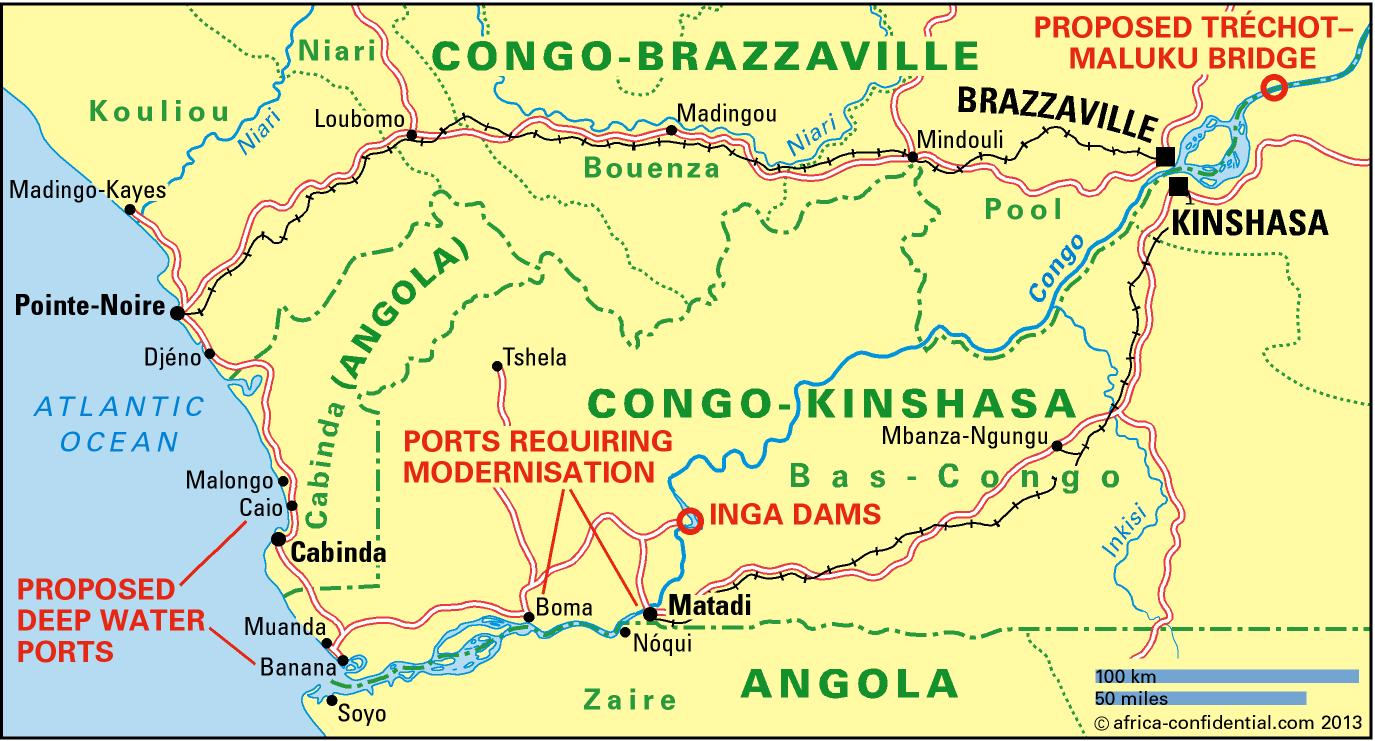
DP World expands African footprint with new port in Democratic Republic of Congo
folder_open Articles , West Africa
DP World wins a 30-year concession to develop the first deep-sea port in the Democratic Republic of Congo at Banana DP World's investment in the Port of Banana will have a major impact on the the Democratic Republic of Congo's trade and will significant reduce transportation costs and time, says Sultan Ahmed Bin Sulayem, Group Chairman and CEO, DP World. Currently, there is only the riverine port of Matadi positioned along the 37 kilometre coastline. DP World will set up a joint venture holding 70 per cent control while the government of DRC will hold a 30 per cent share to manage and invest in the port. The first phase of the $350 million greenfield project will include a 600-metre quay and 25-hectare yard extension with a container capacity of 350,000 TEU (twenty-foot equivalent units) and 1.5 million tons for general cargo. Construction is expected to start later in 2018 and is expected to take approximately tow years to complete. The investment will be spread over two years, but the total project cost of more than $1 billion over four phases will be dependent on market demand for the port, industrial and logistics zone infrastructure. The development gives the Democratic Republic of the Congo the opportunity to be connected into global trade routes and to reduce its dependency on the neighbouring countries’ ports. Sultan Ahmed Bin Sulayem, Group Chairman and CEO, DP World, said, “We are delighted to extend our African footprint further with a major investment in the Democratic Republic of the Congo, which is Africa’s third-most populous country but has no direct deep-sea port. Investment in this deep-water port will have a major impact on the country’s trade with significant cost and time savings, attracting more direct calls from larger vessels from Asia and Europe, and ultimately acting as a catalyst for the growth of the country and the region’s economy. Banana is a small seaport in the Bas-Congo province of the Democratic Republic of the Congo on the Atlantic coast. The port is situated in Banana Creek, an inlet about 1km wide on the north bank of the Congo River's mouth, separated from the ocean by a spit of land 3km long and 100 to 400m wide. The port is located on the creek side of the spit, which shelters it from the ocean. It is about 8km south-east of Muanda to which it is connected by a paved road running along the coast. “DP World has become a major player in Africa and the Port of Banana will contribute to our global network and continued growth in the developing markets. We are confident that this investment will deliver attractive returns to shareholders over the longer-term and we look forward to bringing DP World’s world class productivity-enhancing, security, safety and environmental best practices in container terminal development and operation to the Democratic Republic of the Congo.” Jose Makila Sumanda, Vice Prime Minister and Minister of Transport and Communications, Democratic Republic of the Congo, said, “We are excited to partner with DP World on this landmark project. The Port of Banana will offer the first deep-water port to the Democratic Republic of the Congo that will dramatically improve the cost and time of trade as the majority of the cargo is still handled by neighbouring countries. “The project will provide us with a first-class marine facility comparable to other African countries in terms of capacity, draft and ability to handle the latest generation of vessels.” “The country was waiting for this strategic and structural project for a long time. We are confident that with DP World as a partner, we will be able to meet the expectations of our people, traders and exporters to have access to more markets and to bring more efficiency and cost effectiveness to international trade.”
Preliminary request for participation in the trade show
place
calendar_today
Preliminary request for visitor registration
Visitor Registration
place
calendar_today