
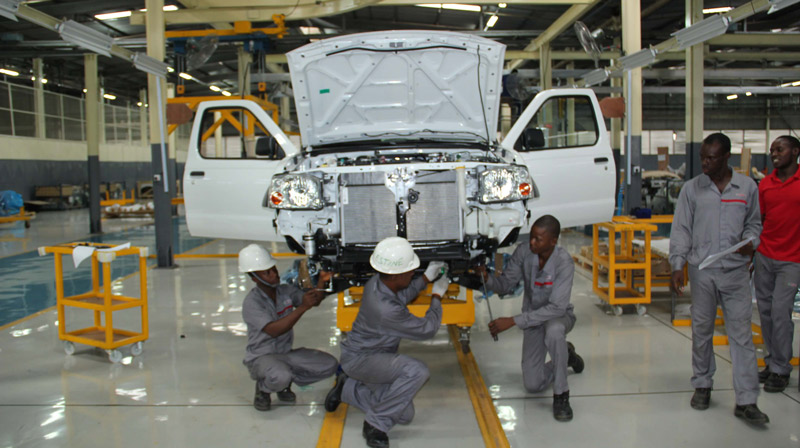
With the imminent ablishment of trade barriers under the African Continental Free Trade Area (AfCFTA), Ghana is poised to overtake Nigeria by becoming a gateway to the rest of West Africa, and a market leader in new car sales. The government of Ghana is also offering 10-year tax breaks to the automotive manufacturing industry in a bid to make Ghana the regional hub for car assembly and boost car sales in the local and regional markets. And a lot of international car makers are considering Ghana government’s invitation very seriously. Toyota, for instance, is aiming to collect 30% of the corporation’s total annual revenue, currently at $60b illion, from Africa in coming 20 years. Industry experts forecast that Africa will account for one-third of the world’s population by 2050, up from 17% now. Africa currently accounts for less than 1% of global annual new car sales. However, Toyota and other manufacturers will find it tough to immediately find a large consumer base in Ghana given the dominance of the used vehicle market. On the other hand, industry experts predict that new vehicle registrations in Ghana are expected to expand at an average annual rate of just 1.5% from 2019-28. On the other hand, retail and consumer spending is expected to grow in Ghana, which is benefiting from two decades of stable democratic government, making Ghana one of the fastest growing economies in the world in 2019, and a pro-business regime proactively attracting foreign investment. Kumasi, the capital of the Ashanti region, has long been a base for the automotive trade, serving the markets of landlocked neighbouring countries to the north as well as an access point for the important markets of Mali and Burkina Faso. Given the promise in the market, it is not just international giants that are looking to gain a foothold. Local electric car manufacturer Kantanka is hoping to capitalise on changing consumer patterns amid growing international concern over carbon emissions. CEO Kwadwo Safo Jnr has said the firm will build electric cars that can travel between Accra and Kumasi without recharging. The business has already received orders from the trade and agricultural ministries. With moves to encourage electric vehicles in Europe and North America, and sales in China growing to 1.4 million in 2019, the market could develop in tandem with a demand for traditional vehicles.
Google Shopping In Nigeria
folder_open Media , West Africa
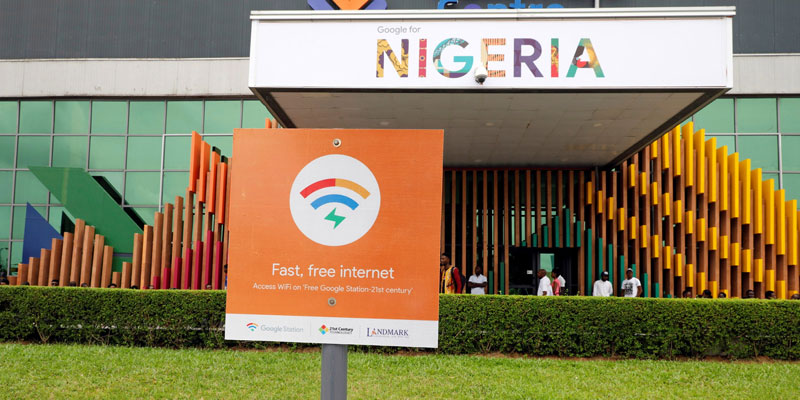
Google will launch Shopping Ads in Nigeria to make it easier and faster for shoppers to find and purchase products online, while also improving their transaction experiences. “We are excited to be launching Shopping ads in Nigeria. Shopping ads include photos and prices to help consumers find the products they are looking for and enable advertisers to reach consumers who are looking to buy,” reads a statement by the Industry Manager, Google West Africa, Adim Isiakpona. Google claims that through Shopping ads, online shoppers will be given a range of product alternatives to choose from and also an opportunity to make informed decisions. Additionally, shoppers will not just see text ads as they search for products, they will also see photos of the product, price, the title and store name, reviews, and more. Google Shopping ads, now available in 94 countries, enables merchants to work with Comparison Shopping Services (CSS) – a website that gathers product offers from online retailers and sends users to the retailers’ websites to make a purchase – to advertise their products. On Google Shopping ads, Google stated that support is made available for advertisers to list their products in multiple languages, while for those who sell and ship products to multiple countries, their product prices will be automatically displayed in the local currency. To create a Google Shopping ad, you’ll need to send Google your product data through the Merchant Center and then create a campaign in Google Ads. This campaign will be used to create ads on Google and around the web where potential customers can see the products you are selling. Google Shopping ads will use your existing Merchant Center product data, not the keywords, to decide how and where to show your ads. It will use the data of the product you submitted when signing up to the Merchant Center to match a user’s search to your ads, making sure it shows the most relevant products. With the impact of smartphone penetration on online commerce in Nigeria, social media/tech platforms are continually looking for more preferable solutions to dominate the mobile market. Africa Business Pages: Promoting Trade To And From Africa Africa Business Pages, the leading B2B portal, has also introduced a dedicated Online Store which showcases products offered by its advertisers. This enables African buyers to reach out to suppliers and wholesalers and request for a free quotation. The Online Store at Africa Business Pages promotes wholesale trade to Africa and enables African buyers to search for compare prices of various products before making a purchase.

Nigeria Uses Drones For Delivery
folder_open West Africa
Nigerian-based medical logistics startup, LifeBank will be adding drone delivery to its methods of transportation. The company is the first African-led company to implement Beyond Visual Line Of Sight (BVLOS) flights for healthcare logistics. Unlike Visual Line Of Sight (VLOS) flights where the pilot has to see their unmanned aerial vehicles (UAVs) or drones at every time, for BVLOS, drones can go beyond the sight of the pilot without human interference. This means more reach into remote and previously inaccessible areas. The service will deliver packages up to five pounds in 30 minutes or less using small drones. The drones will be built with multiple redundancies, as well as sophisticated “sense and avoid” technology although the look and characteristics of the drones will continue to evolve over time. San Francisco-based drone manufacturer and logistics company, Zipline had earlier launched a similar programme in Ghana and Rwanda for delivery of medical services. According to LifeBank, the first drone flight was supported by the Ethiopian Government’s Information Network Security Agency (INSA) and The Drones Doing Good Alliance (DDG). LifeBank will work closely with regulators and industry to design an air traffic management system that will recognise who is flying what drone, where they are flying, and whether they are adhering to operating requirements. LifeBank was the biggest winner among 10 African startups that won a total of $1 million at the grand finale of first Africa Netpreneur Prize Initiative (ANPI) in Accra recently. Other African countries and industries are set to follow as drone technology becomes popular in Africa. Drones can play a useful role in reaching remote areas in the African continent.

Kenyan food manufacturer Ariel Foods expands in West Africa
folder_open Foodstuff & Beverages , West Africa
Ariel Foods, a renowned Kenyan therapeutic foods manufacturer famous for its food supplements for malnourished people worldwide is expandeding its operations in West Africa through its base in Nigeria seeking. The food company aims to tap into the wider West African market through its operations in Nigeria. Insta’s therapeutic foods are a high calorie combination of peanut paste, sugar, oil and milk powder which is fortified with 23 vitamins and minerals. Severely malnourished people, who cannot digest solid food portions or receive supplements intravenously, feed on the supplement for six weeks before progressing to other foods. Insta Products has been operating for 16 years. Its products are distributed regionally but they are also shipped to needy individuals in countries such as Afghanistan, Syria, Pakistan and Yemen among others places, Ariel Foods’ new Nigerian factory will be set up in Alaro City, a mixed-income development featuring industries, logistics, offices and homes in Lagos State. The city is backed by Rendeavour, Tatu City’s owner and developer. Rendeavour is also developing other similar cities in Africa including two in Ghana at King City and Appolonia, Kiswishi in the Democratic Republic of the Congo and Roma Park in Zambia. “Ariel Foods is proud to expand its production to Nigeria, and to play a major role in food and population security in West Africa through the production of ready-to-Use therapeutic foods to feed malnourished children and to supplement the diets of persons with special nutrition requirements,” said Dhiren Chandaria, owner of Ariel Foods. Chandaria also owns Kenya-based Insta Products which is a major supplier to UNICEF and World Food Programme relief initiatives. Lagos State Governor Babajide Sanwo-Olu welcomed the Kenyan firm’s investment. “I am pleased to witness the start of operations of Ariel Foods, which has built a remarkable facility in less than one year,” he said. “The confidence of international and Nigerian investors is a testament to Alaro City as the location of choice for businesses in the Lekki Free Zone, and to the ease of doing business in Lagos State.” Insta, located in Athi River’s Export Processing Zone, produces food supplements for malnourished people

A Single West African Currency in 2020
folder_open West Africa
Come January 2020, countries in West Africa will be using a single currency called the ECO. The new single currency will be introduced after decades of discussion towards achieving regional economic integration. The new single currency would be based on a flexible exchange rate regime, coupled with a monetary policy framework focused on inflation targeting. Eight ECOWAS countries –– Benin, Burkina Faso, Guinea-Bissau, Ivory Coast, Mali, Niger, Senegal, and Togo –– currently use the CFA franc. The aim is to merge ECO with West African CFA Franc and then ultimately create the common currency. West Africa is divided by French and English-speaking countries with individual currencies that have varying degrees of value. The Francophone countries have shared the CFA franc since the colonial times which ties them to France. As the African Union is preparing to kick start the African Continental Free Trade Area (AfCFTA) Agreement, West African states would be major beneficiaries with their single currency in the single largest market in the world. The AfCFTA is expected to bring together the 1.2 billion African population with a combined gross domestic product (GDP) of more than $2.5 trillion to remove tariffs on 90 per cent of goods, with 10 percent of “sensitive items” to be phased in later. The West African leaders endorsed the currency at their 55th Ordinary Session, which will allow citizens across the region to use the single currency from 1st of January 2020. Established in 1975, ECOWAS has a combined population of 385 million across the following countries: Benin, Burkina Faso, Cape Verde, Gambia, Ghana, Guinea, Guinea-Bissau, Ivory Coast, Liberia, Mali, Niger, Nigeria, Senegal, Sierra Leone and Togo. The idea of the single currency for the West African region was first mooted almost 30 years ago in the hope of boosting cross border trade and economic development. There have been many protests in Senegal and Benin against the CFA franc, which is pegged to the euro. CFA critics, especially in Togo, see the new West African currency as a way to break free of financial dependence on former colonial power France.
Nigeria: Economic Recovery Will Open New Business Opportunities
folder_open Business Outlook , West Africa
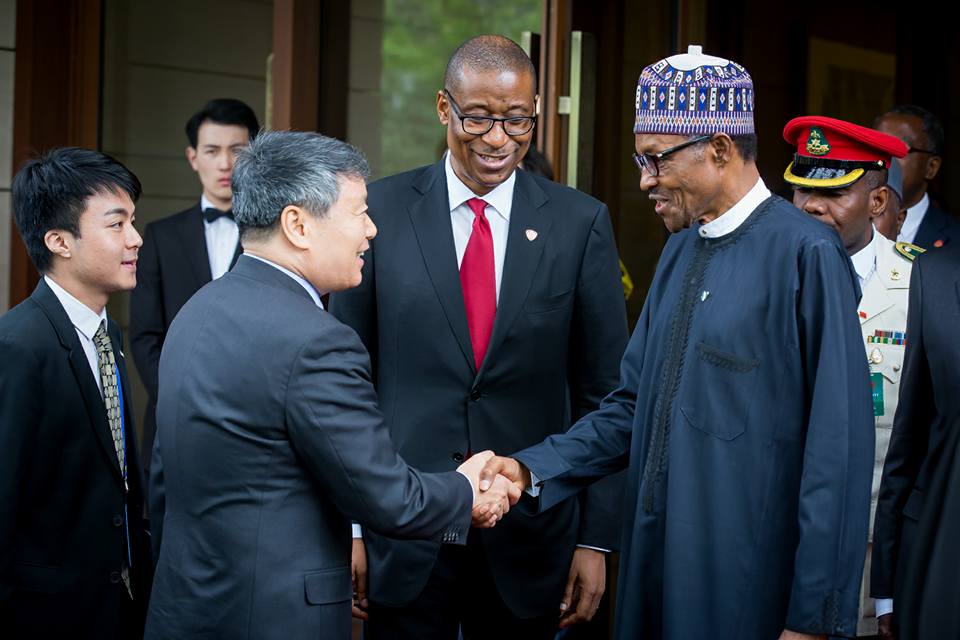
New economic measures adopted by the recently re-elected government of Muhammadu Buhari will try to expand Nigeria's economy away from oil income dependence and focus on consolidating Nigeria's manufacturing base – thereby opening new business opportunities for overseas suppliers and investors. Nigeria's population and gross domestic product is projected to reach 399 million people and cross $3.3 trillion by 2050. However, much needs to be done to bridge the gap between the reality of Africa’s largest economy and its undisputed potential. While Nigeria’s economy has performed much better in recent years than it did during previous boom-bust oil-price cycles, such as in the late 1970s or mid-1980s, oil prices continue to dominate the country’s growth pattern. Nigeria emerged from recession in 2017, with a growth rate of 0.8%, driven mainly by the oil sector. Growth was higher in 2018 (at 1.9%) and more broad-based; however, it still fell below the population growth rate, government projections and pre-recession levels. As Africa’s top oil producer, Nigeria is heavily reliant on crude, with the fuel accounting for 90 percent of foreign-currency earnings and two-thirds of government income. Without reforms to reduce its dependence on oil income, Nigeria risks “a lost decade” of flat economic growth. The country has recently held national elections in 2019, for the sixth consecutive time since its return to democracy in 1999. The incumbent president, Muhammadu Buhari won the elections and would be sworn in for a second term on May 29, 2019. Robust Economic Growth Nigeria’s economy grew in 2018 at its fastest pace since a recession two years earlier. Nigeria’s central bank expects the economy to pick up in 2019, forecasting a gross domestic product growth of 3 percent, up from 1.9 percent recorded last year. On the other hand, Nigeria continues to face massive developmental challenges, which include the need to reduce the dependency on oil and diversify the economy, address insufficient infrastructure, and build strong and effective institutions, as well as governance issues and public financial management systems. Nigeria accounts for nearly 20% of continental GDP and about 75% of the West Africa economy. Despite this dominance, its exports to rest of Africa are estimated at 12.7%, and only 3.7% of total trade is within the Economic Community of West African States. Nigeria has yet to ratify the Continental Free Trade Agreement, pending the outcome of broad consultations with captains of industry and other stakeholders. Large pockets of Nigeria’s population still live in poverty, without adequate access to basic services, and could benefit from more inclusive development policies. The lack of job opportunities is at the core of the high poverty levels, of regional inequality, and of social and political unrest in the country. Economic growth has been recovering since the third quarter of 2016, when the recession bottomed out. Higher oil prices helped Nigeria exit that contraction. Low oil prices will slow down growth in 2019, but the longer-term outlook depends heavily on how the government tackles the expansion of country's economy away from oil income. The World Bank had expected growth to be slightly less than 2 percent in 2019 as the elections kept foreign investors away. New Beginnings To its credit, the Nigerian government has secured the territorial integrity of the nation by reclaiming territory in the Northeast and has tackled big-ticket corruption, introducing and improving transparency and accountability in the management of public funds. Nigeria also committed to unprecedented investments to start and finish critical infrastructure projects in power, roads, and rail across the country, as well as direct investments in people to lift them up—the largest social investment program in Africa. Nigeria accounts for about 47% of West Africa’s population, and has one of the largest populations of youth in the world.
Nigeria’s Booming Auto Market
folder_open Automobiles Sector , West Africa
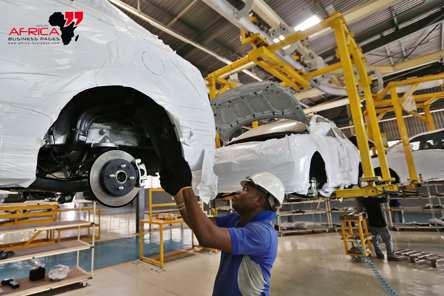
With a population of close to 180 million and a GDP of US$493 billion in 2015, Nigeria is the most populous country with the largest economy in Africa. Despite the current economic challenges facing the country due to low oil prices and a weakened currency, Nigeria still reveals robust economic growth of 2-4% in the medium term. Owing to the lack of domestic vehicle production, Nigeria is highly dependent on imports to meet its domestic demand. In 2014, passenger vehicles constituted the second-largest import category after petroleum oils or bituminous minerals. Overall automotive related imports stood at US$6.9 billion (passenger vehicle imports: US$2.9 billion) accounting for approximately 11.5% of Nigeria’s total imports. While auto imports recorded rapid growth between 2004 and 2014, the current slowdown in the economy and the recent introduction of high import duties on vehicles linked to the new automotive policy has led to approximately a two-third contraction in vehicle imports according to industry players. Second-hand vehicles dominate the import market. It is estimated that approximately 10% of vehicles imported to Nigeria are brand new. A large share of second-hand vehicles are imported from the US, given that vehicle specifications in this market are more in line with the demand and taste of Nigerian consumers, which is not always met by entry-level models from Europe. Importers of used cars in Africa are making a good profit importing used cars for resale from all across the world. Before the hike of import duties on second-hand vehicles, Nigeria imported more than 100,000 cars per year from the the US. In 2015, imports from the US had plummeted to less than 40,000 units. In addition to direct shipments to Nigeria, the Port of Cotonou in neighbouring Benin is a key transit point for second-hand vehicles destined for the Nigerian market. It is estimated that 85% of Benin’s used vehicle imports end up in Nigeria. In 2013, the European Union (EU) and the US exported approximately 300,000 cars to Benin. Based on the import figures for Benin, an additional 255,000 used cars from the EU and the US entered Nigeria via Benin. There is no culture of maintenance in Nigeria – people drive their cars until they break down and then fix them. Vehicle Numbers Depending on the source of data, the current vehicle fleet in the country ranges from 1.3 million vehicles to 10 million vehicles. According to the Federal Road Safety Corps the total fleet size was 1.65 million units in 2015, of which approximately one third are concentrated in Lagos State. Even applying the least conservative estimate of vehicles in use, namely 10 million vehicles, Nigeria’s motorisation rate is approximately one-third that of the global motorisation rate with less than 60 vehicles per 1 000 people. Due to the New Automotive Industry Development Plan (NAIDP) launched in 2014 that increased the prices for imported vehicles, and the economic slowdown triggered by low oil prices, Nigeria’s growth in fleet size slowed down remarkably in 2015. However, it is expected that in the short term fleet growth will stabilise in a range between 4.5% and 5.5% per annum. Vehicle Sales Despite being the most populous country in Africa, Nigeria’s new vehicle sales lag behind less populated countries such as Algeria, Egypt, Morocco and South Africa. According to industry players, the overall new and second-hand market combined ranges between 500,000 and 1 million units per year. Smuggling, grey imports of second-hand vehicles and the lack of reliable data however, make the exact size of Nigeria’s vehicle market and fleet size difficult to quantify. Challenges concerning the licencing and identification of vehicles further contribute to this difficulty. Imported second-hand vehicles, so-called tokunbos, dominate the Nigerian vehicle market as only a small segment of society is able to afford new vehicles. A representative of a leading automotive firm estimates that a mere 2% of the population is able to afford new vehicles given the current economic and financing environment. While commercial banks offer vehicle finance, accessing these credit facilities has become increasingly unattractive to individual consumers as credit facilities are provided at interest rates above 20% per annum and require at least a 10% down-payment. Commercial banks usually require repayment of vehicle loans within four years, due to the rapid depreciation of the value of vehicles given poor road conditions. According to one of the most established vehicle finance providers, the monthly repayment amount should not exceed 35% of the monthly income of the borrower. The short repayment-period as well as the high interest rates present a key challenge for low- and middle-income households when it comes to accessing vehicle finance. Due to the limited accessibility to and expensive financing of vehicles, new vehicles remain out of reach for most Nigerians and the largest share of current vehicle demand comes from the business community. Corporate buyers account for approximately 70% of overall new vehicle purchases, indicating the suppressed demand from private buyers, arguably the market segment with the largest growth potential. Through recently introduced promotional offers by banks in partnership with selected vehicle dealers, customers are able to access finance at a discounted rate for a limited number of vehicles and models. Indeed, the provision of alternative financing products, especially in-house financing by the automotive companies, is seen by industry players as a key requirement for the growth of the local market. However, in the absence of affordable finance solutions, secondhand vehicles remain the more attractive option for private vehicle buyers. According to a representative of a leading automotive company, second-hand passenger vehicles accounted for 80% of sales in 2014. The share of tokunbos in the commercial vehicle market is even larger, reaching up to 90% of the market according to a leading commercial vehicle manufacturer. New vehicle sales are dominated by Toyota which accounts for almost one third of new sales. Hyundai and Kia have established themselves as increasingly serious competitors to Toyota due to their competitive pricing and improved image in terms of quality. In 2015, the three Asian brands accounted for half of new vehicle sales in the country. The economic slowdown, the depreciation of the naira and the increase in vehicle prices due to the import duty hike had a substantial impact on new vehicles sales in 2015. Although vehicle sales saw positive growth post the global financial crisis, total new vehicle sales dropped by more than half in 2015, compared to 2014. The sharp decline of sales highlights the absence of sizeable and competitive domestic assembly that could provide an affordable alternative to imports and the dependency on vehicle imports to meet domestic demand. Production and Assembly Nigeria is no stranger to automotive assembly and manufacturing. Already in the 1970s Nigeria started assembling motor vehicles. In the 1970s and 1980s, the federal government of Nigeria partnered with six international automotive and commercial vehicle manufacturers to produce passenger and commercial vehicles locally from CKD kits. According to the National Automotive Council (NAC) these six companies had an initial installed capacity of 149,000 units per annum during the 1970s and 1980s. “Sometimes, cars are imported to be stripped for parts as availability of genuine parts is limited.” In addition to these plants, the Federal Government entered into five more agreements with international automotive companies to establish assembly plants in 1982, according to the National Automotive Design and Development Council Nigeria. These agreements included the establishment of plants by Isuzu in Maiduguri, Mazda in Umuahia, Mitsubishi in Ilorin, Nissan in Minna and Peugeot in Gusau. However, these plans did not materialise. Furthermore, due to inconsistent policy implementation, corruption, declining patronage by local and federal government departments and lack of reliable power supply, the output and capacity utilisation of the six existing plants declined rapidly. Symptomatic of the demise of Nigeria’s automotive industry was the stop of production activities by Peugeot Automobile Nigeria (PAN), Nigeria’s largest manufacturer, in 2010. Since then assembly plants have been lying dormant. By 2012, all of the country’s automotive manufacturers had been privatised as the government exited the existing partnerships, eroding any incentives for government departments to purchase locally assembled vehicles The launch of Nigeria’s NAIDP in 2014 and the subsequent hike in import tariffs for vehicles has attracted the interest of leading international carmakers and has led to the resumption of small scale vehicle assembly in the country. While the high import tariffs are aimed at encouraging local assembly, the sharp drop in vehicle sales in Nigeria in 2015 is a strong indication that this measure had an adverse impact on overall vehicle prices in the absence of a sufficient assembly base that could provide substitutes for imported vehicles. In 2015, local assembly was only able to cover 10-15% of the new vehicle market. According to a senior representative of one of the automotive companies present in Nigeria, approximately 1,000 passenger vehicles were assembled in Nigeria in 2015 – an even more conservative estimate. Currently, 35 companies are licensed to produce by the Nigerian Automotive Council under the NAIDP. Despite the increased focus on the automotive industry, the sector’s contribution to Nigeria’s GDP remains low at 0.07%. At present the vehicles are assembled from imported SKD kits with a limited degree of local inputs-sourcing due to the lack of a reliable and adequate domestic supplier base. While current assembly figures are low, with Peugeot Automobile Nigeria recording the largest number of vehicles assembled in 2015 with 400 units, the automotive companies aim at increasing their annual output in order to capitalise on the long-term growth prospects of the Nigerian market. However, due to the current economic slowdown, expansion plans are likely to be delayed as reflected in the decline of employment levels in some of the assembly facilities.
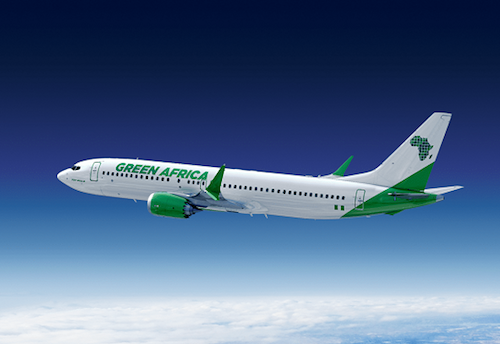
Green Africa Airways – the newly launched airline in Nigeria has signed a deal worth $11.7 billion with Boeing for the purchase of 100 737 Max8 aircraft. The biggest aircraft deal in Africa, is yet to be finalized will be split into 50 firm aircraft and 50 options. The transaction is the second major deal signed by Boeing with a Nigerian airline. Green Africa Airways is backed by a group of aviation industry experts led by Tom Horton, former chairman and chief executive of American Airlines; William Shaw, founder and former chief executive of VivaColombia and Virasb Vahidi, former chief commercial officer of American Airlines. Boeing has predicted that Africa will require 1,190 new airplanes over the next two decades as it boosts both intra-continental and inter-continental connectivity. The Nigerian low-price carrier is working towards establishing a strong foothold in the Nigerian market before expanding to other African countries. “Today is a historic day for the Nigerian and African aviation industry. This landmark deal takes us much closer to our long-held dream of building a world-class airline that will unlock a new realm of positive possibilities for millions of customers. Broadly speaking, this deal is a bold symbol of the dynamism, resilience and soaring entrepreneurial drive of the next generation of Nigerians and Africans,” said Babawande Afolabi, Founder & CEO, Green Africa Airways. “The strategic partnership with Boeing positions Green Africa Airways to expand and improve air travel for customers in Nigeria, and further strengthens the relationship between the United States, Nigeria and Africa,” he said further. This announcement comes at a time when African countries are talking about the African Open Skies Agreement which 10 countries including Nigeria are yet to sign. A few days ago also, Nigeria’s president Muhammadu Buhari commissioned a new terminal at Nnamdi Azikiwe International Airport in Abuja and he said that the government is “committed to developing Nigeria into a regional air transportation hub, thereby assuming leadership in the aviation sub sector in Africa”. “The growth potential for air travel across Nigeria and Africa is extraordinary with the airplane fleet expected to more than double over the next 20 years,” Ihssane Mounir, Boeing’s senior VP of commercial sales, said in a news release. Africa's Aviation Industry Although 737 Max is Boeing’s fastest selling airplane in history with over 4800 orders, it is worthy to note that the aircraft was in the news after a Lion Air 737 Max plane crashed in Indonesia in October, killing all the 189 passengers onboard. Safety Experts involved in the crash investigation revealed to the Wall Street Journal that Boeing did not disclose the possible issues with the flight control System on the 737 Max before the crash. According to the report, the automated stall-prevention system on Boeing 737 MAX 8 and MAX 9 models — intended to help cockpit crews avoid mistakenly raising a plane’s nose dangerously high — under unusual conditions can push it down unexpectedly and so strongly that flight crews can’t pull it back up. However, the Federal Aviation Administration of the United States of America and Boeing are considering the need for software adjustments to the 737 Max to address that system. An Indonesian regulator’s report also pointed to maintenance work and procedures that had failed to fix the aircraft’s repeated problems. Lion Air, one of the biggest customers for the 737 Max has also threatened to cancel its aircraft orders from Boeing after a statement from the planemaker suggested that the carrier was to blame for the crash. The crash has put the stock of Boeing under pressure. The deal between Boeing and Green Africa Airways will help create over 1,000 jobs in Nigeria, a country grappling with unemployment, currently as high as 23.1 percent.
DP World to Build and Operate New Logistics Hub in Mali
folder_open Articles , Business Outlook , West Africa
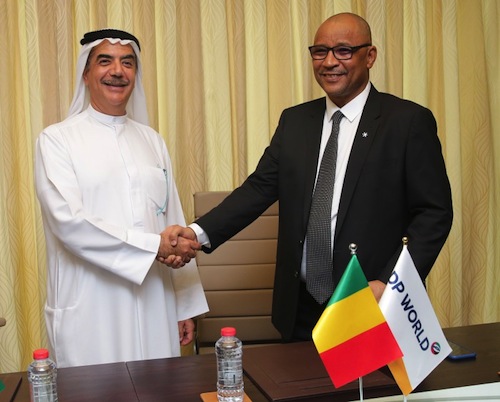
Mali Logistics Hub to fuel trade in west Africa with simplified procedures and paperless transactions Global trade enabler DP World has signed a 20-year concession with an automatic 20-year extension with the Republic of Mali to build and operate a 1000-hectare modern logistics hub outside of Bamako, the capital and largest city of Mali. The multimodal logistics platform, Mali Logistics Hub (MLH), will have inland container depots (ICD) and Container Freight Stations (CFS) that will facilitate the import and export of goods. The Mali Logistics Hub will be located on the main road corridor from Dakar, Senegal to Bamako and close to the Dakar - Bamako rail line and will be capable of handling 300,000 TEU (twenty-foot equivalent unit), 4 million tons of bulk and general cargo. The first phase of the project, with an estimated initial investment of $50 million, will support the growth of the Malian economy by streamlining the import and export of goods. Construction is expected to start in 2019 and is to take approximately 18 months to complete. DP World will also provide the Republic of Mali with three locomotive trains to boost cargo & passenger traffic along the Bamako-Dakar rail system. Furthermore, the Mali logistics hub will significantly reduce processing times for products entering the Malian market as part of efforts to reduce obstacles to trade and economic development. DP World will also implement its online paperless facilitation platform to accelerate the movement of goods as part of the agreement. The concession agreement was signed in Dubai on Monday by Suhail Al Banna, Chief executive Officer and Managing Director, DP World Middle East and Africa and Moulaye Ahmed Boubacar, Minister of Equipment and Transport, the Republic of Mali, in the attendance of Malian and DP World officials. DP World Chairman and CEO Sultan Ahmed Bin Sulayem, said: "The Malian market is expected to grow over the next two decades and is driven by a robust economic and population growth. Thus, the Mali Logistics Hub is much needed and will provide the country with a logistics platform that aims to facilitate the import and export of goods via the Port of Dakar, which is operated by DP World. "DP World's investment will significantly cut processing times for goods and thus facilitate trade. We are committed to enabling trade in the region and helping local businesses and people prosper, and look forward to working together." Republic of Mali Minister of Equipment and Transport Moulaye Ahmed Boubacar said: "We are excited to partner with DP World on this project. The Mali Logistics Hub will dramatically improve the cost and time of trade for Mali. The project will provide us with a first-class logistics facility comparable to global standards and will be the largest in terms of capacity". "We are confident that with DP World as a partner we will be able to meet the expectations of our people, traders and exporters to have access to more markets and to bring more efficiency and cost effectiveness to international trade. The project also gives the Republic of Mali the opportunity to be connected to global trade lanes, and to speed up access and transport in and out of the country."

John Deere will lease up to 300 tractors to about 100,000 farmers in the Niger Delta region of Nigeria The global tractor maker John Deere has partnered with Alluvial, a Nigerian company which works with smallholder farmers, a move that aims to turn agriculture into a more successful commercial business Under the terms of the agreement, John Deere will lease up to 300 tractors to about 100,000 farmers in the Niger Delta region of Nigeria through Alluvial. John Deere will supply the tractor through the distributor Tata Group. Commenting on the deal, Dimieari Von Kemedi, founder of Alluvial, said that farmers could produce more than US$300mn worth of rice a year. The deal aims to provide the Nigerian smallholder farmers with a greater access to advanced mechanisation options to produce more quality yields and explore new business opportunities. A number of smallholder farmers in Nigeria struggle to purchase tractors for agri-production. With the new deal, the farmers will be able to have tractors form their use. In addition, it is also expected to create employment in the Niger Delta region. This is in line with the Buhari government’s ambitious aim to boost up agricultural production in the region, which, in turn, will improve the standard of life of many smallholder farmers, thus improving the socio-economic situation in the African nation. John Deere is an American corporation that manufactures agricultural, construction, and forestry machinery, diesel engines, drivetrains (axles, transmissions, gearboxes) used in heavy equipment and lawn care equipment.
Preliminary request for participation in the trade show
place
calendar_today
Preliminary request for visitor registration
Visitor Registration
place
calendar_today