
Tanzania has earned the distinction of being among the world's 10 fastest-growing economies. The east African nation grew at the rate of 6.8 per cent, according to the 2020 African Economic Outlook report. Other five African countries that have been making impressive growths are Rwanda (8.7 per cent), Ethiopia (7.4 per cent), Côte d'Ivoire (7.4 per cent), Ghana (7.1 per cent) and Benin 6.7 per cent. Not only did Tanzania achieve the highest growth rate among African countries, it’s inflation also fell to 3.3 per cent in 2019 due to improved food supply. The Tanzanian shilling also stood fairly stable in 2019, exchanging at an average of 2,290 to the dollar, compared with 2,263 in 2018. An impressive growth in the middle class of Africa has seen a steady rise in demand for consumer and capital goods all across Africa. The East Africa region has emerged as the continent's fastest-growing regions with an average growth estimated at five per cent in 2019; North Africa is currently the second-fastest, at 4.1 per cent, whereas West Africa's growth has been recoded at 3.7 per cent in 2019. The 2020 African Economic Outlook report predicts that Tanzania's growth will to be stable at 6.4pc in 2020 and 6.6 per cent in 2021. Overall, Africa's economic growth stood steady at 3.4 per cent in 2019 and is expected to pick up to 3.9 per cent in 2020 and 4.1 per cent in 2021.

At the start of a new decade, Emirates SkyCargo, the freight division of Emirates, is geared up to facilitate global trade and cargo movement in 2020 and beyond through a combination of innovative product development and investment in ‘fit for purpose’ infrastructure. “The global air cargo industry witnessed what was a very challenging year in 2019. Economic uncertainty, tensions in global trade and unrest in key markets negatively impacted cargo volumes. However, the tough market conditions were an opportunity for us to review our core offering to our customers and ensure that we remained market leaders with our specialised product offering, superior capabilities and infrastructure as well as our agility in responding to customer demand,” said Nabil Sultan, Emirates Divisional Senior Vice President, Cargo. “The outlook for 2020 is more positive with the air cargo industry set to post a modest recovery thanks to improved economic activity and trade growth. With our commitment to ‘deliver as promised’ backed by a global network covering over 155 destinations centred in Dubai, our modern fleet of all wide-body aircraft and our state of the art Emirates SkyCentral terminals, Emirates SkyCargo is well positioned to support trade and economic growth in line with the Dubai Silk Road Project. With Expo 2020 Dubai also set to kick off in October 2020, we will see a surge in movement of goods to and from Dubai and we are working with our partners to provide specialised air freight services for this once in a lifetime event,” he added. Specialised Products In 2019, Emirates SkyCargo continued to roll out specialised products catered for specific industry verticals. Emirates Delivers is a new e-commerce platform that enables consumers, both individuals and small businesses, to purchase products from any US based online retail store and have it delivered in the UAE. Emirates Delivers is part of Emirates SkyCargo’s broader strategy to promote Dubai as an e-commerce fulfilment hub for customers based in the Middle East, Asia and Europe. In 2020, the availability of Emirates Delivers will be expanded to more markets. Other products from the Emirates SkyCargo portfolio showed a strong performance despite challenging market conditions. More than 400,000 tonnes of perishables were flown on Emirates’ flights under Emirates Fresh, Emirates SkyCargo’s specialised product for perishables. In November and December of 2019, the carrier operated nine charter flights from Santiago, Chile uniquely for carrying cherries. Close to 11,000 high-priority shipments were moved across six continents under the Emirates AOG product during 2019. Year-on-year Increase of 6% in the volume of high value goods that were flown under Emirates Safe VAL, Emirates SkyCargo’s product for transportation of precious goods. A 12% increase in demand for Emirates Pets, Emirates SkyCargo’s product for transportation of domestic cats and dogs. Emirates Charter In addition to its scheduled passenger and freighter flights, Emirates SkyCargo offers customisable and flexible charter solutions to its global customers. With a responsive and agile team that works to meet customer requirements and set up operations within a short time frame, the carrier has been able to operate close to 370 charters during 2019. Charter operations have helped transport a wide variety of cargo from relief materials for natural disasters and equipment for music concerts to flowers and other perishables. Fit-for-purpose infrastructure and capabilities In 2019, Emirates SkyCargo unveiled a new handling facility dedicated for pharmaceutical cargo at Chicago airport, one of the most important pharma stations for Emirates SkyCargo across the world. The facility features temperature controlled zones for acceptance and delivery, pharma cargo build up and break down, storage and direct ramp access and is also certified under EU GDP guidelines. In November 2019, Emirates SkyCargo moved its pharma handling operations at Copenhagen airport to a dedicated GDP certified facility. Both initiatives are part of the carrier’s objective to offer enhanced protection for pharmaceutical cargo, not just at the Dubai hub, but from origin to destination under the pharma corridors programme. During 2019, Emirates SkyCargo worked with ground handlers at key pharma origin and destination cities across the world to expand the number of pharma stations from 12 to 25. With its focus on improved capabilities and process benchmarks through collaboration, the implementation of Emirates SkyCargo’s pharma corridors programme has resulted in an increase in the volume of pharma cargo handled across the carrier’s pharma stations. For example, since the launch of the new facility, Chicago has seen a double digit growth in the volume of pharma cargo transported. Operations In 2019, Emirates SkyCargo’s SkyCentral terminals in Dubai handled an average four pieces of cargo every second of every hour on a 24*7 basis. Over 700 staff on duty at any time of the day helped process around 360,000 individual packages daily through these terminals enabling Emirates’ fleet of over 270 aircraft move approximately 7,000 tonnes of cargo every day, the equivalent of more than 60 full Boeing 777 freighters, between Dubai and the rest of the world. A fleet of 49 trucks, including 12 refrigerated trucks, made an average 175 trips daily in 2019 to connect the two cargo terminals. Acting as a seamless conveyor belt between the two cargo terminals, the trucking system helped connect cargo from touchdown in one airport to take-off at another airport and vice versa in under five hours. Overall, more than 307,000 tonnes of cargo were transferred by the trucking system between the two airports in 2019 and more than 1.6 million tonnes of cargo over the five years since the start of trucking operations in 2014. Delivering as Promised Emirates SkyCargo’s unwavering commitment to “Delivery as Promised” has since 2018, been reinforced by applying the Cargo iQ framework. Emirates SkyCargo has established a 24/7 operational Cargo Operations Control Centre (COCC) which monitors the progress of shipments across predetermined milestones from acceptance to delivery. In 2019, the carrier monitored over 1.5 million shipments using Cargo iQ guidelines ensuring that cargo having a direct impact on the lives of people around the world, was transported and delivered on time. About Emirates SkyCargo Emirates SkyCargo is the freight division of Emirates. With an unrivalled route network, we connect cargo customers to over 155 cities across six continents and operate in many of the world’s fastest developing markets. Our cargo hold capacity comprises Emirates’ fleet of over 265 aircraft, including 12 freighters – 11 Boeing 777-Fs and one B747F. During the last Financial Year (2018/19) Emirates SkyCargo carried 2.7 million tonnes of cargo. Emirates SkyCargo has developed transportation solutions for specific verticals including pharmaceuticals and perishables.

Kenyan food manufacturer Ariel Foods expands in West Africa
folder_open Foodstuff & Beverages , West Africa
Ariel Foods, a renowned Kenyan therapeutic foods manufacturer famous for its food supplements for malnourished people worldwide is expandeding its operations in West Africa through its base in Nigeria seeking. The food company aims to tap into the wider West African market through its operations in Nigeria. Insta’s therapeutic foods are a high calorie combination of peanut paste, sugar, oil and milk powder which is fortified with 23 vitamins and minerals. Severely malnourished people, who cannot digest solid food portions or receive supplements intravenously, feed on the supplement for six weeks before progressing to other foods. Insta Products has been operating for 16 years. Its products are distributed regionally but they are also shipped to needy individuals in countries such as Afghanistan, Syria, Pakistan and Yemen among others places, Ariel Foods’ new Nigerian factory will be set up in Alaro City, a mixed-income development featuring industries, logistics, offices and homes in Lagos State. The city is backed by Rendeavour, Tatu City’s owner and developer. Rendeavour is also developing other similar cities in Africa including two in Ghana at King City and Appolonia, Kiswishi in the Democratic Republic of the Congo and Roma Park in Zambia. “Ariel Foods is proud to expand its production to Nigeria, and to play a major role in food and population security in West Africa through the production of ready-to-Use therapeutic foods to feed malnourished children and to supplement the diets of persons with special nutrition requirements,” said Dhiren Chandaria, owner of Ariel Foods. Chandaria also owns Kenya-based Insta Products which is a major supplier to UNICEF and World Food Programme relief initiatives. Lagos State Governor Babajide Sanwo-Olu welcomed the Kenyan firm’s investment. “I am pleased to witness the start of operations of Ariel Foods, which has built a remarkable facility in less than one year,” he said. “The confidence of international and Nigerian investors is a testament to Alaro City as the location of choice for businesses in the Lekki Free Zone, and to the ease of doing business in Lagos State.” Insta, located in Athi River’s Export Processing Zone, produces food supplements for malnourished people
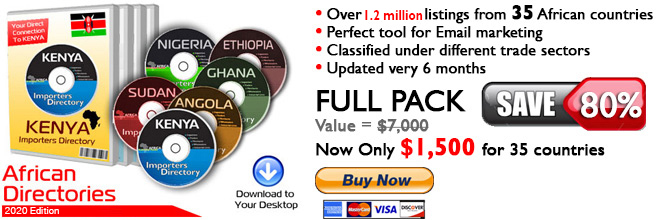
Email marketing lists of companies in Africa is now available at Africa Business Pages for those who are looking for a database of email database to conduct email marketing in Africa. Email marketing lists for Africa are in big demand specially for companies that are seeking to export to Africa and looking for a list email marketing list of importers in Africa in oder to improve their sales in the African markets. The Africa Business Pages has compiled a series of email lists of African companies that has proved very helpful for those looking for importers in Africa, buyers in Africa as well as wholesalers in Africa. The email list of African companies has helped many importers, exporters, manufacturers and traders find business partners in new and emerging markets of Africa. Launched in 1996, the Africa Business Pages has emerged as one of the leading B2B portals for Africa and has played an instrumental role in promoting trade and business to and from Africa by connecting African importers with international exporters. The database of email list of importers in Africa has served as a useful tool for international exporters to find importers in Africa and increase their export to Africa. The email database list at Africa Business Pages is available countrywide as well as sector wise so as to help exporters find the right buyers in Africa for their products and services. Some of the sector wise list of emails available in the database includes: List of Foodstuff Importers in Africa List of Auto Parts Importers in Africa List of Pharmaceutical Importers in Africa List of Tyre Importers in Africa List of Car Importers in Africa List of Rice Importers in Africa List of Cosmetics Importers in Africa List of Building Materials Importers in Africa List of Furniture Importers in Africa List of Hotels in Africa List of Hospitals in Africa Email marketing lists for Africa have proved to be a very useful tool for contacting companies in Africa, importers in Africa, buyers in Africa through email marketing campaigns targeted at the African markets. The database of emails of African companies compiled by Africa Business Pages is priced nominally and is available for immediate download in Excel format. You can download the African Importers Lists from: http://importers.africa-business.com/
Ethiopian Airlines Plans To Build New Airport
folder_open Articles , East Africa
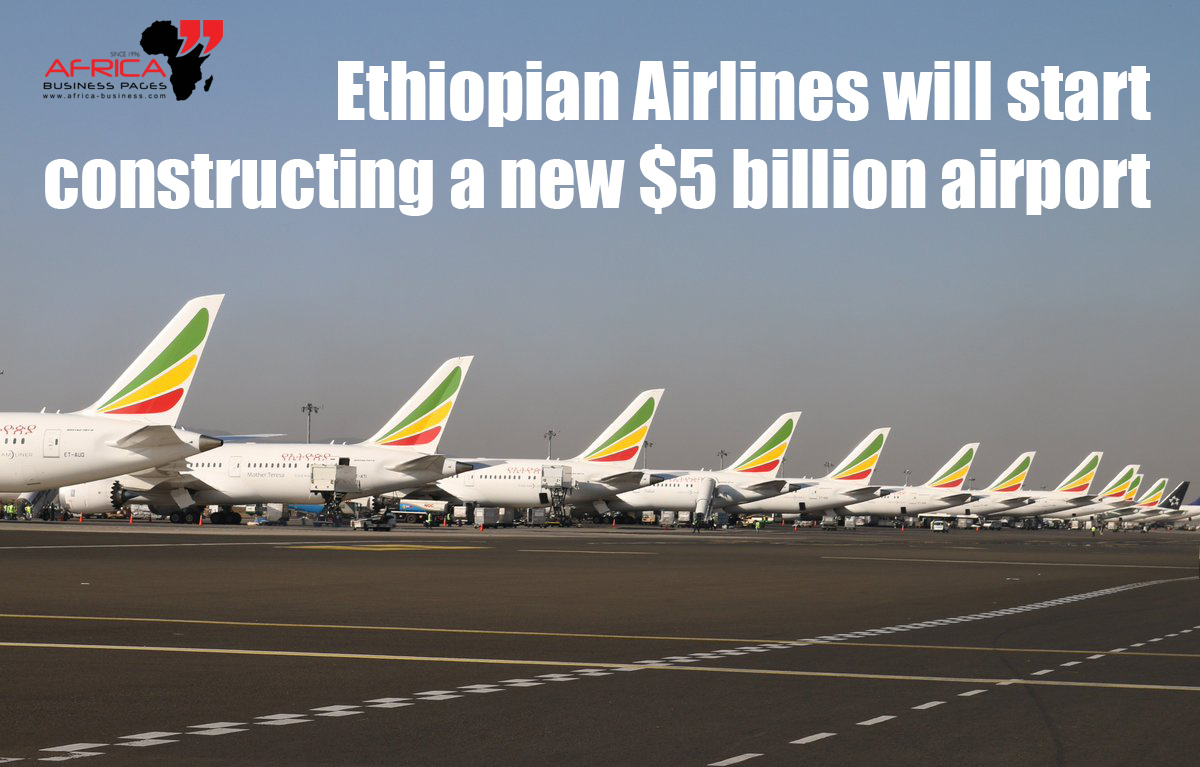
Ethiopian Airlines has announced that it will start constructing a new $5 billion airport later this year, its as the rapidly-expanding carrier outgrows capacity at its current base in Addis Ababa. The airport, which will cover an area of 35 square km, will be built in Bishoftu, a town 39 km south east of the capital, and have the capacity to handle 100 million passengers a year. Bole International Airport in Addis Ababa has a passenger capacity of about 19 million passengers annually. The state-owned Ethiopian Airlines, which competes with large Middle East carriers to connect long-haul passengers, has built a patchwork of African routes from its hub in Addis Ababa to fly customers towards expanding Asian markets. It has 116 aircraft in its fleet and its net profit rose to $260 million in its 2018/19 financial year from $207.2 million a year earlier. In 2018, Addis Ababa overtook Dubai as the top transit hub for long-haul passengers into Africa. In 2019 China funded the expansion of Bole Airport was, allowing it to accommodate 22 million passengers annually. Gebremariam has not said how the new airport — which will accommodate 100 million passengers — will be funded. In a region that has historically struggled in the aviation field, state-run Ethiopian Airlines is truly a success story, playing a key role in the country’s economic development and helping solidify its status as a tourist destination. A new airport takes it to the next level. The continent has been notoriously under-connected by air, and Ethiopian Airlines is changing that, with flights to more than 60 African cities. The company also owns stakes in several local airlines based in other countries. Ethiopian Airlines also has a special “Stopover Package” for passengers connecting through its Addis Ababa hub. The program officially launched in 2018 does not raise the cost of an airfare, caters to leisure travellers in order to promote tourism in Ethiopia.

Global trade enabler DP World has signed a Memorandum of Understanding (MoU), with Namibia's Nara Namib Free Economic Industrial Zone to develop a free economic zone for industry and logistics in Walvis Bay to support the growth of Namibia as a regional hub for Southern Africa. The development will help Namibia grow as a centre for industrial operations and logistics, creating opportunities and jobs across multiple sectors including agriculture, fishing, automotive and mining. The facility at Walvis Bay will provide businesses with development-ready land for industrial and logistics operations, pre-built warehouses and office accommodation. The first phase will be a gross developed area of 50 hectares, with expansion opportunities up to 1,500 hectares. The parties have set the second quarter of 2020 as the target date for reaching a definitive agreement on the project. Development of the first 50 hectares phase of the zone has the potential to create 3,000 jobs and help attract investment to Namibia of US$237 million. Expansion to 1,500 hectares is expected to increase the potential investment of around US$1.7 billion with 20,000 job opportunities. Enhancing Walvis Bay as a hub will support Namibia by increasing trade flows with surrounding markets such as Angola, the Democratic Republic of Congo, Zambia, Zimbabwe, Botswana, Malawi and South Africa. Namibia is in a prime location on the Southern Africa Development Community (SADC) Corridor. As part of the MOU DP World plans to bring to the project its extensive expertise and track record in establishing and operating some of the world's leading ports, logistical parks and free zones integrated with railways and trucking. DP World has a network of more than 150 operations in 46 countries. DP World's flagship development, Jebel Ali Port, is the largest container port between Rotterdam and Singapore and the 11th largest container port in the world, with an annual capacity of 19.3 Million TEU. The Jebel Ali Free Zone Authority (Jafza) stretches across 51 square kilometres and is home to 7,500 companies employing 135,000 people, including more than 100 Fortune 500 corporations. Jafza and Jazfa-based companies handle $83.1bn in trade annually, contributing around a quarter of Dubai's GDP. Suhail Al Banna, CEO and Managing Director - Middle East and Africa at DP World said : "DP World is pleased to work with Nara Namib to explore how we can work together to enable smarter trade in Namibia. We believe the country has great potential to expand its role as a hub for the region. The Namibian government's recent legislation on free zones and efforts to facilitate greater business provides an attractive environment for investment. » Andre Olivier of Nara Namib said, "Today's MoU brings us a step closer to fulfilling Namibia's vast trade and economic development prospects, and we look forward to benefiting from DP World's global expertise and network in the areas of parks, economic zones, ports and logistics while creating synergies with our strong local footprint and industry reach." DP World's potential expansion in Namibia complements its notable presence in other key African nations including Senegal, Rwanda, Mozambique, Egypt, Algeria and Somaliland.
Africa: The Business Hub of the Future
folder_open Articles
With 54 countries, Africa is a large continent with tremendous economic growth, investment, and rapidly rising living standards. Today Africa offers a host of opportunities for entrepreneurs and businesses across the world as it marches towards a better economic future. All across the African markets, national and regional economies are steadily accelerating their growth and attracting foreign investors from all across the world. This drastic change is driven by a number of factors, including more democratic and accountable governments; economic policies which increasingly favour and facilitate international trade; a new generation of policy-makers and business leaders; innovative information and communication technologies; an emerging spirit of entrepreneurship; and a growing middle class of relative prosperity with a taste for modern consumer goods. As a matter of fact, six of the world’s 10 fastest growing economies are in Africa, and the ease of doing business in Africa is improving to the extent that a good number of countries (including South Africa, Ghana, Mauritius and Tunisia) now outperform China, India, Brazil and Russia. FDI inflows to Africa have also registered year-on-year growth since 2010 and now amount to US$ 50 billion. Forecasts by industry experts are leading to optimistic outlooks among those early movers who have already identified the huge potential of the African continent with its one billion people spread across 54 countries. It is time for enterprising businesses to seize the opportunity and look at the African markets seriously. Key figures: The attractiveness of business in Africa: Population and demographics More than 50% of Africa’s population is under 20 years old, making it the world’s youngest continent – in comparison only 28 % of the population of China is under 20 years old Almost 40% of the global population growth will be in Africa by 2050 500 million Africans are between the age of 18 and 24. By 2040, the forecast is 1.1 billion — more than in China or India Markets and consumers Urban African consumers spend the largest share of their budgets (45%) on food and groceries –more than the average consumer in the BRIC countries Consumer expenditure is set to rise from USD 600 billion in 2010 to nearly USD 1 trillion in 2020 More than half of all African households are projected to have discretionary income by 2020 – corresponding to almost 130.000 households Consumer-facing industries (retail/wholesale, banking, telecommunication and tourism) in Africa are expected to grow by USD 400 billion by 2020, with apparel, consumer goods and food accounting for $185 billion Economic performance Average annual return on capital of African companies was 65-70% or higher than that of comparable companies in China, India, Indonesia, and Vietnam GDP growth for the continent is forecast at 5.4% in 2013 and 5.7% in 2014 6 of 10 of the world’s fastest growing economies are currently in Africa FDI inflows to Africa have increased by 13.6% and FDI outflows by 55.6% since 2010 Doing business in Africa Transparency International’s Corruption Perceptions Index 2012 ranks Botswana, Rwanda, Namibia, Ghana, South Africa, Liberia and Tunisia better than China and India in terms of the perceived corruption levels of public institutions The Doing Business 2013 Report ranks Mauritius, South Africa, Rwanda, Botswana, Ghana, Tunisia and Namibia above China (the best performing BRIC country), while Morocco, Zambia, Egypt, Kenya, Uganda, Ethiopia and Nigeria rank above India and Brazil African Economies: Marching Ahead Africa’s fundamentals appear strong, and the continent’s outlook remains positive. The belief remains unshakable among Africans that tomorrow will be better than today and that is the kind of infectious confidence in which investments thrive. Many African governments are now embracing the right reforms, building the right institutions, growing resilient economies and making the right policy choices, including diversifying their economies away from oil, gas and mining to the massive job-creating promise held by agriculture and small and medium-size enterprise creation. The global economy is to gain greatly from high-performing Africa that can be the next global growth pole and its next market. Global prosperity will expand if Africa grows and prospers. The message to any company or investor still not in Africa is that today is the day that business in Africa is made and it might already be too late tomorrow. Africa is the now, no longer the future. The Africa train has already left the station. You are either on it or you risk becoming irrelevant.

Exports from Dubai to Africa Grow
folder_open Business Outlook
Dubai has emerged as one of the leading supplier of goods and all kinds of consumer products to Africa. Shipping lines plying the Dubai-Africa route are experiencing a welcome rise in business with the coming of African bulk buyers during the last decade. Among the major destinations of UAE exports are Nigeria, Mauritania, Senegal, Gabon, Ghana and the Ivory Coast in West Africa, and Tanzania, Uganda and Kenya in East Africa. On an average, freight rates to Africa cost around $2,200 to $2,600 for a 20-foot container, which has a capacity of 21 tonnes. For a 40-foot container with a capacity of 26.5 tonnes, current rates are between $4,900 and $5,600. Certain trade sectors in Dubai have reported substantial increase in demand from African countries in recent years. A growing number of African buyers are travelling to Dubai to purchase a wide variety of goods and to make direct contacts with suppliers and manufacturers in the UAE. Dubai's Exports to Africa Dubai’s trade with Africa, estimated at $45 billion, has grown beyond its traditional trade partners in Africa like Egypt, Ethiopia, Kenya and Uganda to new and emerging markets like Nigeria, Angola, Benin, Cameroon, Mozambique, Tanzania, Eritrea and Ghana. According to recent study conducted by Africa Business Pages, exports from Dubai to Africa constitute 10 per cent of the emirates total trade. In recent years, Africa has emerged as the largest export market for Dubai wholesalers of consumer electronics and IT equipment. Dubai’s trading ties with Africa go back decades and the emirate has been trading with many African countries much before the discovery of oil and the formation of the UAE Federation. Traditional trade partners in those historic days used dhows trade with the ports of Zanzibar, Somalia, Kenya and Tanzania was once dominated by Arab traders. Somali cattle have been imported in the Gulf countries since historical times. So trade between Africa and Dubai has a long and illustrious history. Emirates Opens New Trade Corridors in Africa Emirates airline has also played an instrumental role in the improving bi-lateral trade between Africa and Dubai. By operating direct flights from Dubai into many African countries, Emirates airline has helped in building new trade routes in the African markets as well as contributing to the rise in African passenger traffic to Dubai. Africa-Dubai Trade Grows New and liberal economic policies adopted by many African countries have also attracted foreign investments in industrial and manufacturing projects - mainly in the several Export Processing Zones (EPZs) that have come up in countries like Kenya, Uganda and Tanzania in recent years. This has resulted in greater demand for capital goods, machinery and raw material – a demand that is being met by many Dubai-based enterprises. The growing demand for goods in Africa is clearly reflected in statistics. The improving economic and political situation in many East African countries has resulted in greater buying power for the average person in Africa and has in turn boosted demand for consumer goods. The surge in the number of African visitors is a new phenomenon, although Dubai has traditional links with East Africa. According to data available, from a mere 6,954 in 1984, the number of visitors from African countries shot up to over 100,000 now. Most of them came from Ethiopia, Kenya, Uganda, Nigeria, Cameroon and South Africa.
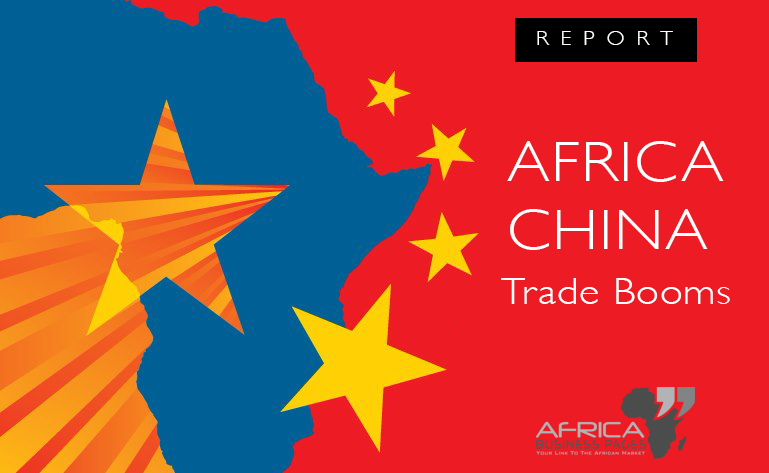
Chinese goods have been gaining increasing popularity in the African markets and Chinese companies are exporting in huge quantities of a wide variety of products directly into many African countries. In the last few years, China's trade with Africa has been growing with leaps and bounds, as has Chinese investments into several African nations. In 2018, China-Africa trade reached US$204.2 billion, up 20 percent year-on-year, and China has emerged as Africa's largest trading partner for 10 straight years. Price-sensitive markets in Africa are hungry for cheaper-priced Chinese goods. Wholesalers, traders and merchants in Africa have also been quick to meet the rising demand for Chinsese goods in Africa and are now sourcing a large portion of their requirements from China. Africans Buying from China By cutting out the middlemen and buying directly from Chinsese manufactures has also helped them increase profit margins. This trend of buying from China and selling locally and regionally is being repeated in almost all African countries and the result is clearly visible in almost all African markets that are now flooded with low-priced Chinese goods – whether it is tyres, automobile parts, stationery, perfumes, cosmetics, computer hardware, furniture or machinery, China has dominated the African markets in the last decade. The main products China exports to Africa are machinery and electronics, textile and apparel, hi-tech products and finished goods, while imports from Africa concentrate on crude oil, iron ore, cotton, diamond and other natural resources and primary goods. To help the countries in Africa expand exports, China has exempted import tariffs for certain commodities of these countries. China has announced the names of over 25 African countries that enjoy zero tariff treatment and special preferential tariff rate for exports of some 190 products to China, ranging from food, mineral product and textile, to machinery and electronics. In fact, Africa’s resource-rich nations are getting even more reliant on China for their exports. China imports from China include crude petroleum from Angola and South Sudan, zinc and copper ore from Eritrea, cobalt from DR Congo, raw tobacco from Zimbabwe, besides iron and titanium from Sierra Leone. China in Africa China has committed to set up a $10-billion special fund for development financing, showcasing a possible change from a resources-for-infrastructure model of financial engagement. These statistics clearly show the increased trading activity between Africa and China. Chinese companies, known for their marketing and business skills, have been reaping rich dividends by promoting their products and services in the new and emerging markets of Africa. China-US Rivalry in Africa The battle for political and economic influence between the U.S. and China is playing out across Africa, and Beijing’s growing presence is troubling Western policymakers, experts say. Africa has become the fastest urbanizing region on the planet, and China has placed itself at the infrastructural vanguard of the new frontier. Chinese firms have been most active in building ports, roads and railways that will underpin integration and trade between African nations — an intention most recently exemplified across the continent in the landmark African Continental Free Trade Agreement (AfCFTA). The AfCFTA recently launched its operational phase, and eventually intends to bring together all 55 African Union member states into the world’s largest free trade area, spanning 1.2 billion people. U.S.-Africa trade has dipped in recent years, while China is now Africa’s biggest trade partner. Between 2002 and 2008, following the signing of the African Growth and Opportunity Act (AGOA), which provided tariff-free access to 6,500 products for qualifying sub-Saharan countries, trade between the U.S. and Africa grew to $100 billion. China recently launched a $1 billion Belt and Road infrastructure fund for Africa, and last year delivered a whopping $60 billion African aid package, further consolidating its robust economic influence.

Zimbabwe is an attractive tourist destination – specially for desert dwelling residents in the Middle East. Emirates operates a daily flight between Dubai and Harare, making it easier for Middle East travellers to explore this beautiful country. As a result, an increasing number of visitors from the Middle East are now visiting Zimbabwe - making it one of the new holiday destinations that is gaining popularity among residents and expatriates living in the region. Unlike many other African countries, Zimbabwe boasts of a world-class tourism infrastructure and has some of the most luxurious hotels and lodges in the Southern African region. The African Sun Group is one of the largest players in the hospitality and hotels sector of Zimbabwe and runs as many as 11 prestigious hotels and lodges across the country. Established in 1968, the African Sun Group has hotels in every major tourist destination in Zimbabwe and in four out of the five major cities in the country – thereby making the African Sun Group a perfect host for those looking for a luxurious and unforgettable experience when visiting Zimbabwe. Our editorial team stayed at a few properties run by the African Sun during our recent visit to Zimbabwe and we were greatly impressed by the amenities and service levels provided at these properties. We caught up with Tariro Ndebele, Group Sales and Marketing Director, African Sun for an informal chat...
Preliminary request for participation in the trade show
place
calendar_today
Preliminary request for visitor registration
Visitor Registration
place
calendar_today