
Economic integration is key to Africa’s growth and development across all sectors, Yoweri Museveni, President of Uganda, explained as he addressed audiences at the Global Business Forum on Africa in Dubai. During a special head of state session entitled, “Next Generation Africa – Realising the Promise of Integration”, the Ugandan President underlined the importance of education in addressing the challenges facing African countries. He warned that a lack of integration will inhibit Africa’s ability to establish healthy markets and may potentially worsen the continent’s brain drain. Museveni called on young people, in particular, to find solutions to the problems facing African societies and be the engine of their development. He urged the youth to focus more on their national identity and less on other affiliations in order to prioritise public interest, build strong societies, and help expand African companies’ footprint into international markets “I am proud of my struggle against sectarianism in my country, because sectarianism is backed by foreign interests rather than national ones. I am committed to implementing all measures necessary to build a bright future for my country. This is not an achievement, it is a national effort to firmly place Uganda on the international map, and cement its distinct national identity,” said Museveni. He stressed his view that African unity is paramount the continent’s progress and development in the future, and noted that Africa is making great strides on economic integration. “On the political side, however, we have work to do. It is my dream to have a unified African market, where goods flow smoothly between East and West Africa, in addition to larger political integration in order to protect ourselves against global blocs and major countries such as China, India, and America, without isolating Africa from the rest of the world,” he concluded.
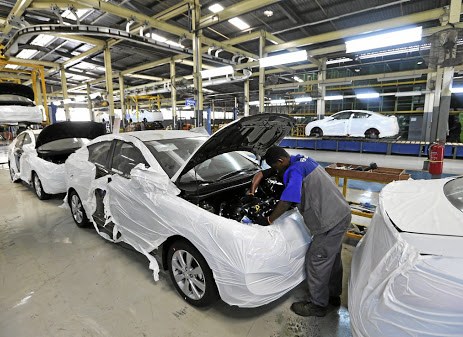
The automotive manufacturing industry in Africa is growing fast. Automotive production in Africa is growing industry as more and more manufacturers move closer to their African customers and discover the advantages of low-labour costs and tax holidays. Demand for automobile spare parts in Africa is also growing. The automotive production industry in South Africa is nearly 100 years old. In the 1980s and 1990s, Nigeria achieved significant production and production occurs in Egypt and more recently Morocco. Smaller production activities take place in Kenya and some decades ago in Zimbabwe. However, currently significant modern assembly is largely located in South Africa. Formed in 2015, the Africa Association of Automotive Manufacturers (AAAM) works specifically to promote and facilitate the growth of the African automotive industry. Formed by executives from the world’s biggest car manufacturers, the African Association of Automotive Manufacturers (AAAM) embarked on a concerted push to revive and resurrect Africa’s auto industry. Since then, the newly-created African Association of Automotive Manufacturers (AAAM) has been working with key African governments to create the right policy environment for the sector to Flourish. Africa’s untapped demand combines with a steady increase in consumer spending which has been rising at an annual rate of 10 per cent over the last few years. Moreover, analysts predict that by 2030, over half a billion Africans will have joined the middle class. “If the growth in vehicle sales keeps pace with growing consumer spending, annual sales of passenger cars in Sub-Saharan Africa will surpass 10 million units by 2030,” says South African consultancy B&M Analysts. Not surprisingly, one of the organisation’s first ports of call was government leaders in Nigeria’s capital Abuja. Fast-growing Nigeria is the jewel in Africa’s auto crown with just 44 vehicles per 1,000inhabitants,far below the global average of 180 vehicles per 1,000 inhabitants, according to recent estimates by a Deloitte report. While new vehicle sales have jumped in developing markets like China, India and Brazil over the last decade, growth in Africa has remained relatively slow. According to the International Organisation of Motor Vehicle Manufacturers (OICA), only 1.5 million new vehicles were sold across the African continent’s 54 countries with a combined population of 1 billion in 2016. South African consumers buy most new cars, and together with Egypt, Algeria and Morocco account for almost 80 per cent of the continent’s total auto sales, with only muted demand from important economies like Nigeria and Kenya. But far from being a disincentive to investors, the figures act as a rallying call. “When Volkswagen and General Motors moved into China the motorisation rate was lower than in Ethiopia today. The limited market was not a deterrent for the early movers who recognised China’s long-term potential,” says Karthi Pillay, Africa automotive leader, risk advisory at Deloitte. Mix with this a renewed determination amongst African leaders to diversify their economies through boosting manufacturing. New policies aimed at increasing domestic car production are starting to pay off. In 2016, China’s state-owned car manufacturer Beijing Automotive International Corp unveiled plans to build a R11bn (US$759mn) auto plant in South Africa – the biggest investment in a vehicle-production facility in the country in four decades will earmark over half of its output for export, initially to East, West and North Africa. Elsewhere, after a four-decade break in production, Volkswagen is starting up its Kenyan production line once again. The signs are good. But with challenges ranging from imported used cars flooding the market to Africa’s weak manufacturing base and a lack of finance for would-be car owners, Africa promises a challenging operating environment. IMPORT OF USED CARS IN AFRICA The biggest barrier to new vehicle sales in Africa is cheap, imported second-hand cars from the US, Europe and Japan. Consultancy Deloitte estimates that eight out of 10 imported cars in Ethiopia, Kenya and Nigeria are used cars. According to the Kenya National Bureau of Statistics (KNBS) the volume of imported vehicles between 2005 and 2017 grew at over 300 per cent from 33,000 to over 120,000 units. Governments are developing policies to limit the influx. In an effort to hike the price of second-hand cars to favour more new car purchases, Kenya has forbidden vehicles over eight years old from entering into the country, with plans to reduce this further. Similarly, Nigeria has increased its import duty on second-hand vehicles, most of which arrive in a bustling trade from the US into Africa via Benin’s Cotonou port. As a result, Nigeria’s imports of cars from the US plummeted from more than 100,000 a year to less than 40,000 units in 2015. Nigeria car salesOther signs of change include the enduring stagnation of the Japanese economy. It has resulted in sluggish sales of new cars there, which in turn has created a shortage in the supply of quality used vehicles. There has been “a deterioration of the environment surrounding the export of the used motor vehicles industry”, says Hiroshi Sato, chairman of the Japan Used Motor Vehicle Exporters Association. As crucial as controlling used-car imports is to nurturing a domestic industry, so is establishing a manufacturing base. South Africa leads the continent’s auto manufacturing sector with original equipment manufacturers, long-established in the country and backed by a vibrant community of 500 suppliers and diversi?ed manufacturers. Yet, head up the continent and there is little auto manufacturing until North Africa, bar light manufacturing from imported kits. Kenya only has three assembly plants, and they all produce vehicles with wholly imported parts that require no domestic manufacturing input. The Kenyan government, which has identified the auto sector as a key driver of the country’s industrialisation policy, has promised incentives to encourage a local industry. These include building special economic zones which benefit from tax holidays and low utility rates. It has also introduced local input requirements and tariffs on imported auto components that could be manufactured locally. Encouragingly, the assembly of motor vehicles in Kenya grew by 31.4% from 2013 to 2014, with assembly figures forecast to almost double between 2013 and 2019. It’s improving the country’s chances of becoming a hub for assembly and production in the region. It’s a similar story in Nigeria, where the Automotive Industry Development Plan (NAIDP) pledges to build auto industry infrastructure including supplier parks and clusters. Tax incentives include Nigeria allowing car groups to import two fully-built units at a discount duty of 35 per cent for cars and 20 per cent for commercial vehicles, for every one built locally. The government also aims to boost skills and investment and encourage a local component industry to supply manufacturers at competitive prices. It amounts to the kinds of incentives that encouraged Ford to begin assembling its Ford Ranger pickup in the Nigerian city of Ikeja in 2015, partnering with Ford dealer group Coscharis Motors on the project. “Nigeria is a priority market for us in Sub-Saharan Africa and this will allow us to better serve our customers, both from a retail point of view and in terms of vehicle and parts availability,” says Jeff Nemeth, president and CEO of Ford Motor Company of Sub-Saharan Africa. “We are committed to supporting Nigeria’s developing automotive industry and economy together with Coscharis, and are looking forward to being active in the community. New assembly operations, even on a smaller scale like this one, have very positive ripple effects in the local economy and workforce.” But nurturing indigenous manufacturing is still difficult. Nigeria-based groups Nissan and Peugeot also only assemble the bulk of their vehicles from imported semi-knocked down (SKD) kits because there is no local manufacturing industry. Even Nigeria’s own Innoson Vehicle Manufacturing Company (IVM) based in the south-eastern Anambra state, assembles trucks and buses with completely knocked-down (CKD) kits with all the vehicles’ engines, gear boxes and electrical parts imported from overseas. Auto-related imports into Nigeria accounted for around 11.5% of total imports, worth around US$6.9bn in 2014, according to UNCTAD. THE AUTOMOTIVE SECTOR IN AFRICA Nigerian policy is currently making things even more difficult. Like all manufacturing, the auto sector is struggling under currency policies and associated import controls set up to conserve hard currency – and encourage local manufacturing – by prioritising strategic imports. It’s starving the auto sector of inputs and leading to a collapse in supplies of product lines from glass to rubber. OICA estimates that total new vehicle sales in Nigeria dropped by more than half in 2017, compared to 2016. It’s this kind of foreign exchange controls that are also limiting the ability of companies to import SKD units and parts for assembly and repair in Ethiopia, where high taxes also make cars unaffordable for most. Exporting within Africa is also a challenge for the continent’s carmakers because of tariffs and barriers. Uganda and Tanzania slap tariffs on cars assembled in Kenya, the only country in the East African Community with assembly capability, because they don’t meet local input criteria. It gives imported second-hand cars the edge. In recent times, Toyota South Africa saw a fall in exports to the rest of the continent as a result of higher tariffs in Nigeria, Algeria and Angola. Meanwhile, South Africa exports more vehicles to Europe, the US and even Asia than it does to its neighbouring African market. “Vehicle exports to Europe and Asia continued to show growth. Vehicle exports to African markets recorded substantial declines. This was due to a combination of factors including ad hoc duty increases in Nigeria and Zimbabwe, regulatory restrictions in Algeria and weaker economic conditions across most African countries due to the decline in commodity prices,” says Nico Vermeulen, director of the National Association of Automobile Manufacturers of South Africa (NAAMSA). AFRICA: CAR FINANCE PROBLEMS Governments also need to create easier access to car finance. “The availability of financing for new motor vehicles is virtually non-existent in most African countries,” says Vermeulen. South African banks have been quickest off the mark. South Africa’s FirstRand Bank announced plans to set up a vehicle financing arm in Nigeria via its subsidiary WesBank, Sub-Saharan Africa’s largest provider of auto loans. Meanwhile, First Bank of Nigeria has spotted opportunity in the growth of car sharing in Nigeria in a development that the architects trying to build demand for new cars can hardly welcome. The bank’s vehicle ?nancing arm plans to extend borrowing to highly-rated Uber drivers via low-interest, used vehicle loans. The car-sharing platform has operated in Abuja and Lagos since it entered the Nigerian market in 2014. It currently has more than 2,000 drivers and was targeting 4,000 by the end of 2016. “We are absolutely committed to making it as easy as possible for our driver partners to start and maintain their own successful and pro?table businesses,” says Ebi Atawodi, general manager of Uber Nigeria. “And these used vehicle ?nance options make it possible for those with a demonstrable performance commitment to build sustainable businesses without incurring the high costs often associated with new vehicle purchases.” The growth in car sharing in Nigeria leads Deloitte’s Pillay to ponder future developments in the industry. “It shows mobility leapfrogging car ownership; Africa may not be a market focused on making and selling cars,” he suggests. Indian and Chinese manufacturers believe their low-cost models will have the advantage, while others are betting on the electric car. Uganda’s Kiira Motors grew out of a research project at Makerere University and is aiming to produce electric vehicles by 2019 before becoming original manufacturers by 2039. Ford is expanding its multi-modal approach to urban mobility. One of the innovations on show at Go Further Africa was its electric MoDe:Pro e-bike. Whatever the future holds, Africa’s consumers are the last untapped market for the auto giants.

Nigeria confirms participation in Expo 2020 in Dubai
folder_open Articles , Exhibitions , West Africa
Nigeria has officially committed to participate in Expo 2020 to be held in Dubai, United Arab Emirates. Nigeria joins over 150 other countries that have confirmed their participation in Expo 2020 Dubai. Burkina Faso, Cape Verde, Central African Republic, Democratic Republic of Congo, Guinea, Lesotho, Liberia, Senegal, Sierra Leone, Somalia and Togo have already confirmed their participation in Expo 2020. The UAE which is hosting the event wants Expo 2020 to serve Africa’s interests and provide a platform for connections to be made by, and for, its African partners whether they be government, business or visitors. Emirates Airline, Dubai based currently serves 27 destinations in Africa, including five cargo points. Africa is the future of global economic growth. While other continents saw slow to negative growth in their economies Africa countries economies were growing at double digit level. So African participation in Expo 2020 is seen as an important element for the success of the mega event. Nigeria has the highest population in Africa and is a traditional trade partner for UAE with non-oil trade between the two countries amounting to $1.3 billion in 2016. Almost all the African nations will pade tiesrticipate in Dubai’s Expo 2020 as bilateral relations between the UAE and African countries are growing economically. “As director general of Expo 2020, I have no doubt to say that the Expo will offer an opportunity to take our relationships (with Africa) to new heights. Our Expo visitors are expected to be primarily international coming from all over the world – including Africa. Almost all African nations have confirmed their participation and we are working closely with them to curate and programme exhibitions that are meaningful to contribute at all levels,” said Reem Ibrahim Al Hashimi, Minister of State for International Cooperation and Director-General of Expo 2020 Dubai. Over the last five years, Dubai Chamber has opened representative offices in Ethiopia, Ghana, Mozambique and Kenya to assist UAE companies that want to expand their footprint on the continent and also to attract African businesses to Dubai. Mohammed Dansanta Rimi, Ambassador of the Federal Republic of Nigeria to the UAE delivered a letter to Sheikh Ahmed bin Saeed Al Maktoum, chairman of the Expo 2020 Dubai Higher Committee confirming Nigeria’s participation in Expo 2020. “People and innovation are at the heart of World Expos, which is why we are delighted to welcome Nigeria as the latest country to formally announce its participation at Expo 2020 Dubai,” Sheikh Ahmed said. “Expo 2020 will be the first World Expo to be held in the developing world, and will be for the developing world, so we look forward to working with Nigeria and other confirmed African countries on our journey to 2020,” he added. Mohammed Dansanta Rimi, Ambassador of Nigeria to the UAE said: “We want to show the world how we are working to improve the lives of our youth and people, while opening up our economy and encouraging foreign investment – and Expo will be the ideal platform for us to do so.” Expo 2020 Dubai will be held between October 20, 2020 to April 10, 2021 and is expected to draw 25 million visitors.
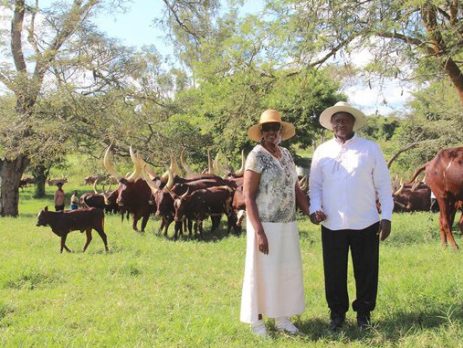
President Museveni has promised to allot 27 square miles of land in Mbarara District to a United Arab Emirates investor to set up model farm in the country. The investor, Dr Ahmad Eltigani Al Mansouri, will bring in new technology to fertilise cows that produce high milk, according to a press release from State House. The President reportedly promised to allocate the free land during a meeting on Friday at State House Nakasero. Dr Eltigani had called on President Museveni to discuss investment opportunities in the country. Dr Eltigani is also member of the Chamber of Commerce of Sharjah and the Chief Executive (CEO) one of UAE’s largest dairy companies, Al Rawabi. According to a press release, the meeting which was attended by the State minister for Animal Industry, Joy Kabatsi, Uganda president Uganda Chamber of Commerce, Olive Zainab Kigongo, and Secretary to the Treasury, Keith Muhakanizi, also touched on other investment opportunities in different sectors. Kabatsi confirmed attending the meeting and said the investor plans to set up a model farm in the country. She said the model farm will be established in Nsala, a government land near Mbarara town. The minister noted that Dr Eltigani is introducing technology where a high milk producing cow is injected with some medicine which will make it produce many eggs. The eggs are then fertilised by a similar bull from a good milk producing herd and then the eggs are implanted in several other cows. She said this will increase the number of the high quality milk producing cows. “We are trying to do this for our local Ankole cow… we are going to have those cows deliver more and more. We hope this technology will help us to preserve our local Ankole cows,” Ms Kabatsi said. According to her, through the technology, a single cow can produce more than 50 calves of high milk producing gene. According to the minister, the technology is aimed at preserving the Ankole cows and ensure that those that produce more milk are not eliminated. She said the technology will be rolled to other parts of the country where good quality animals will also be selected for both meat and milk production. She added that through the technology, one cow can produce up to 50 calves within nine months. While the model farm will host the initial process, the target is to reach about 6,000 farmers who will benefit from the technology. On why the investor is coming at a time when the President has just returned the Biosafety Bill 2017 to Parliament over concerns on the local genes and a host of other issues, she said the technology will not modify anything, but simply working with the natural genes. “No no no, we are not modifying anything, we are just using our own genes, but only improving the quality,” she said. President Museveni assured him that the Government of Uganda will locate land to the investors on which more of such model farms for modern farming and factories for food and fruit processing will be built.
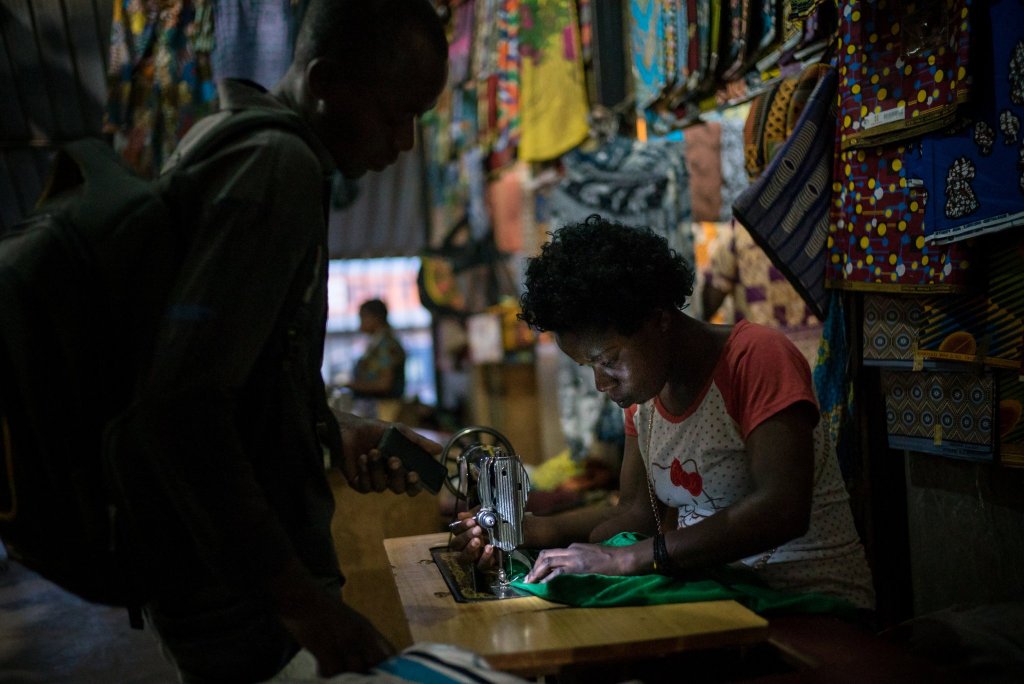
East African countries could ban imports of used clothes and second-hand cars in the next three years, putting an end to a lucrative trade in the region. The EAC directed member countries to buy their textiles and shoes from within the region with a view to phasing out imports by 2019. The move follows a decision by the six-nation East African Community – Kenya, Uganda, Rwanda, Burundi, Tanzania and South Sudan – to fully ban imported second-hand clothes, shoes and used cars by 2019, arguing it would help member countries boost domestic manufacturing. Second-hand cars have also been blamed for causing accidents. To avoid paying taxes, people pay bribes at ports to import cars. Those cars then do not go through any safety checks. To give some idea of the extent of smuggled imports, recent news reports claim that over 2,700 shipping containers had disappeared in at Dar es Salaam port in Tanzania. The U.S. Trade Representative is also threatening to review trade benefits to Rwanda, Tanzania and Uganda under the African Growth and Opportunity Act (AGOA) after a complaint by U.S. interests about East African ban on imports of used clothing. The AGOA trade program provides eligible sub-Saharan countries duty-free access to the United States on condition they meet certain statutory eligibility requirements, including eliminating barriers to U.S. trade and investment, among others. U.S. AGOA imports from Rwanda, Tanzania, and Uganda totaled $43 million in 2016, up from $33 million in 2015. U.S. exports to Rwanda, Tanzania, and Uganda were $281 million in 2016, up from $257 million the year before.
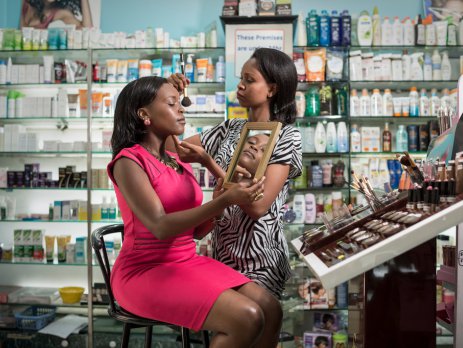
The cosmetics market and beauty products market in African is poised for unprecedented growth. African consumers have long been asking for products adapted to their hair, skin and body specificities. Africa remains a largely untapped market where consumers are screaming out for quality products adapted to their specific needs. For example, African skin requires darker shades than make-up lines traditionally offer. Make-up also needs to be more resistant to heat. Different needs also exist in terms of skin care, as anti-ageing products for African consumers primarily aims at tackling dark spots and uneven complexion, whereas anti-ageing products for Western women aims at tackling wrinkles first. And in terms of hair care, matters become more complicated since African hair strongly differ from Caucasian or Asian hair but also varies from one country to another. It is a well known fact that the biggest challenge for many African women is combing their hair – which itself can be painful at times. Knowing such differences, it is easily understandable that African consumers, and especially women, pay strong attention to Africa-specific products. Product tailoring is the key to winning the African battle…provided the products remain affordable. Therefore, Cost and R&D competitiveness are critical in the beauty sector in East Africa. The African Market Africa has 54 countries; including the addition of the South Sudan in 2011. In 2015, the urban population was estimated at 450 million inhabitants, or 40% of the total African population; making Africa more urbanised than India. It is estimated that by 2030, more Africans will be residing in urban areas for the first time in the continent’s history and this number is projected to grow to 1.2 billion; that amount to almost 60 per cent of the total population of Africa. Africa has 52 cities with more than one million inhabitants and is expected to grow to 75 cities in the near future. Experts believe that if the infrastructure expenditure grows in the coming years, the cosmetic market growth rate will also be improved due to the benefits that an improved infrastructure provides. The increase in growth rate can lead to further improvements in the infrastructure due to the immense amount of money generated from this sector of the economy. The African market is expected to be in virtual circle where an increase in infrastructure spending will lead to an increase in the market growth rate, which in turn, will benefit the cosmetic industry. However, customs procedures are still a lengthy process. A trade-facilitation programme that would cut the time needed to comply with customs procedures at port by 50 per cent would generate an extra $15 billion annually in GDP for sub-Saharan Africa alone. Market Segmentation & Brand Awareness While the growth of the cosmetics goods market is highly correlated with macroeconomic indicators such as real GDP growth and disposable income, a key impediment to cosmetics brands’ successful expansion into Africa is a failure to recognise the vast differences in consumer preferences between these high-growth countries. Africa does not constitute a single economy, and vast cultural and religious differentiation does not allow cosmetic firms to blindly use one African country’s product penetration strategy as a blueprint for expansion into the entire region. Correctly estimating the maturity phase of the target country is pivotal to commercial success, as different product categories see peak demand at different moments of the maturity cycle, ranging typically from the lowest to highest price points. For example, while the Kenyan cosmetics goods market is estimated to have expanded by 60 per cent during the period 2007-17, higher-end cosmetic brands such as Revlon met with weak appetite as the Kenyan consumer favoured cheaper brands. Gender differentiation is also a key factor to consider: male income continues to outpace their female counterparts’ earnings trajectory, which presents opportunities in the sector of men’s grooming products. Not surprisingly then, men’s grooming is fast emerging as one of the fastest growing sectors in East Africa’s beauty and personal care industry.
Preliminary request for participation in the trade show
place
calendar_today
Preliminary request for visitor registration
Visitor Registration
place
calendar_today