

Ethiopia's Automotive Industry
folder_open Articles , East Africa
Ethiopia is among Africa’s most impressive growth performers over the past decade averaging 10.9% annual growth between 2010 and 2020. With a GDP of US$91 billion in 2019 it is among the top ten largest economies in Africa and the third largest in Eastern Africa. After Nigeria, the country is also home to the continent’s second largest population of 95 million people. Undoubtedly, Ethiopia is a relatively untapped investment opportunity in Eastern Africa especially in the manufacturing sector. Ethiopia’s automotive market is dominated by second-hand imported vehicles – particularly commercial vehicles. Commercial vehicles were Ethiopia’s second most valuable import overall in 2019, worth US$955 million. On the other hand, commercial vehicles are also Ethiopia’s highest earning automotive export. This can largely be attributed to Bishoftu Automotive Industry (BAI), an automotive manufacturing and assembly company run by the Ethiopian military. BAI specialises in assembling, upgrading, overhauling and localising buses, pick-ups, SUVs, trucks and military equipment such as tanks and armoured personnel carriers (APCs). Military vehicles are largely for the use of the Ethiopian military and African Union peacekeeping missions while civilian vehicles are supplied to local customers such as state-owned transport providers. Small quantities of commercial vehicles have been exported to neighbouring Somaliland. Increasing Numbers Ethiopia has the lowest motorisation rate globally, with only two cars per 1,000 inhabitants. Recent reports estimate that in 2019 there were 175,000 vehicles in use in Ethiopia, of which 100,000 were passenger vehicles and 65,000 were commercial vehicles. Between 2010 and 2020, total vehicles in use grew at a CAGR of almost 2.1%. According to Ethiopia’s Ministry of Transport approximately 84% of the market is passenger vehicles while commercial vehicles make up 16%. Second-hand vehicles in Ethiopia tend to appreciate in value due to high import duties and limited supply of vehicles. As a result, second-hand vehicles dominate the market. Approximately 85% of vehicles are second-hand imports, of which almost 90% are Toyotas.These vehicles are imported primarily from the Gulf States, through the Port of Djibouti. Automotive Sales Although there is almost no publicly available reliable data on vehicle sales in Ethiopia. It is however estimated that 18,000 vehicles are brought into Ethiopia each year. The majority of these are second-hand vehicles. Each year, 2,000 new Toyotas and between 5,000 and 7,000 used Toyotas are imported. Clearly, Toyota controls approximately 65% of the total market (new and second-hand) due to its reputation as being reliable and inexpensive to maintain. The main drivers of new commercial vehicle sales are construction, agri-business and retail while passenger vehicle sales are driven by government (including diplomatic corps) purchases. Vehicle affordability is further locked up by prohibitively high vehicle taxes of sometimes more than 220% depending on engine size. As taxes in Ethiopia are cumulative, excise tax is calculated on the customs duty, surtax is charged on top of the excise tax, and customs duty and final VAT is calculated once the surtax, excise tax and customs duty have been added. Imported vehicles may cost as much as three times the retail price of the vehicle outside of the country. Commercial vehicles, such as pick-ups, vans and trucks, have a lower tax rate than vehicles for personal use. Relative disincentives exist vis-à-vis personal vehicles compared to commercial vehicles. Diplomats and foreign investors are allowed to import vehicles duty-free. The supply-depressing character of foreign exchange shortages contributes to imbalances in the market and drives up the market price of vehicles, thus also having a negative impact on the affordability of vehicles in the Ethiopian market. Production and Assembly The Ethiopian Investment Commission (EIC) reports that 31 foreign vehicle investment projects (largely Chinese projects but also someinvolvement of European companies) and 73 domestic vehicle assembly investment projects have been licensed since 1998. This means that a total of 104 companies have been licensed for vehicle assembly in the country over the past two decades. However, only a few of these are operational, with the vast majority licensed at the pre-implementation stage. During the past decade, a number of leading international automotive companies have carried out market scoping exercises to assess the viability of Ethiopia as an assembly hub. However, due to the limited market size, large-scale investments by these automotive firms have not yet materialised. Although a number of assemblers source some components such as tyres locally, Ethiopia has no defined local content requirement. A number of assemblers indicated that they are instructed that local content should be approximately 30% in order to qualify for the 30% tax incentive associated with all local manufacturing, but that no written agreement exists between assemblers and the state. Due to Ethiopia’s tax system, which subjects vehicles to tax depending on their engine size rather than age or origin, it is often cheaper to import a second-hand vehicle with a smaller engine size than it is to assemble a vehicle locally, despite import taxes on these vehicles. Despite being home to the continent’s second largest population, the overall automotive market size remains small in the short to medium term for current and prospective assemblers and producers. However, Ethiopia’s strong government support for industrialisation and the development of auxiliary industries coupled with a large cost competitive labour pool, and sizeable investments in infrastructure (both physical and economic) could position the country favourably for automotive manufacturing in the long term to service both the regional and domestic market with price competitive vehicles. To achieve this, clear definitions of local content need to be developed. The country’s high tax rates on vehicles reduce the affordability of vehicles, especially given the low income of the population, and restrains the vehicle retail market. To address this, industry stakeholders should support the establishment of vehicle financing solutions, in order to encourage wider vehicle ownership. Taxes should be revised to also take the age of vehicles into account in order to provide incentives for locally produced vehicles.
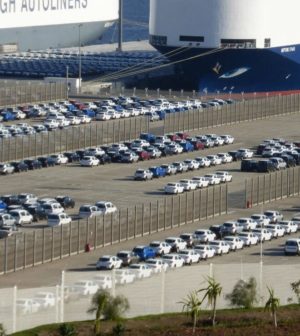
Morocco Automotive Industry Growing Fast
folder_open Articles
Before the end of next year, Morocco officials hope to announce the name of a third global automaker to build an assembly plant there. The unnamed manufacturer would launch production in the North African kingdom in 2021 or 2022, according to Khalid Qalam, senior adviser with Invest in Morocco. That third player would join Renault, which has two factories in Morocco, and PSA Group, which will begin building cars near the coastal city of Kenitra in 2019. But Morocco has even bigger plans for the industry. The country is working to recruit a fourth major automaker plant before the end of 2021, Qalam says, with production starting in 2023 or 2024. A fourth project would help the country reach its stated goal of having the capacity to build 1 million vehicles a year by 2025. “At that level, we believe Morocco will rank among the top 15 vehicle-producing countries in the world, and quite possibility even enter the top 10,” Qalam said. Officials are mindful of the shifting nature of global technologies, he adds. Morocco is encouraging its next vehicle manufacturer to produce a platform that allows it to manufacture both electrified vehicles and conventional models. Morocco’s pitch to world automakers is that it offers a low-cost base to produce models for export to Europe. But to help make EV production more attractive, Morocco will be providing consumer incentives to get local buyers to consider switching to models that fully or partially run on battery power. By 2025, Morocco wants annual sales of electrified vehicles to rise to 70,000 to 100,000 from small numbers today. The move to electrified transportation coincides with Morocco’s aim to become a major producer of solar power and to cover half of the country’s energy needs from alternatives such the sun, wind and biomass. The average wage in Morocco is less than 400 euros ($450) a year, compared to 2,000 euros just across the Mediterranean in Spain. The tax rate on companies is 0 percent for the first five years, and businesses are given a big break on value added tax. The country’s Tangier Med Port is already capable of processing 1 million vehicles a year. In addition, a high-speed rail line between Tangier and Casablanca is set to be operational in 2018. Africa Automotive Directory The research team at Auto Parts Africa has compiled a valuable database of automotive companies in Africa through painstaking work across more than 20 African countries. The result is the compilation of the first even Africa Automotive Directory which lists more than 17,000 automotive companies in Africa. This database of automotive-related companies in Africa lists wholesalers of automotive parts in Africa, auto parts dealers in Africa, auto parts retailers in Africa, auto parts suppliers in Africa, auto parts distributors, garages & service stations, Government Bodies, Automotive Associations as well manufacturers of auto parts in Africa. The Africa Automotive Directory is available for download here. Companies and exporters of auto parts from across the world have been using this database of automotive companies in Africa to reach potential buyers in Africa of auto parts and connect with importers of auto parts in Africa. This Directory contains the latest and complete information about your potential business partners in several cities across Africa. Listings of Top Companies Dealing in Auto Parts In MS Excel format Classified under different Trade Categories Up-to-date database of tyre dealers in Africa The database is well organised in an Excel sheet and the sortable fields include: Company Name, Address, Phone, Fax, Email, Website, Business Category.

Formed in 2015, the Africa Association of Automotive Manufacturers (AAAM) works specifically to promote and facilitate the growth of the African automotive industry. Formed by executives from the world’s biggest car manufacturers, the African Association of Automotive Manufacturers (AAAM) embarked on a concerted push to revive and resurrect Africa’s auto industry. Since then, the newly-created African Association of Automotive Manufacturers (AAAM) has been working with key African governments to create the right policy environment for the sector to ?ourish. Not surprisingly, one of the organisation’s ?rst ports of call was government leaders in Nigeria’s capital Abuja. Fast-growing Nigeria is the jewel in Africa’s auto crown with just 44 vehicles per 1,000 inhabitants, far below the global average of 180 vehicles per 1,000 inhabitants, according to recent estimates by a Deloitte report. While new vehicle sales have jumped in developing markets like China, India and Brazil over the last decade, growth in Africa has remained relatively slow. According to the International Organisation of Motor Vehicle Manufacturers (OICA), only 1.5 million new vehicles were sold across the African continent’s 54 countries with a combined population of 1 billion in 2016. South African consumers buy most new cars, and together with Egypt, Algeria and Morocco account for almost 80 per cent of the continent’s total auto sales, with only muted demand from important economies like Nigeria and Kenya. But far from being a disincentive to investors, the ?gures act as a rallying call. “When Volkswagen and General Motors moved into China the motorisation rate was lower than in Ethiopia today. The limited market was not a deterrent for the early movers who recognised China’s long-term potential,” says Karthi Pillay, Africa automotive leader, risk advisory at Deloitte. Africa’s untapped demand combines with a steady increase in consumer spending which has been rising at an annual rate of 10 per cent over the last few years. Moreover, analysts predict that by 2030, over half a billion Africans will have joined the middle class. “If the growth in vehicle sales keeps pace with growing consumer spending, annual sales of passenger cars in Sub-Saharan Africa will surpass 10 million units by 2030,” says South African consultancy B&M Analysts. Mix with this a renewed determination amongst African leaders to diversify their economies through boosting manufacturing. New policies aimed at increasing domestic car production are starting to pay off. In 2016, China’s state-owned car manufacturer Beijing Automotive International Corp unveiled plans to build a R11bn (US$759mn) auto plant in South Africa – the biggest investment in a vehicle-production facility in the country in four decades will earmark over half of its output for export, initially to East, West and North Africa. Elsewhere, after a four-decade break in production, Volkswagen is starting up its Kenyan production line once again. The signs are good. But with challenges ranging from imported used cars ?ooding the market to Africa’s weak manufacturing base and a lack of ?nance for would-be car owners, Africa promises a challenging operating environment. USED CARS THRIVE IN AFRICA The biggest barrier to new vehicle sales in Africa is cheap, imported second-hand cars from the US, Europe and Japan. Consultancy Deloitte estimates that eight out of 10 imported cars in Ethiopia, Kenya and Nigeria are used cars. According to the Kenya National Bureau of Statistics (KNBS) the volume of imported vehicles between 2005 and 2017 grew at over 300 per cent from 33,000 to over 120,000 units. Governments are developing policies to limit the in?ux. In an effort to hike the price of second-hand cars to favour more new car purchases, Kenya has forbidden vehicles over eight years old from entering into the country, with plans to reduce this further. Similarly, Nigeria has increased its import duty on second-hand vehicles, most of which arrive in a bustling trade from the US into Africa via Benin’s Cotonou port. As a result, Nigeria’s imports of cars from the US plummeted from more than 100,000 a year to less than 40,000 units in 2015. Other signs of change include the enduring stagnation of the Japanese economy. It has resulted in sluggish sales of new cars there, which in turn has created a shortage in the supply of quality used vehicles. There has been “a deterioration of the environment surrounding the export of the used motor vehicles industry”, says Hiroshi Sato, chairman of the Japan Used Motor Vehicle Exporters Association. As crucial as controlling used-car imports is to nurturing a domestic industry, so is establishing a manufacturing base. South Africa leads the continent’s auto manufacturing sector with original equipment manufacturers, long-established in the country and backed by a vibrant community of 500 suppliers and diversi?ed manufacturers. Yet, head up the continent and there is little auto manufacturing until North Africa, bar light manufacturing from imported kits. Kenya only has three assembly plants, and they all produce vehicles with wholly imported parts that require no domestic manufacturing input. The Kenyan government, which has identi?ed the auto sector as a key driver of the country’s industrialisation policy, has promised incentives to encourage a local industry. These include building special economic zones which bene?t from tax holidays and low utility rates. It has also introduced local input requirements and tariffs on imported auto components that could be manufactured locally. Encouragingly, the assembly of motor vehicles in Kenya grew by 31.4% from 2013 to 2014, with assembly ?gures forecast to almost double between 2013 and 2019. It’s improving the country’s chances of becoming a hub for assembly and production in the region. It’s a similar story in Nigeria, where the Automotive Industry Development Plan (NAIDP) pledges to build auto industry infrastructure including supplier parks and clusters. Tax incentives include Nigeria allowing car groups to import two fully-built units at a discount duty of 35 per cent for cars and 20 per cent for commercial vehicles, for every one built locally. The government also aims to boost skills and investment and encourage a local component industry to supply manufacturers at competitive prices. It amounts to the kinds of incentives that encouraged Ford to begin assembling its Ford Ranger pickup in the Nigerian city of Ikeja in 2015, partnering with Ford dealer group Coscharis Motors on the project. “Nigeria is a priority market for us in Sub-Saharan Africa and this will allow us to better serve our customers, both from a retail point of view and in terms of vehicle and parts availability,” says Jeff Nemeth, president and CEO of Ford Motor Company of Sub-Saharan Africa. “We are committed to supporting Nigeria’s developing automotive industry and economy together with Coscharis, and are looking forward to being active in the community. New assembly operations, even on a smaller scale like this one, have very positive ripple effects in the local economy and workforce.” But nurturing indigenous manufacturing is still dif?cult. Nigeria-based groups Nissan and Peugeot also only assemble the bulk of their vehicles from imported semi-knocked down (SKD) kits because there is no local manufacturing industry. Even Nigeria’s own Innoson Vehicle Manufacturing Company (IVM) based in the south-eastern Anambra state, assembles trucks and buses with completely knocked-down (CKD) kits with all the vehicles’ engines, gear boxes and electrical parts imported from overseas. Auto-related imports into Nigeria accounted for around 11.5% of total imports, worth around US$6.9bn in 2014, according to UNCTAD. AFRICA'S AUTOMOTIVE SECTOR Nigerian policy is currently making things even more dif?cult. Like all manufacturing, the auto sector is struggling under currency policies and associated import controls set up to conserve hard currency – and encourage local manufacturing – by prioritising strategic imports. It’s starving the auto sector of inputs and leading to a collapse in supplies of product lines from glass to rubber. OICA estimates that total new vehicle sales in Nigeria dropped by more than half in 2017, compared to 2016. It’s this kind of foreign exchange controls that are also limiting the ability of companies to import SKD units and parts for assembly and repair in Ethiopia, where high taxes also make cars unaffordable for most. Exporting within Africa is also a challenge for the continent’s carmakers because of tariffs and barriers. Uganda and Tanzania slap tariffs on cars assembled in Kenya, the only country in the East African Community with assembly capability, because they don’t meet local input criteria. It gives imported second-hand cars the edge. In recent times, Toyota South Africa saw a fall in exports to the rest of the continent as a result of higher tariffs in Nigeria, Algeria and Angola. Meanwhile, South Africa exports more vehicles to Europe, the US and even Asia than it does to its neighbouring African market. “Vehicle exports to Europe and Asia continued to show growth. Vehicle exports to African markets recorded substantial declines. This was due to a combination of factors including ad hoc duty increases in Nigeria and Zimbabwe, regulatory restrictions in Algeria and weaker economic conditions across most African countries due to the decline in commodity prices,” says Nico Vermeulen, director of the National Association of Automobile Manufacturers of South Africa (NAAMSA). FINANCING NEW CARS IN AFRICA Governments also need to create easier access to car ?nance. “The availability of ?nancing for new motor vehicles is virtually non-existent in most African countries,” says Vermeulen. South African banks have been quickest off the mark. South Africa’s FirstRand Bank announced plans to set up a vehicle ?nancing arm in Nigeria via its subsidiary WesBank, Sub-Saharan Africa’s largest provider of auto loans. Meanwhile, First Bank of Nigeria has spotted opportunity in the growth of car sharing in Nigeria in a development that the architects trying to build demand for new cars can hardly welcome. The bank’s vehicle ?nancing arm plans to extend borrowing to highly-rated Uber drivers via low-interest, used vehicle loans. The car-sharing platform has operated in Abuja and Lagos since it entered the Nigerian market in 2014. It currently has more than 2,000 drivers and was targeting 4,000 by the end of 2016. “We are absolutely committed to making it as easy as possible for our driver partners to start and maintain their own successful and pro?table businesses,” says Ebi Atawodi, general manager of Uber Nigeria. “And these used vehicle ?nance options make it possible for those with a demonstrable performance commitment to build sustainable businesses without incurring the high costs often associated with new vehicle purchases.” The growth in car sharing in Nigeria leads Deloitte’s Pillay to ponder future developments in the industry. “It shows mobility leapfrogging car ownership; Africa may not be a market focused on making and selling cars,” he suggests. Indian and Chinese manufacturers believe their low-cost models will have the advantage, while others are betting on the electric car. Uganda’s Kiira Motors grew out of a research project at Makerere University and is aiming to produce electric vehicles by 2019 before becoming original manufacturers by 2039. Ford is expanding its multi-modal approach to urban mobility. One of the innovations on show at Go Further Africa was its electric MoDe:Pro e-bike. Whatever the future holds, Africa’s consumers are the last untapped market for the auto giants.

Africa Business Pages B2B networking group. Join now at https://chat.whatsapp.com/Hh6sOcfcAw2BdW5PCtyyfS From 2016 onwards, WhatsApp has emerged as one of the fastest growing networking apps as well as a media platform in Africa. For most Africans, WhatsApp is their main social media platform, overtaking even Facebook. According to recent reports, more people in Africa use WhatsApp, not Facebook, to communicate with each other and share information. People all around the world use WhatsApp to connect with small businesses they care about – from online clothing companies in India to auto parts stores in Brazil. But WhatsApp was built for people and we want to improve the business experience. For example, by making it easier for businesses to respond to customers, separating customer and personal messages, and creating an official presence. Although WhatsApp has not released any official data about its market position in Africa but it seems to be eager to tap into the growing popularity of WhatsApp in Africa – evident from the recent launch of a dedicated standalone app called WhatsApp Business which targets small businesses. WhatsApp Business is currently just for Android users who dominate market share in emerging markets. It is estimated that 80% of small businesses in Brazil and India already use WhatsApp Messenger to reach their customers. WhatsApp Business features include business profile, messaging tools such as quick replies, greeting messages and away messages, metrics and a verified business account listing. “Our new app will make it easier for companies to connect with customers, and more convenient for our 1.3 billion users to chat with businesses that matter to them,” WhatsApp says. Customers won’t need to install new apps as messages sent from WhatsApp Business will be received on WhatsApp Messenger as usual. Already, over 500,000 users have installed the app within two weeks of being rolled out. A quick check showed the app which was rolled out initially in the UK and US on January 18, is now available in Nigeria, Kenya and South Africa. “It is a nice move that WhatsApp is going all-in for small businesses even though Africa’s big companies would also jump on the WhatsApp Business train as part of their digital business outreach,” said Chris Alagboso, an Owerri-based Nigerian media entrepreneur. While several early users of the new app in Nigeria said they were impressed, they observed that several important features that small businesses need are still missing such as receiving payments and the possibility of finding potential customers with a service similar to Facebook’s Sponsored Posts. WhatsApp rise has caused tensions with some of the mobile network operators as its success has eaten into the traditional voice and SMS revenue structure since the app enables users to make voice calls and text messaging for relatively low data costs. But the upside of WhatsApp’s popularity is that it is likely partly responsible for the continued rise in internet use particularly with smartphone take-up. For example in Zimbabwe, one of the few countries to provide data, WhatsApp alone was responsible for nearly half of all internet traffic in the country in 2017. In Nigeria, both e-commerce startups and traditional retailers in local markets have been experimenting with reaching their customers on WhatsApp, usually targeting popular WhatsApp groups or building broadcast lists. Africa Business Pages has always been leading the brigade in terms of embracing new technology to reach new audiences in Africa and already has a dedicated WhatsApp Business Group that helps African entrepreneurs connect with businesses worldwide. You can join the https://chat.whatsapp.com/Hh6sOcfcAw2BdW5PCtyyfS

The latest Africa Wealth Report by New World Wealth reveals there are now just over 160,000 millionaires in Africa. Interestingly, from 2000 to 2013, the number of millionaires on the continent grew by more than 145 percent, compared to the worldwide growth rate of 73 percent. In recent years, most of the ‘new millionaires’ have been young entrepreneurs and investors who have created promising businesses and invested in lucrative sectors of Africa’s fast-growing economies. This year, more new millionaires will join the club. In this article, I’ll share with you the top business opportunities on the continent that will make more millionaires in 2016. Let’s meet them… 1) Solar Power Solar energy is one of Africa’s most abundant natural resources. Most parts of sub-Saharan Africa enjoy more than 300 days of free God-given sunlight every year. Still, over 600 million people on the continent, especially in rural areas, don’t have access to reliable electricity. In most cities and towns, power outages are the norm and people often have to rely on noisy petrol and diesel power generators. Solar energy is free, absolutely clean and abundant. And it provides the best alternative for people in remote parts of Africa who are out of reach of electricity grids. Interestingly, some smart entrepreneurs are rising to the challenge of lighting up Africa through solar energy, and are very likely to join the millionaires club. I’ll share a few interesting examples… Off Grid Electric, a solar energy provider in Tanzania recently raised $25 million from international investors and won a $5 million grant from USAID. The company is already on track to provide solar power to 1 million homes in East Africa by 2017 and has recently expanded into Rwanda. M-KOPA, which provides ‘pay-as-you-go’ solar power systems has attracted investments of up to $40 million. This Kenyan-based business has already provided solar power to nearly 300,000 homes in Kenya, Tanzania and Uganda. 2) Agribusiness Agribusiness is Africa’s untapped goldmine, and a major potential source of millionaires in 2016. According to a World Bank report, Africa’s agribusiness industry is expected to be worth $1 trillion by 2030. With up to 60 percent of the world’s uncultivated arable land, fertile soils, abundant labour, and all-year sunshine, sub-Saharan Africa surely has the potential to become the world’s biggest exporter of food products. Even if Africa decides to ignore export markets, the continent’s one billion people provides a huge and ready market for agribusiness. Still, every year, African countries import more than 70 percent of wheat consumed, over 300,000 tons of chicken and spend more than $10 billion on imported grains, especially rice. Interestingly, more African entrepreneurs are tapping into the vast opportunities in Africa’s agribusiness market. And with the continued harsh impacts of low crude oil prices in 2016, sleeping agribusiness giants like Nigeria and Angola are finally putting a strong focus on agribusiness as a means to diversifying their economies. This means that governments in these countries are now more open and supportive of agribusiness initiatives. 3) Smartphones The phone in the picture is one of the versions of the Obi Worldphone; a low-priced smartphone that’s specifically targeted at the African market. Guess what? It sells for just about $129, and it’s selling like hot cakes. Africa is currently the second fastest growing market for mobile phones, after Asia. However, the first wave of Africa’s mobile phone revolution is almost over. These days, African consumers are looking to upgrade from ‘first generation’ feature phones to smartphones. It’s no surprise that the continent’s growing population of technology and fashion-savvy youth now presents a multi-billion dollar market for smartphones. However, most ‘new-age’ smartphone devices like iPhone, Blackberry and Samsung are quite expensive for the average African. This has created a huge opportunity for low-priced smartphones that are now hitting the African market. Better still, many of these smartphones are built on the Android operating system, have similar features to the ‘high end’ smartphones and most are just as stylishly designed. In the last eighteen months, over a dozen low-priced smartphone brands have debuted on the African market. Given the market potential for these phones, they’ll very likely make more millionaires for the entrepreneurs behind them. 4) Internet Access Africa’s internet market is worth billions of dollars. It’s no surprise that tech giants like Google and Facebook are scrambling to improve internet access to millions of Africans. Google’s Project Loon and Facebook’s Free Basics are just two of several bold initiatives to connect Africa. However, some smart African entrepreneurs are already making impressive moves to conquer the internet access market. One example is ‘BRCK’ a startup company in Kenya that has created a rugged internet modem device that’s designed for harsh environments with limited internet connection and electricity. The modem can hop between Ethernet, WiFi, 3G and 4G, and comes with eight hours of battery life. This African-inspired invention has already sold thousands of units in 54 countries, even in faraway places as India. Their biggest customers have been schools. Recently, BRCK raised $3 million in funding from investors to extend the reach of this amazing device. The entrepreneurs behind it will surely be smiling to the bank, after all the hardwork is done. 5) Education Africa’s human talent is one of its most ignored and underexplored assets. With one of the world’s youngest populations (over 50 percent of Africans are younger than 31), the continent is rich with creative and innovative talent. However, poor access to quality education is a serious threat to Africa’s human capital. Currently, a couple of interesting businesses and initiatives are achieving remarkable successes as they tackle Africa’s education problems head-on. Bridge Academies (in Kenya and East Africa) and Omega Schools (in Ghana and West Africa) have built an incredible education model of low-cost primary schools that allow pupils to pay as low as $1 a day as school fees. Another interesting business on Africa’s education scene is Andela. Through its free and highly rigorous training program, Andela develops promising African talents into top class software developers who are hired out to the likes of Microsoft and other tech giants in the USA and Europe. This interesting business model is called ‘talent-as-a-service’. Andela recently attracted $10 million in investment and is on track to train 100,000 world class African software developers over ten years. 6) African Art How much do you think African art is worth these days? You’ll be surprised. In November 2014, a collection of antique African art from Mali, Gabon, Congo and Liberia was sold in New York at Sotheby’s for a record-breaking price of $41 million. This is the largest ever sum realized from the sale of African art in the USA. Not too long ago, a set of wooden sculptures by the Nigerian artist Ben Enwonwu sold in London for over $500,000, three times the expected price. New World Map, the aluminium and copper sculpture of El Anatsui, the Ghanaian artist, sold for roughly $767,000, one of the highest prices ever fetched by the work of an indigenous African artist. After decades of neglect, both antique and contemporary works of African art are attracting high prices in the world’s major art markets. In 2017, more investors and collectors will be upping the demand for African art, and more millionaires will be made in the process. 7) Retail In April 2016, the Mall of Africa opened in South Africa. This massive 131,000 square metres of retail space is the largest shopping mall in Africa ever to be built in one phase. Recently, the Two Rivers mall opened in Nairobi, Kenya. It’s the largest shopping mall of its kind anywhere in East Africa. Across the continent, both local and international supermarket brands like Shoprite, Game, Checkers, Woolworths, Edgars and Spar are expanding as they scramble for every inch of available space in shopping and retail infrastructure developments. Interestingly, the battle for retail supremacy in Africa isn’t only happening in physical retail chains. eCommerce giants like Konga and Jumia have grown quite impressively in the last few years. Both internet-based retail businesses now have a combined worth of over $1 billion. In fact, the battle ground for Africa’s retail market is moving beyond the continent’s shores. New eCommerce entrants like Mall for Africa and Shop to my Door now make it possible for Africans to shop directly from retailers in the USA, UK and China. Amazing! Africa is now one of the fastest growing retail markets in the world. A large and growing middle class, increasing local spending power, and a boom in the number of expat workers are fueling the shopping trend on the continent. 8) Apps and Online Services There’s a digital revolution taking over Africa. These days, many services now have an app or are going online. Africa’s digital economy is growing really fast. These days, there’s almost an app or online service for anything you want. If you’re looking for a suitable hotel accommodation in Nigeria, Hotels.ng and Jovago.com are now the biggest online services in the hotel booking business. Recently, Hotels.ng attracted an investment of $1.2 million. If you want to watch African movies on the fly, there’s an app for that. IrokoTV is an app that gives you access to 5,000+ African movies on your mobile phone. Recently, IrokoTV secured an additional $19 million in investment funding to expand its presence across Africa. If you’d like to order bespoke furniture pieces without having to run after artisans or worry about quality, there’s an online service for that too. Showroom.ng is a Nigerian startup that’s changing how people buy furniture in Africa’s biggest economy. In 2020, more apps and online services will launch across Africa to solve problems and provide value. And more millionaires will be made in the process. 9) Payment Solutions Every year in Africa, over $100 billion in transactions are still done in cash. This presents a huge and lucrative financial services opportunity for savvy entrepreneurs. Since M-Pesa was introduced in East Africa, the transformational mobile-based money transfer and payment service has proved to be phenomenal in Kenya and Tanzania, where the platform handles over 200 million person-to-person transactions every year. In other parts of Africa, there is a huge scramble for Africa’s next big money transfer and payment service. In Nigeria alone, several promising businesses are jostling to dominate Africa’s biggest economy. Some of the top contenders are Paga, PayAttitude, SimplePay and PayWithCapture. Less than six months ago, Paga attracted a $13 million investment to expand its business within and outside Nigeria. It’s a huge bet that has the potential to really pay off. Payment solutions will be a key area to watch in the coming years. 10) Real Estate Africa’s real estate market is a multi-billion dollar opportunity, and several new millionaires will build their fortunes in this market. In almost every corner of the continent, real estate projects are emerging. The biggest attractions are high-rise hotels and office buildings, residential homes and apartments, and shopping malls. In Nigeria alone, there is a shortfall of 17 million housing units, with a funding requirement of $363 billion. In Angola’s capital, Luanda, prime office rents are among the highest in the world at US$150 per sq metre per month. In Mozambique, property prices at the sea ports, particularly for warehouses, are one of Africa’s most expensive. The key markets for real estate on every investor’s agenda are Angola, Nigeria, Egypt, Mozambique, South Africa and Kenya. All of these countries are experiencing a real estate boom like never before in history. Africa’s large and youthful population, an expanding middle class, increasing urbanization, influx of expatriates and multinational companies are the key drivers of demand for both commercial and residential real estate. 11) Startup financing Investing in startup and early-stage businesses is on the rise globally, accounting for 67 percent of all venture capital (VC) funds in North America and increasing 19-fold in Europe. Across Africa, start-up companies are attracting the interest of venture capital, private equity, social impact funds and angel investors who are looking for higher returns on invested capital. In 2015 alone, the amount of capital invested in African startup businesses was roughly $0.5 billion. And in 2022, this figure is expected to double. As Africa’s young entrepreneurs continue to come up with brilliant business ideas that have the potential to significantly disrupt both new and established markets, it’s almost impossible for investors to ignore the lure of attractive investment returns. As of January 2019, there are now more than 250 investment organisations, firms and platforms that are focused on investing in early-stage African businesses.
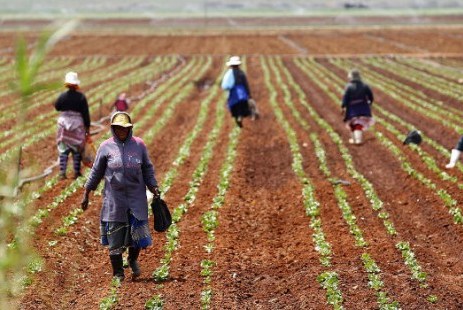
So Many People, So Little Land
folder_open Articles , Foodstuff & Beverages
Ethiopian and Kenyan governments have evicted local farmers to sell their land to agribusinesses from China and India As drought and famine threaten millions of lives in the horn of Africa, global food security — or rather insecurity — is at the forefront of development discourse. What’s more, Harvard University demographers forecast that before the end of the 2018, the world’s population will reach 7 billion. In light of these daunting statistics and what the United Nations is calling “the worst humanitarian disaster in the world,” one cannot help but wonder: how will the planet continue to feed itself? To find an answer, international aid agencies are searching for the roots of famine. Some problems contribute more directly to food shortages than others — in the case of East Africa, climate change is severely restricting crop yields and driving up prices. Studies show that crop-killing droughts in Somalia have become more frequent and long-lasting over the past fifty years. From 1950 to 1970, they came roughly once every seven years. Since 2000, Somalia has suffered three major droughts. But as the world grapples with and tries to learn from the East African famine, experts are arguing that food shortages and high prices in the developing world are also attributable to a lower-profile issue: irresponsible land use. For instance, in recent years the Ethiopian and Kenyan governments have evicted local farmers to sell their land to agribusinesses from China and India. While these sales generate governmental revenue, the agribusinesses generally produce solely for foreign markets and leave local food markets strained. A report by the International Food Policy Research Institute announced that between 15 and 20 million hectares of farmland in Sub-Saharan Africa were sold to foreign interests between 2006 and 2009. Land Africa Another hot-button land issue in the developing world stems from the expansion of the global biofuels industry. In another type of land deal, governments are leasing available farmland to biofuel plants, forgoing traditional agricultural production and driving up food prices both locally and globally. During the international food crisis of 2008, for example, the IMF estimated that increased biofuel demand accounted for 70 percent of global corn price increases and 40 percent of soybean price increases. So while land deals provide income for developing nations, unless that income is re-invested in infrastructural or agricultural development (which it often isn’t), they may leave populations vulnerable to famine during emergencies like the East African drought. To combat short-term thinking and its adverse effects, we have to demonstrate the benefits of long-term investment in responsible land use. CI is making the case for sustainability as a top priority in field program countries through participatory land use planning, a process which encourages local input in determining the best use of land from both conservation and economic perspectives. To put the food security issue in perspective, Harvard’s research predicted that 97 percent of the projected population increase of 2.3 billion over the next half-century will occur in underdeveloped nations. The population may be surging, but we have a fixed amount of land to work with. Managing it with a short-term mindset only creates problems down the road. We have a lot of work to do — 2050 is just two generations away.

Future of Africa
folder_open Articles
The last large source of arable land, minerals and fossil fuels, Africa may also be the continent that is the least-equipped to manage and protect its resources sustainably. If pursued with nature’s value in mind, Africa’s future growth could mean long-term prosperity for its people; if not, it could bring unsustainable consumption, resource extraction and environmental degradation. Here are some of the changes facing the future of Africa: 1. There are more Africans than ever before 2. In 2014, one in six people on Earth were African. By 2030, it will be one in five. Africa’s population is projected to more than double by 2060, with 300 million new babies born just between 2015 and 2030. More mouths to feed will put increasing pressure on the continent’s agricultural production, which is already failing to provide enough food for Africa’s current population amid challenges like drought, insufficient financing and lack of infrastructure connecting sellers and buyers. More than half of the African population — and an even higher percentage in East Africa — is dependent on agriculture for at least part of their livelihoods, which means that changes to agricultural productivity would have widespread impacts. Of the world’s 20 countries most vulnerable to agricultural production loss due to climate change, 11 are in Africa. Given the importance of pollination, freshwater provision and other natural systems that make food production possible, implementing sustainable agricultural practices that increase productivity without depleting nature are critical. Conservation International (CI) led the development of a web-based monitoring system called Vital Signs to do just that; by providing diagnostic tools and near real-time data on factors such as precipitation and soil health, the system helps farmers and governments adapt their practices to changing weather patterns. 3. Africa’s workforce is growing faster than any other continent While this shift reveals the potential of Africa to take a larger role in the global economy, having people ready to work isn’t enough. Michael O-Brien-Onyeka, senior vice president of CI’s Africa field division, explains: “By 2050, one in every four workers in the world will be from Africa — but I’m not sure if all of them will have jobs.” In order for those jobs to be sustainable long term, they must reflect a new economy that accounts for nature’s value. If Africa’s economic growth continues at the cost of its “natural capital” — that is, the forests, fresh water, soil, wildlife and other elements of nature that its people rely on — the continent’s future as a global leader will be in jeopardy. 4. Almost half of Africans live in cities To much of the world, Africa is synonymous with wildlife — but many Africans have never seen a wild giraffe or elephant. As the growing population of mainly young people migrates to cities in search of work, economists are asking the question: Will urbanization in Africa solve any of its economic problems? Cities offer “investment, innovation, skilled labor, and higher incomes”; for many countries, they’re the hallmark of development. But cities can also bring “congestion, the creation of slums, worsening air quality, floods and inadequate sanitation, and joblessness arising from migration from poor rural communities to urban centers ill-equipped to receive them.” Which direction will dominate Africa’s cities? It will depend on the development path its countries choose. 5. Africa’s middle class is growing fast. rising middle class is good news for the economy — and the newly affluent members of that group. But too often it goes hand in hand with overconsumption and a host of environmental issues that affect human health, the long-term availability of natural resources and ultimately, economic stability. In places like China, which is projected to overtake the United States as the world’s largest economic power, the short-term economic gains of a rapidly rising middle class — and its spending habits — have come with serious environmental ramifications like deforestation and increased carbon emissions from more cars on the road. 6. Half of the world’s 12 fastest-growing economies are in Africa The Future of Africa? For Africa to manage its resources for future generations, it will have to account for the value of its “natural capital,” as it does its financial and human capital. The Gaborone Declaration for Sustainability in Africa, a 10-country consortium spearheaded by Botswana, offers a model for bringing the value of natural resources into economic decision-making.

In East Africa alone the brand is set to open three more hotels later this year with the opening of Four Points by Sheraton Nairobi Airport, Four Points by Sheraton Dar es Salam and Four Points by Sheraton Arusha DUBAI, United Arab Emirates, April 10, 2017/ — Marriott International, Inc. today announced its first property in Kenya with the opening of Four Points by Sheraton Nairobi Hurlingham. Owned by Kamcan Properties Limited, the hotel is strategically located in the upmarket suburb, close to the city center and within easy access from the surrounding business areas of Westlands, Kilimani and Nairobi Central as well as from the Kenyatta International Airport and the Wilson Airport. “Four Points by Sheraton Nairobi, Hurlingham is a significant addition to our fast growing portfolio in the region offering a perfect blend of stylish comfort and genuine service at an honest value,” said Alex Kyriakidis, President and Managing Director, Middle East and Africa, Marriott International. “The hotel is yet another example of our conversion friendly strategy that highlights our ability to convert hotels successfully within a short period of time and have them join our system while delivering value to our partners and creating memorable experiences for our guests in exciting new destinations.” Designed for the modern traveler with an emphasis on approachable design and stylish comfort, Four Points by Sheraton Nairobi, Hurlingham features 96 spacious and modern rooms as well as food and beverage optionsincluding an all-day dining restaurant, a rooftop restaurant with spectacular city views and a bar and lounge where guests can experience the brand’s signature Best Brews™ program featuring an array of local beers – the ideal spot to watch sports matches and unwind with friends and colleagues. Other hotel facilities include a fitness center, a rooftop pool and 8500 square feet of flexible meeting spaces. The hotel provides all of the brand’s defining elements including the signature Four Points bed, free bottled water in all rooms and suites, fast and free Wi-Fi throughout the hotel, and an energizing breakfast with fresh coffee that helps guests start and end the day right. “By introducing a Four Points property, we expect to attract travelers familiar with this popular global brand and everything it has to offer,” said Vivek Mathur General Manager Four Points by Sheraton Nairobi Hurlingham “and we are confident that the hotel will emerge as a preferred choice for travelers looking for stylish accommodation and a relaxing atmosphere whether they are on business or on leisure.” Marriott International is also currently developing a 365 room JW Marriott in Nairobi slated to open in 2020 which will substantially enhance Marriott International’s presence in the country. Globally Four Points by Sheraton continues to experience incredible growth momentum. In East Africa alone the brand is set to open three more hotels later this year with the opening of Four Points by Sheraton Nairobi Airport, Four Points by Sheraton Dar es Salam and Four Points by Sheraton Arusha. About Four Points: Four Points is travel reinvented. With over 200 hotels in nearly 40 countries, Four Points meets the needs of the everyday traveller and offers guests exactly what they need on the road. Four Points combines timeless style and comfort and an authentic sense of the local as well as genuine, always-approachable service, all around the world. About Marriott International: Marriott International, Inc. is the world’s largest hotel company based in Bethesda, Maryland, USA, with more than 5,700 properties in over 110 countries. Marriott operates and franchises hotels and licenses vacation ownership resorts. The company’s 30 leading brands include: Bulgari Hotels and Resorts®, The Ritz-Carlton® and The Ritz-Carlton Reserve®, St. Regis®, W®, EDITION®, JW Marriott®, The Luxury Collection®, Marriott Hotels®, Westin®, Le Méridien®, Renaissance® Hotels, Sheraton®, Delta Hotels by MarriottSM, Marriott Executive Apartments®, Marriott Vacation Club®, Autograph Collection® Hotels, Tribute Portfolio™, Design Hotels™, Gaylord Hotels®, Courtyard®, Four Points® by Sheraton, SpringHill Suites®, Fairfield Inn & Suites®, Residence Inn®, TownePlace Suites®, AC Hotels by Marriott®, Aloft®, Element®, Moxy Hotels®, and Protea Hotels by Marriott®. The company also operates award-winning loyalty programs: Marriott Rewards®, which includes The Ritz-Carlton Rewards®, and Starwood Preferred Guest®.

Email marketing in Africa has been yielding excellent results for entrepreneurs from across the world looking for buyers in the lucrative markets of Africa. By identifying potential buyers for their products in ket African markets and reaching them through targeted email campaigns has become a popular and effective way of marketing one products in the African markets. However, sourcing email database and African business directories is a task in itself. Email databases for Africa are difficult to source and are often priced high. Email Database of African Importers However, Africa Business Pages, one of the oldest African B2B portal, established in 1996 has been compiling databases or various African markets as well as business sectors on a regular basis by providing African companies a free registration service. This has helped the Africa Business Pages to acquire the most reliable and extensive database of companies in Africa. The email database for companies in Africa is now available for download from Africa Business Pages at cost-effective prices. The email database accuracy is guaranteed through six-monthly updates as well as telephone verifications – thereby making the database of African companies sold by the Africa Business Pages one of the most reliable in the world. Email marketing has a long history as one of the most powerful methods for growing sales and maintaining strong relationships with customers. It has also been found to be an effective way for brands to convert their website visitors or followers into potential customers. As a result, acquiring a reliable database of your target audience in the African markets can go a long way in developing new business relations with your business counterparts in Africa. The email database of African importers sold by Africa Business Pages provide an extensive listing of companies together with their business activities – making it easier for you chose your target audience, thereby making your email marketing campaign yield better results. Available for instant download in Excel format, the database of companies in Africa is a perfect starting point for those looking for buyers in Africa, importers in Africa. Database of companies in Africa As e-mail marketing usage in Africa grows, so does its benefits. Marketers now use e-mail as part of their business-to-business and business-to-consumer integrated marketing mix, as most recipients accept and even welcome targeted, useful e-mails. According to a recent Jupiter Research survey, 60% of business decision makers prefer e-mail and the Internet over other mediums for receiving marketing messages. Even the cost-per qualified lead can be 5% to 15% less when using online media. Whether you are looking for an email database or a complete listing of importers in Africa, you can find them all under one roof. Africa Business Pages, is an award-winning B2B portal dedicated to promoting trade to and from Africa and has been connecting African buyers with international suppliers since 1996. You can download the email database of companies in Africa from: http://importers.africa-business.com
Dubai, UAE: DP World is looking for new investment and expansion opportunities across Africa, as it pushes ahead with its long-term strategy focusing on the continent, the company’s Senior Vice President and Managing Director for the UAE Mohammed Al Muallem told delegates on Thursday at the fourth Global Business Forum on Africa in Dubai. “We want to be part of Africa’s progress. We see huge potential in Africa and we are looking to build on our success and the experience we’ve accumulated there to grow further,” said Al Muallem. He noted that DP World is already present on the ground and has grown to seven locations and ports on the continent covering the Mediterranean Sea, the Red Sea, the Atlantic Ocean, and the Indian Ocean. He spoke about the company’s aim to partner with landlocked countries and revealed that it has already ventured into Rwanda as part of its efforts to expand from marine operations to dry ports. “We want to be part of the entire supply chain and we are looking at any opportunity to invest into the supply chain and make it more efficient. Countries may have the ability to produce but lack ways to circulate their product: this is where we come in, sharing our knowledge and expertise,” said Al Muallem. Offering advice to African partners and stakeholders, Al Muallem said: “By removing red tape and introducing advanced technologies, we can make streamline operations and move things along faster. We can bring great value in that regard based on our experiences here in Dubai, where the government is heavily investing in the digital infrastructure. If we look at the UAE, it is the government that’s really moving things forward and building the necessary infrastructure.” Organised by the Dubai Chamber of Commerce and Industry, the fourth Global Business Forum on Africa, was held on November 1 and 2, 2017, at Dubai’s Madinat Jumeirah, under the patronage of H.H. Sheikh Mohammed bin Rashid Al Maktoum, Vice President and Prime Minister of the UAE and Ruler of Dubai. The high-level event is part of the Chamber’s Global Business Forum series, which focuses on Africa, Latin America, and the Commonwealth of Independent States (CIS). To date, the series has hosted 10 heads of state, 74 ministers and dignitaries, and 5,400 executives, as well as a host of influential decision makers from 65 countries around the world.
Preliminary request for participation in the trade show
place
calendar_today
Preliminary request for visitor registration
Visitor Registration
place
calendar_today