

E-commerce In Africa: Projections Vs Reality
folder_open Articles
Going by statistics alone it is obvious that Africa is an up and coming market for e-commerce. Though African countries are not ranked as high as other markets like the US and Europe when it comes to e-commerce, the online shopping phenomenon is spreading fast across the continent. E-commerce in Africa was valued at $16.5 billion in 2017 and this value could cross the $75 billion mark by 2025. Even though these predictions paint an optimistic picture, one must do a reality check before completely relying on these reports and predications. The reality is that E-commerce in Africa is far from realising its full potential in the short term future because of many inherent shortcomings that plague the African continent. Experts believe that a number of problems need to be resolved before Africa can realise its full potential as an e-commerce ready market. Online Payments First and foremost is the issue of online payments. As many African countries have few people with access to a bank account, most e-commerce platforms in Africa have turned to mobile payment as a payment method during the checkout process. To make maters worse, most Africans are accustomed to using cash. It’s more familiar and tangible than digital payments, which are fairly new on the scene for most African markets. Data Costs No doubt, with a billion people on the continent still mostly offline, Africa does present itself as a huge market for online trading. However, one of the major challenges facing African e-commerce is the high cost of Internet services. Less than one-third of the African population has an Internet service that allows them to shop online. Internet data is expensive for most people in Africa, and with those who manage to have connection to the Internet experience weak Internet connectivity, consequently making online shopping not an attractive option for everyone. This means that many Africans don’t find it economical to spend time even attempting to browse through e-commerce sites when they could easily obtain needed items from physical stores. However, with continued investment in fiber optic networks and pressure on governments to pursue lower Internet costs, this may become less of a barrier over the coming decade. Delivery Problems Delivery of goods is a real challenge for e-commerce operators in Africa. The postal services in most African countries are extremely limited or non-existent, making e-commerce operations extremely difficult. E-commerce businesses rely entirely on great infrastructure, including an effective postal service to for logistical purpose. However, e-commerce in Africa relies on motorbike delivery operations, which increase the cost of doing business. Conclusion In the coming years, we can expect increased implementation of innovative technologies, including drone deliveries, mobile payments, and fiber optic infrastructures. This, together with education about the safety and convenience of online payments, makes the future of African e-commerce extremely promising.
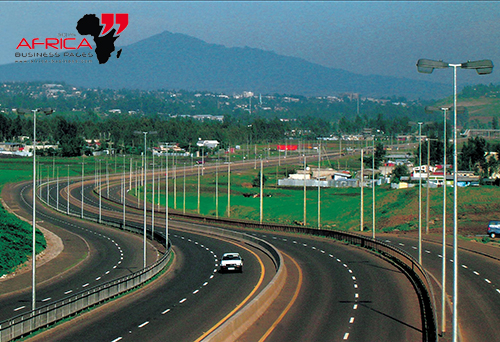
Ethiopia’s Road To Success
folder_open Articles
One of the fastest growing economies in Africa, Ethiopia, has an ambitious plan to cut a green, sustainable path to becoming a middle-income country by 2025. Along the way, the country faces growing urban migration and rising demand for food—challenges that are linked by, and depend on, roads for access, supply and mobility. In 1997, the total road network in Ethiopia was 26,550 kilometers. By 2014 it reached 99,522 km. For the country to reach its ambitious growth targets it’s aiming to double this to over 200,000 km by 2020. But new roads in Ethiopia and across sub-Saharan Africa often change the landscape, bringing dust, flooding and erosion. The impact is felt most by rural communities. Roads can negatively affect water flows to wetlands, block fish movements and cause landslides, as well as impact the livelihoods of millions of people. There is a solution: an approach to road building developed by Dutch social enterprise MetaMeta shows that it’s possible to reduce the impact of new roads and support food production by harvesting excess water. Under a project rolled out in Ethiopia as well as nine other countries including Bangladesh, roads are being built using innovative designs and drainage structures to collect water caused by flooding. This has solved an infrastructural issue while conserving water that can be used for crops and to feed livestock. Well built roads Practitioners at MetaMeta found that more than a third of households in Tigray, northern Ethiopia, reported flooding as a result of new roads with negative effects on crop production for around one in ten households. The study found that poor road construction can lead to soil erosion on farms and plots of land hugging the roadside. In addition, construction can increase the cost of road maintenance and repairs. This in turn limits transport options, including restricting access to markets, schools and hospitals. The net cost is damaged livelihoods. One solution, developed by MetaMeta, helps both mitigate the impact of new roads and support food production by harvesting excess water with “smart roads”. A project called Roads for Water is testing the concept. Funded by the Global Resilience Partnership, an independent partnership of public and private organisations focusing on the most vulnerable people and places, this project uses innovative road concepts, designs and drainage structures to collect water caused by flooding. For example, roads can route water to storage ponds or underground aquifers. Road drifts can help to retain water in dry riverbeds, and ensure systematic spreading of floodwaters. By harvesting rainwater, communities living near road networks can increase their resilience to shocks such as floods and droughts. In Ethiopia the project showed that $1,800 per km investment is sufficient to implement such measures, and can directly benefit over two million people. This compares favourably with annual maintenance expenditures per kilometer of $1,100 per year on rural roads in sub Saharan Africa and a periodic maintenance of $11,200 often incurred from water damage. These smart roads are increasing resilience to shocks, such as floods because water is being harvested and maintenance costs are reduced. They are also driving down the cost of road construction through, for example, the reuse of borrow pits for permanent water storage rather than requiring them to be backfilled. This is a considerable cost saving measure and additionally creates a local water resource. In Bangladesh, for example, smart roads are helping build resilience to floods that submerged a third of the country last year. If countries like Ethiopia and Bangladesh are to become more resilient they will need innovative solutions to an increasingly uncertain climate. The importance of building resilient roads will only intensify as populations grow and countries develop. Globally, an estimated 900 million rural people still don’t have access to road and transport infrastructure. The investment gap on global roads is expected to approach $1.6 trillion per year for the next 40 years as increasing amounts of roads are built, especially in the developing world. But solutions for better roads won’t work unless they are driven by local ideas and are compatible with local needs and contexts. Collaboration and buy-in between local partners – from engineers to technicians, farmers, laborers and governments departments – is critical. Solutions as simple as bringing the ministry responsible for roads together with the ministry responsible for water and talking them through the challenges and opportunities can produce remarkable results. All in all, better infrastructure will result in higher FDI as well as higher trade volumes for Ethiopia – making the country a hub for trade and investment in times to come.
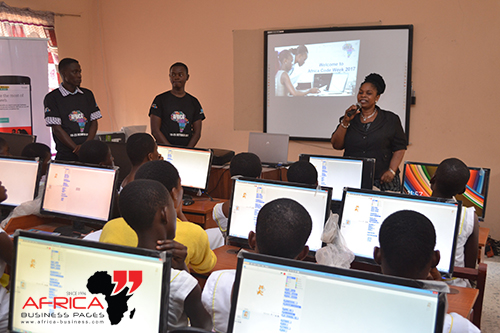
Google has released a new search app called Go in 26 African countries that would allow users to search the web faster, even with slow Internet connections. It will partner with pan-African wireless carriers such as MTN Group Ltd. and Vodacom Group Ltd. to preload the app on some of their low-end devices. The internet giant has also adapted the voice function to work better on slow connections, even as basic as 2G networks, according to Google Africa Chief Marketing Officer Mzamo Masito. “Weak data connectivity, high data costs and low storage space often make it hard for people to get the most out of the internet,” he told reporters on Thursday. “Google Go is built to handle these challenges.” U.S. tech giants see Africa as a relatively untapped market for smartphones and services such as web search and social media. Over the last few months, Google has been releasing lightweight operating “Go” systems of its popular apps for less capable phones including Gmail and Google Assistant. Last year, it launched YouTube Go in Nigeria, an “offline first” version of the video sharing platform, allowing users to preview and download videos, rather than stream, and essentially save on data costs. The app’s release is part of a recognition of how high data costs, inadequate digital infrastructure, geographical locations, and scarcity of content in local languages keep many Africans offline. By 2020, there will be 535 million unique mobile subscribers in sub-Saharan Africa, up from 420 million in 2016 – a subscriber base that is growing faster than any other region globally. Internet bandwidth capacity is also growing fast while mobile broadband connections are set to reach half a billion by 2020, becoming the driving force behind innovation, financial inclusion, and access to services ranging from solar power to education, and insurance. Younger consumers in sub-Saharan Africa are increasingly demanding quicker internet speeds and cheaper phones to go about their business, while MTN and Vodacom see the digital space as their fastest-growing market. The new app will be available in 26 countries in sub-Saharan Africa and will be pre-installed on all Android Oreo devices. The company also plans to make it available in other emerging markets, including India, Brazil and Indonesia. Africa Business Pages (africa-business.com), on the other hand, is also offering free listings for African businesses. You can list you company by registering here.
Africa: Ripe for Business: Export to Africa and Reap the Benefits
folder_open Articles , Business Outlook
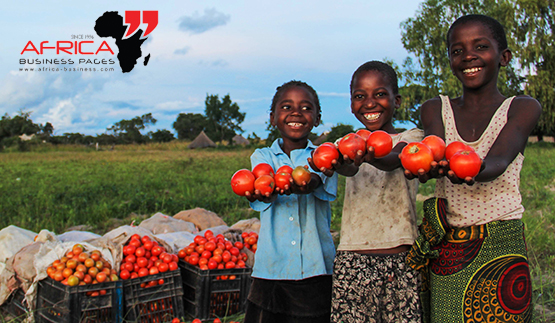
Currently, 6 of the world’s 10 fastest growing economies are in Africa, and the ease of doing business in Africa is improving to the extent that a good number of countries (including South Africa, Ghana, Mauritius and Tunisia) now outperform China, India, Brazil and Russia. In addition, FDI inflows to Africa have demonstrated year-to-year growth since 2010 and now amount to US$ 50 billion. The key reasons behind this growth surge included government action to end armed conflicts, improve macroeconomic conditions, and undertake microeconomic reforms to create a better business climate. To start, several African countries halted their deadly hostilities, creating the political stability necessary to restart economic growth. Next, Africa’s economies grew healthier as governments reduced the average inflation rate from 22 per cent in the 1990s to 8 per cent after 2000. They trimmed their foreign debt by one-quarter and shrunk their budget deficits by two-thirds. Finally, African governments increasingly adopted policies to energize markets. They privatised state-owned enterprises, increased the openness of trade, lowered corporate taxes, strengthened regulatory and legal systems, and provided critical physical and social infrastructure. Nigeria privatized more than 116 enterprises between 1999 and 2006, for example, and Morocco and Egypt struck free-trade agreements with major export partners. Although the policies of many governments have a long way to go, these important first steps enabled a private business sector to emerge. Together, such structural changes helped fuel an African productivity revolution by helping companies to achieve greater economies of scale, increase investment, and become more competitive. After declining through the 1980s and 1990s, the continent’s productivity started growing again in 2000, averaging 2.7 percent since that year. These productivity gains occurred across countries and sectors. This growth acceleration has started to improve conditions for Africa’s people by reducing the poverty rate. But several measures of health and education have not improved as fast. To lift living standards more broadly, the continent must sustain or increase its recent pace of economic growth. To be sure, Africa has benefited from the surge in commodity prices over the past decade. Oil rose from less than $20 a barrel in 1999 to more than $145 in 2008. Prices for minerals, grain, and other raw materials also soared on rising global demand. Political change in Africa is rapidly happening in unexpected pockets. Observers are actively monitoring situations in certain countries, in particular South Africa, Ethiopia, and Zimbabwe, with an excitement for future socio-political change that could follow these headwinds. Yet all consideration of the current political movements suggest that the imagined economic change is not necessarily an easy sequel to the political prologue. Political change is also sweeping across the African contient: Ethiopia The unexpected (or expected, depending on who you ask) resignation of Ethiopian Prime Minister Hailemariam Desalegn, in theory, paves the way for change. But many insiders are not exactly sure what path will be chosen by the ruling Ethiopian People’s Revolutionary Democratic Front. Faced with ongoing demonstrations that began sporadically in 2015, the ruling party has two options in front of it: Choose someone open to allowing increased political freedom or Appoint a party hardliner to shut down the dissent. For many political analysts, the arrival of Desalegn’s resignation day is an odd juxtaposition with the rising economic prowess of the country. Ethiopia, as it goes, always craftily kept political freedom and economic growth in two separate buckets of discussion, especially as the growth justified the political environment in which it excelled. But the death of the pervasive and endearing prime minister Meles Zenawi in 2012 opened the door for a discussion on politics in conjunction with economic transition, theoretically blurring the line that separated the two subjects in public discourse. The economics of the country could possibly have to account for its internal politics. Yields on Ethiopia’s $1 billion 2024 Eurobonds fell a few basis points after the government announced a state of emergency following the prime minister’s resignation. That drop was not significant enough to stir major concern amongst investors in the country. But investors will watch closely to see how the next few months play out. Two things are increasingly truer today than yesterday: (1) Ethiopians think protests can affect political change and the stance of the country’s political leaders, and (2) markets and investors have punished other countries for instability (ask Kenya in late 2017 and South Africa for the last two years). Zimbabwe The death of Zimbabwe opposition leader Morgan Tsvangirai quickly followed the exit of former President Robert Mugabe. With no clear leader to fill the power vacuum in the opposing Movement for Democratic Change (MDC) party, the ruling ZANU-PF may face little opposition in a presidential election expected before July this year. Tsvangirai won, at least, in the first round of the vote in 2008, but eventually lost a disputed election to Mugabe and later formed a unity government with him. Some opposition leaders are suggesting that the death of Tsvangirai may encourage President Emmerson Mnangagwa to ensure the Zimbabwe election stays on track with timing. That positive, in the eyes of political critics, is not too positive if a true debate on the economy and the general direction of Zimbabwe cannot be had without a face or voice to put opposite President Mnangagwe. The reuniting of Tsvangirai last year with his former allies, Welshman Ncube and Tendai Biti, who both left Tsvangirai’s wing of the party, to run together in the 2019 elections was a boost to the opposition’s spirits in the midst of flailing motivation and energy in the anti-Mugabe camp. Yet now the question becomes whether the former allies can push forward in Tsvangirai’s memory and Mugabe’s absence. No one truly knows where the allegiances may fall. Some observers suggest that ZANU-PF is not a tight-knit as advertised. Even if true, ZANU-PF has proven its ability to win national elections. Regardless, the economics in the country require change. Zimbabweans need infrastructure, an economic rebound, and jobs among other things. But who has the new ideas and energy in 2018 to endure a long process in rejuvenating the economic spirits of businesses and locals? Investors and markets – excited to have a serious discussion on Zimbabwe again – want to reward the country for political change. Yet the question may still be whether Zimbabwe cares about what outsiders are saying or what the market is selling it. South Africa The rise to the presidency for Cyril Ramaphosa in the immediate aftermath of the resignation from South African President Jacob Zuma spells opportunity for the challenged country. Investors, markets, and pundits alike have punished Africa’s most developed economy for Zuma’s leadership and rule. It only follows that the stark opposite leader – admired in the business community for his successes and once pursued by the beloved Nelson Mandela to be his deputy president – should spell relief for investors and potentially have a Trump-esque bump on markets in the early days. Yet the ‘dawn of a new day’ in South Africa may require more than a simple change of leadership. The South African mining sector requires wage and ownership changes as well as tax changes to spur more investment and strengthen a buried gem (no pun intended) in the country. The economy requires a solution to energy troubles. The state-owned power company Eskom remains a trouble spot for the country with regards to its poor balance sheet performance. And the country needs jobs to combat unemployment and boost consumer spending as nearly every consumer and retail-based related sub-sector complains that South Africans cannot afford to spend despite their usual appetite for doing so. Beyond the economics and the politics, President Ramaphosa will have to battle pockets of nationalism within the country that want to restrict land rights, fight back against privatization, and avoid the dirty fights to reform certain government institutions, such as the South African Revenue Service. At the end of the day, political change and the arrival of President Ramaphosa may be a breath of fresh air, but the ruling party cannot inhale too long with too much on its plate to do and with an impending general election. A few early reforms may be the difference between winning and losing for the ruling ANC in early 2019. The message to any company or investor still not in Africa is that today is the day that business in Africa is made and it might already be too late tomorrow. Africa is the now, no longer the future. Any CEO who has not presented his or her board of directors with their Africa strategy needs to get to work on such a plan and implement the plan as soon as possible in order to reap the benefits by gaining first entry into the emerging markets in Africa. The Africa train has already left the station. You are either on it or you risk becoming irrelevant.
Kigali Sets Up New Logistics Hub
folder_open Articles , East Africa
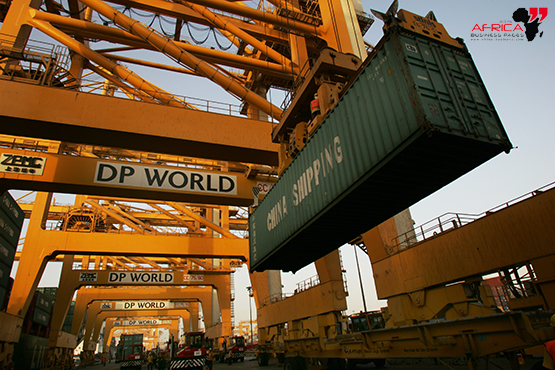
DP World Kigali is a secure, bonded facility spread over13 hectare that will improve imports and exports... DP World and the government of Rwanda have setup a state-of-the-a logistics hub, located 20 kilometers from the capital city Kigali, close to the international airport. The facility is East Africa’s first ever Inland Dry Port developed by DP World. DP World Kigali is a secure, bonded facility spread over 13 hectares and features an Inland Container Terminal (ICT) with modern warehousing capacity, a container yard, administrative and services buildings, parking areas and other facilities. DP World Kigali accesses two secure trade gateways for eastern Africa, the port of Mombasa in Kenya and Dar es Salaam in Tanzania. Rwanda is working closely with Tanzania on a new standard gauge railway from Dar es Salaam to Kigali that will add a direct rail corridor to the two existing road routes, further improving connectivity for containers and bulk goods. Currently the cost of transport of a 20 foot container from Shanghai China to Mombasa costs anywhere between 500 US$ to US$1,000. The cost of transport of the same container from Mombasa to Kigali varies between US$3,000 to US$4,000. The introduction of DPWK will serve the inland logistics problems, delays and cost by providing a one-stop shop for all logistics requirements and cargo services. The facility offers container handling, stuffing and de-stuffing, warehousing, storage and other cargo handling services. Imports from overseas can be routed through Kigali Logistics Platform for onward distribution to the surrounding countries of Uganda, Tanzania, Burundi and the DRC, a growing region of over 40 million people. Customs officers at the incoming port use highly advanced e-tags, to seal incoming containers. These active RFID tags allow real-time tracking of cargoes on route to Kigali, for complete transparency and added security. A dedicated customs team inside DP World Kigali handles final customs clearances. DP World Kigali is also establishing a road transport solution that will allow clients to fully outsource their end-to-end logistics needs, including international shipments, clearances, repacking and final deliveries. DP World’s single-window cargo management system and other investments in IT and automation will further increase efficiency and reduce costs. These are savings that can be passed down along the supply chain to drive more growth in the region’s economy.
Construction Activity In Africa Increasing
folder_open Articles
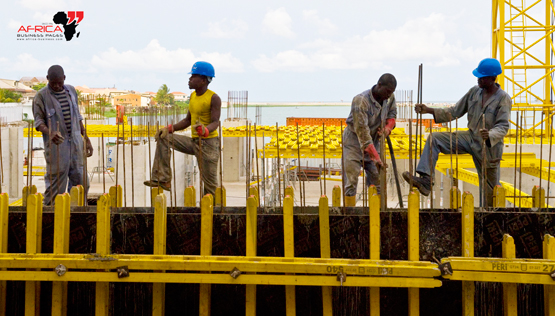
The face of the African construction industry is changing. Construction projects on the continent are getting bigger and more complex. According to recent reports, this is owing to rapid urbanisation, strong economic growth, a rising middle class and regional integration in many of Africa’s 54 nations. All make for the ever-increasing demand in Africa’s construction industry, as big infrastructure projects get under way on the continent. This development leaves industry stakeholders with a lot of questions on how to best secure funding for a project, what is needed for successful project management, what projects have priority and how to access the African market place? Construction Costs Will Rise Due To Materials And Labour One of the most common concerns industry experts cited is the escalating cost of doing business. With rising building material and labour costs, firms will likely struggle to maintain their margins in the coming year. Contractors have been expecting an impending bump in building material costs after several years of relatively flat growth. The Associated Builders and Contractors called the most recent decline in material prices “the calm before the storm.” On the labour side, the skilled-worker shortage has led to employers raising average pay higher than the national average. Experts say that increasing workforce costs — which include recruiting and wage costs for current employees — will cut into contractors’ bottom lines. Most Africa countries spent a lot of money in the construction related projects in the last couple of years and growth of over 5% in the construction industry is expected in the next two years. Demand For Green Cement In Africa The global market for green cement is expected to grow to US$38.1 billion by 2024 from US$14.8 billion in 2015. Green cement reduces the carbon footprint of construction activities through the substitution of cementitious industrial wastes, such as fly ash from coal-fired power plants and slag from the steel and iron processing industry, as a replacement for traditional cement. Demand for green cement in Africa will provide an increasingly lucrative market over the next few years due to growing trends in sustainability and energy efficiency for both buildings and infrastructure. The coming years will witness an increase in demand from local African marketplaces for more sustainable products in the local built environment. Kenya: A Booming Construction Industry Currently, Kenya’s construction industry is going through boom. The government has invested heavily in the construction sector of Kenya in order to improve the infrastructure such as road networks, and at the same time provide new residencies for the locals (who are being supported by the banks to get loan to buy apartments/cars). According to the Kenya National Bureau of Statistics, the real estate and construction sectors continues to be some of the key drivers of economic growth in Kenya for the last five years. The Kenyan construction industry contributes 7 percent of the gross domestic product (GDP), which makes it clear that Kenya has a well-developed construction industry. With an increase in population, opportunities exist in the construction of residential, commercial and industrial buildings, including prefabricated low-cost housing. The economic outlook of the country indicates that the construction industry presents one of the key areas that would, and is, attracting investors to the country. Extensive opportunities for investment exists particularly in the area of upgrading slums and informal settlements, urban renewal, construction of middle and low income housing, and the manufacture and supply of building materials and components. Infrastructure development is a central pillar of Kenya’s Vision 2030 and in 2015 the US$3bn construction sector contributed 4.8% to the Kenyan economy. The Economic Survey 2016 published by the Kenyan National Bureau of Statistics (KNBS) reported that approximately 148,000 people are formally employed in the domestic building and construction industry. Players operating in the sector range from indigenous micro-enterprises to foreign multinational civil engineering and construction giants. Although building and construction contractors are required to be registered with the National Construction Authority (NCA), a significant number of unregistered contractors operate in the informal sector. Kenya has the highest literacy rate in Africa and the workforce is well known for being educated and hard working. One advantage for foreign investors is that everyone speaks the common language English. This makes it easy for new people to understand and quickly adapt to the new country. Therefore, Kenya serves as a good starting point to begin business in Africa due its positive growing economy, natural reserves & a strong workforce who can easily be communicated with. A recent study by BMI Research shows that the local construction industry will grow by 8.7 per cent this year and remain steady up until 2026 with an annual growth of 6.2 per cent – which will see Kenya outperforming all Sub-Saharan countries. Kenya’s construction market is poised for significant expansion between 2018 and 2026. Significant support for the sector will stem from the Kenyan budget, backed by foreign investment into the country’s planned infrastructure development. Nigeria’s Construction Industry Following a difficult 2016 the Nigerian construction sector showed signs of stronger growth from the first half of 2017 onwards. The uptick in activity comes on the back of a low base, however, as the country’s first recession in 25 years affected private investment in real estate building and oil companies had to scale back investment plans due to lower global oil prices. The stabilisation of the naira, the utilisation of new contract structures and an increase in local suppliers are now helping to provide fertile ground for tarde. Local content, in particular, is playing a larger role in the market, with domestic companies active as both standalone contractors and as subcontractors for foreign firms. While public sector tenders – which have traditionally been the source of major works – remain limited compared to the booming years of the 2000s, the increase of private development in the residential and commercial building segments offers promise. Nigeria is often highlighted as one of the most attractive markets in Africa for construction works. In West Africa, of the nearly $120bn committed to infrastructure spending across 92 projects, 61% is earmarked for plans in Nigeria. The country currently has 68 major building projects with a total capital expenditure of approximately $73billion, second only to South Africa on the entire African continent. Given the size of the Nigerian economy and traditional spend of other African states, however, these figures mask a historical underspend in gross fixed capital formation (GFCF), a category that includes infrastructure projects and land improvements. An average GFCF of 30% of GDP is considered optimal for creating a growth-conducive environment, but in recent years Nigeria has spent just 11.9% of GDP compared to a sub-Saharan Africa average of 21.5%. Ethiopia, the continental leader, spent an average of 32.8% of its GDP on infrastructure over the last decade.
How to Export to African Countries
folder_open Articles , Business Outlook
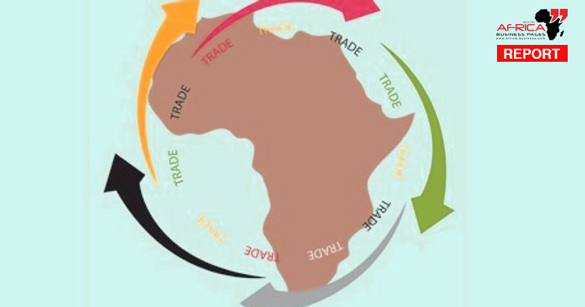
In times of economic meltdown, planning which markets of the world to target for exports, the continent of Africa doesn’t always come top of the list. In fact, rarely. Part of that is down to preconceived opinions about the continent. Constant images of war and starvation don’t always make a business believe there are riches to be earned from business dealings on the continent. However the truth is that the economic situation in Africa is changing: Africa hosts the majority of the top ten fastest growing countries in the world. The IMF estimates that economic growth in sub-Saharan Africa will be over 5.5% in 2019. The World Bank believes that most African countries will reach “middle income” (at least US$1000 per person a year) by 2025 if current growth rates continue. Nearly half of the labour force in Africa is expected to have some secondary-level education by 2020. Africa has around 98 million people with household incomes exceeding $5,000 meaning they can direct more than half of their income towards discretionary spending. It’s expected that this figure will reach 128 million by 2020. All of a sudden exporting to Africa looks a much rosier prospects than in the past and already countries such as the US, Brazil, China and India have increased their business dealings with the continent. The UK and South African Governments set targets to double bilateral trade in the next five years. The main imported commodities are: Machinery and equipment Chemicals Petroleum products Scientific instruments Foodstuffs Tyres & Batteries Automobile Spare Parts Cosmetics Stationery Items Household Electronics While Africa faces tremendous challenges on the road to integration into the world trading system, there is more to Africa's trade performance than meets the eye. Many African export sectors have outperformed world market growth. Champions in the African export portfolio include cut flowers, frozen fish, t-shirts, women's trousers, footwear and transistors. These cases illustrate that Africa can compete. How to Export to Africa In many ways it’s pretty much the same as making plans to start exporting goods to any country in the world. You need to start off by doing some research to find out if your product compares to what is currently being supplied in the target market. Find out who your competitors are and what services they offer as well as their pricing schedules. Look at duty structures, freight rates, currency fluctuations and then you will have a better idea of whether you have a marketable product. There are enormous opportunities in Africa but you have to thoroughly research the market. If your business produces machinery and equipment, chemicals, petroleum products, scientific instruments or foodstuffs then exporting to Africa is a great idea. It’s important to have an agent who can travel to your target market on a regular basis and has established a network of customers there. This allows you to concentrate on supply and production. At some point though it’s important for you to get on that plane and travel to Africa. It’s important to meet people face-to-face and build proper relationships but make sure that you learn about their culture to avoid any potential embarrassing mistakes. Some countries such a Nigeria offer both complimentary and fee-based market research tools to help possible exporters from other countries to analyze the market and gain insight into specific sectors. Other advantages with Africa are lower salaries and rents, improving infrastructures and growth in those who have broadband. There are risks though as in any emerging market. These include crime and corruption. Also in a country such as South Africa you have to respect laws that demand a certain percentage of employees, directors and shareholders are black. In Gabon there are strict rules that have to be adhered to. These protect the health, safety and environment of Gabon’s citizens from sub standard imported goods. Exporters need to provide a Certificate of Conformity for Customs clearance. Since October 2013 this has been compulsory. It’s important to break into a growing market like Africa as early as possible. Make sure you do your research, employ agents to keep a close eye on your investments and make sure you comply with all the relevant laws in the country you are exporting to and exporting to Africa really can pay dividends. Traditionally a commodity exporter, Africa is diversifying into industrial goods and services. Tunisia is a good example of Africa's emerging growth areas. Exports of electronic components have passed the US$ 500 million mark, expanding at annual rates of 22% for several years. In clothing, despite fierce global competition, Tunisia has been able to increase its market share. It now ranks eighth among 184 countries in the Trade Performance Index for clothing, reflecting exports of US$ 2.5 billion to a diversified group of countries. Mauritius, Africa's other major clothing exporter, has also increased its world market share, supplying garments worth US$ 1 billion. In textiles, the continent's leading suppliers are South Africa, Morocco and Zimbabwe. More recently, a number of very successful small companies are driving rapid improvement in textile exports in Cameroon, Madagascar and Sudan. Export Markets in Africa Southern Africa has joined the ranks of the world's leading trading areas. In five out of the 14 sectors covered by the Trade Performance Index, the Southern African Customs Union (SACU) figures among the world's top 15 exporters. Transport equipment is one example, where SACU ranks ninth, with exports of US$ 1.4 billion and a high degree of product and market diversification. South Africa, the largest member of SACU, has experienced growing interest of transnational corporations to invest in the country, as shown by UNCTAD's recent survey on foreign direct investment in Africa. Success stories of African exporters are not confined, as is often perceived, to the Maghreb countries and southern Africa. Exports in sub-Saharan Africa (excluding southern Africa) are far from marginal for some product groups. This region, for instance, is a major net exporter of fresh food and agro-based products. Moreover, several countries are improving their competitiveness in exports of processed food, as evidenced from the change in competitive position in the Trade Performance Index for Kenya, Malawi, Ghana and Mozambique. Importers in Africa Low-income countries are also focusing on international business development. Despite being landlocked and among the group of least developed countries (LDCs), Ethiopia has become a competitive international supplier of several products and services. Ethiopian producers are now a leading source for sesame seeds, with an 11% share of world imports. Ethiopia's coffee export values and quantities have expanded at double-digit rates between 2013 and 2018, earning well over US$ 375 million in 2018. Ethiopian transport companies, including Ethiopian Airlines, chalked up export earnings from transport services of US$ 180 million in 1998. Finding Importers in Africa The Africa Business Pages has compiled the Africa Business Directory to help global exporters connect with importers in Africa for direct B2B interaction. Segmented by countries as well as business secretors, the Africa Business Directory has helped many exporters connect with their business counterparts in African countries. In addition to specific country directories, you can also download sector specific directories for the following business sectors: Africa Automotive Directory Africa Tyre Dealers Directory Africa Building & Construction Directory Africa Cosmetics & Beauty Directory Africa Foodstuff Directory Africa Health & Medical Directory Africa Hotels & Restaurants Directory Africa Pharmaceuticals Directory Africa Hospitals Directory Africa Rice Importers Directory Africa Furniture Directory Africa Security Directory Africa Car Importers Directory By contacting importers in Africa using the Africa Business Directories, you can take the first step towards increasing your exports to Africa and finding the right business partners for your business.

The furniture business continues to boom in many African markets as the demand for home and office accommodation grows across Africa. Africa’s growing economy and its large and rapidly growing urban population are some of the reasons why the furniture business is experiencing good times on our continent. Africa’s Real Estate Boom Boosting Furniture Sales From Lagos in West Africa to Nairobi in East Africa, it is very difficult to not notice the vast amount of construction work in many of Africa’s cities and towns. Residential estates and complexes, office buildings, guest house lodgings, three and five-star hotels, new schools and campuses are rising up everywhere. The demand for all kinds of accommodation is rising very fast on the continent and there is a growing investment in real estate to satisfy this demand. As more people move into new homes and open new business offices, furniture will be required. When new schools are built, desks and chairs will be needed. New hotels will often require tastefully designed beds, wardrobes and several other fixtures and fittings. As a result, higher demand for home and office accommodation is leading to a high demand for furniture pieces. Apparent furniture consumption (at production or import prices, excluding retail mark-up) amounts to US$ 9.6 billion. Africa accounted for roughly 2.5% of world furniture consumption in 2017 with a per capita furniture consumption of US$9, compared to a per capita average of US$12 recorded by Asian countries. Over 60% of the total furniture market in Africa is satisfied by local manufacturers. Total Africa furniture production amounts to approximately US$ 7.5 billion. Almost 15% of local manufactured furniture is exported, with main exporting countries being South Africa, Egypt, Morocco and Nigeria. Real furniture consumption (at production or import prices, excluding retail mark-up) amounts to roughly US$ 9.5 billion. Main markets with over $500 million of furniture consumption are South Africa, Algeria, Nigeria, Egypt and Morocco. Urbanisation Increase Demand for Furniture Urbanisation process in many parts of Africa is expected to be very rapid, particularly in Sub Saharan Africa and large urban areas will be the engine of economic growth with important catalysts for the increase of furniture consumption. Despite political instability and relative poor infrastructure level, there is evidence of a number of urban centres, which offer potential for growth for the furniture market. These cities are increasingly diversifying their economy. In recent years, huge investments have been made in real estate, tourism and hospitality industry, culture and entertainment, which have boosted demand for the furniture sector. In West Africa the leading furniture consumer is Nigeria (a large fast growing market), followed by Ghana and Ivory Coast. In West Africa more than 70% of furniture consumption is satisfied by local manufacturers. In East Africa the largest furniture consumer is Ethiopia, followed by Kenya, Tanzania and Uganda. The fastest growing markets in the region are Ethiopia and Uganda. Southern Africa is the second largest furniture market. Local manufacturers satisfy 50% of the market. South Africa is ranking first as furniture consumer, followed by Angola, where prospects for growth are particularly favourable. In Africa, the demand for furniture is much higher in the urban than in rural areas because there are more offices, modern accommodation, hotels and schools in the cities and these are the biggest buyers and users of furniture. As a result, of sustained migration from the rural areas, more than 40 percent of Africa’s one billion people now live in urban areas (cities and towns). At the current rate of growth, more than 500 million Africans will live in cities by 2030. As the population of Africa’s cities and towns increases, this will naturally increase the demand for real estate; residential accommodation, office space, hotels and schools. At the moment, just a little over 50 African cities have a population equal to or more than one million people. At the current rate of migration, the number of cities in Africa with over one million people is expected to reach 65 by the year 2030. Because more people are flocking to cities and towns in search of jobs and a better life, they are helping to increase the demand for accommodation. Don’t forget, when the demand for accommodation rises, the demand for furniture is never far behind. Rising Income Levels While the global economy is predicted to grow by 2 to 3 percent between 2011 and 2020, Africa is expected to grow by nearly 6 percent, making it one of the world’s fastest-growing regions. The level of development going on in many African cities and towns are increasing day-by-day and this development includes construction of buildings such as; schools, campuses, complexes, residential estates, hotels, guest houses etc. With the increasing number in population, the demand for all kinds of accommodation is increasing daily. And this fact has caused a huge growth in the real estate investment. Statistics shows that about 40% of the African population has migrated from the rural area (villages) down to the urban area (cities). It has also been predicted that about 500 million Africans will live in cities by the year 2030. Judging by the statistics stated above, there will be an increase in the demand for modern accommodation such as real estate and residential buildings as well as business offices, schools, hospitals, hotels etc. This positive trend will usher nearly 300 million Africans into the middle class and will lead to huge spending on real estate and construction for housing and office accommodation. As more people flood into cities and towns in search of greener pastures, the number of African cities with over a million populations is expected to raise from 50 to 65 by the year 2030. Africa is expected to witness a high increase in the demand for accommodation and as this tends to occur, the rate in the demand for furniture will definitely increase. Africans in this economic ‘middle class’ are usually urban dwellers who hold salaried jobs or own and operate a small business. Many of them are young, educated, and more aware of modern consumer tastes and trends in furniture and interior decoration. This segment of consumers are willing to spend more on furniture and fittings that suit their higher tastes. Favourable Government Policies For many years, imported furniture from North America and Europe dominated African markets and made it very difficult for local furniture businesses to thrive. This is still the case in many countries on the continent. However, in countries like Nigeria,, imported furniture has been banned since 2004. This has allowed several local furniture companies to grow and become very successful. A classic example of such a success is the Sokoa Chair Centre, a partnership between a major French furniture maker and a local Nigerian company. In Kenya, the Public Procurement Oversight Authority (PPOA) has released regulations that restrict government offices and public entities from buying imported furniture. All government spending on furniture will now go to local Kenyan furniture businesses. This is huge because the government is arguably the biggest spender in Kenya and local furniture businesses will get a huge boost from this initiative. Banning imported furniture is a good way for African governments to develop and support local furniture businesses. As more countries on the continent impose bans on imported furniture, smart entrepreneurs can seize such opportunities to tap into a very lucrative market. However, some consumers (like hotels, offices and rich people) prefer foreign furniture for reasons of brand appeal or because they ‘perceive’ the locally produced items as poor quality. Some other people cannot afford imported furniture because they can be very expensive. The bottom line is that the projected sure shot increase in the demand for residential and commercial accommodation is the engine to accelerate the growth of furniture industry in Africa. It’s the perfect time to get into the furniture business in Africa! Africa Furniture Importers Directory The AFRICA FURNITURE DIRECTORY is a perfect starting point for international exporters, manufacturers, traders and merchants of furniture equipment looking to establish direct contacts with their business counterparts in the lucrative African market. The directory lists furniture dealers in Africa, importers of furniture equipment in Africa. This database of FURNITURE FIRMS IN AFRICA will help you reach your target audience in Africa by helping you build direct B2B contacts with importers in Africa dealing in your products. There is a great demand for furniture equipment among importers in the African market. This database will help you reach potential buyers in Africa and expand your market share in the new and emerging markets in Africa.
The world has gone digital is a term we hear far too often nowadays, but it’s not exactly true. It is true that the world is transforming, but there is an increasing distinction between those who are leading the change and profiting from it, and those who are falling behind and missing the many opportunities. So what does digital transformation really mean to business? Digital transformation is based on a beautiful two-way street – you provide your customers with the information, content, products and services that they want, when they want it, and how they want it. They, in turn, appreciate the relevant, seamless experience you have given them and keep coming back for more. We call this standout digital engagement, it means that by delivering rewarding, optimised, contextual experiences, you can increase conversions, page views, and engagement. Africa Business Pages has a digital presence that spans over 25 years and is one of the leading B2B portals for African businesses. The Africa Business Pages has accumulated consumer data over 25 years and has the advantage of a comprehensive database of African buyers – segmented by location and business activity. Digital Marketing in Africa If you work with digital marketing or campaign management, you probably have some clear goals for your digital presence: increased engagement, conversions and website page views, with content that works on any device. Specially so in the African market where buyers are looking for specific products to meet the growing demand in their region. As a result, this is an exciting time to be in digital marketing – there have never been more opportunities to provide outstanding experiences for your customers. At the heart of your digital experience is your owned media: your web and mobile sites. When redesigning or rebranding, however, there are a few challenges that need to be overcome. One basic challenge is time. Another challenge is coordinating several marketing activities across diverse systems, channels and markets to provide a seamless experience for users. Ideally, you would be able to easily develop content for campaigns, landing pages and social media and launch it across several channels with a single click. And have the system figure out what is most relevant to each visitor, which would convert leads faster and drive more prospects down the funnel. Leads Generation Service: Business Leads from Africa Africa Business Pages has launched a special Lead Generation Service that gets you upto 10 business inquiries from African buyers everyday. The special packages offered let companies target specific countries and audiences in Africa based on their products and services. Starting package costs as little as $550 per month and guarantees a minimum of 10 business leads from Africa every day. You can also try the service for Trial Period of 7 days for just $35. After the trial period, if you are happy with the results, you can continue with the plan of your choice. The Africa Business Pages offers three plans to suit the requirements and budgets of various companies. These include: Silver Plan : US$550 per month (inclusive of all advertising expenses) Gold Plan : US$850 per month (inclusive of all advertising expenses) Platinum Plan : US$1,100 per month (inclusive of all advertising expenses) The digital marketing team at Africa Business Pages uses various online marketing verticals like email marketing, Facebook marketing, WhatsApp marketing, content marketing, banner advertising, email funnels as well as Featured Listings on Africa Business Pages to nurture and capture relevant business leads for your business. B2B Portals It would be great if you could sit in your chair and use your mind powers to make all of your campaigns magically align around the world. And simply by touching your fingertips together you could sense what your customers cared about, and understand why they continued their journey – or went away. The trouble is that technology that is supposed to help us achieve this – in some small way – can be difficult to manage, and the data it produces hard to analyse and quickly act on. The role of B2B portals like the Africa Business Pages can never be underplayed as they are recognised by Search Engines as useful hubs for information and therefore enjoy a higher search engine ranking – providing you with a direct link to your target audiences. In an ideal situation, you would be able to distribute content and promotions to the right channels, at the right time, to the right target market. After you publish the content on high ranking B2B portal like the Africa Business Pages, you would be able to easily respond to the campaign metrics – changing and tweaking the content so you can increase conversion rates and decrease the cost of leads. This is what agile marketing is all about. Reach African Buyers Digitally Create, orchestrate and optimise campaigns in real time. There are three elements crucial to any successful campaign – audience, message and timeliness. There are solutions like Featured Listings on the Africa Business Pages that enable you to launch new campaigns within hours of identifying a new opportunity. By advertising on Africa Business Pages, you can easily target audiences, create personalised experiences within your campaigns, and engage visitors in mobile, social and email channels. Once ready, your campaigns are instantly pushed out across channels – web, mobile, social, email and instore kiosks, and you will begin collecting insights on campaign performance and visitor engagement. Improve paid search conversions and organic search placement. For most businesses, organic search traffic is crucial to acquire new traffic and a cornerstone in an inbound marketing strategy. While most marketers know SEO, they struggle to achieve their organic acquisition goals. Once again, Africa Business Pages comes in handy here by providing you a readymade SEO platform that helps you reach African buyers across various digital channels – web, mobile, social, email and B2B WhatsApp groups. Africa Business Pages content is built around the visitor, and is inherently search-engine friendly with reusable content that attracts interest. As a leading content hub for Africa, the Africa Business Pages provide genuine value to the visitor, and built-in tools for marketers to optimise copy for better visibility and reach. Africa Business Pages offers automate content marketing to drive loyalty and engagement. Regulat email newsletters sent to registered users of Africa Business Pages offers excellent inbound email marketing once a lead has been acquired. Undoubtedly, email marketing is the foremost channel for lead nurturing, as well as an important component in customer loyalty programs. By sending personalised, high-converting and timely emails, Africa Business Pages ensures that you get the desired results from their email channel. With Africa Business Pages dedicated digital marketing campaigns, we have fused together all the parts you need for a successful email campaign: compelling content, precise targeting and profile management, and the authoring and automation tools that let you focus on the message instead of the mechanics. Digital Marketing Plans Africa Business Pages special Business Matchmaking program automatically presents content relevant to each visitor, and uses machine learning to optimise content presentation based on the behaviour and interests of the visitor. Personalised content offered to users at Africa Business Pages helps advertisers achieve on average a 19 percent uplift in sales when using Africa Business Pages digital . At the same time, it is often time consuming and costly to create a multitude of content assets, text and image variations, and target them to the right audience. Africa Business Pages Business Matchmaking program makes this process easy – it derives insights from each visitor’s behaviour, helps marketers select content for personalisation, and delivers actionable metrics on the performance and behaviour of different audiences. The digital marketing team at Africa Business Pages helps you to achieve better business results through time-tested inhouse digital marketing activities and by employing latest techniques like pixel marketing and other digital marketing methods to target specific customers and customer segments. Advertising in African Markets Digital marketing is not only about the opportunity to grow revenue, acquire new customers, and keep current customers loyal – it is also about streamlining operations. Africa Business Pages has a dedicated digital marketing team that has proven skills to increase operational efficiencies drastically, by reducing time spent on experience management, authoring and running campaigns, efficiently supporting internal operations, and connecting into back-end business systems. As digital marketing and digital commerce usually involve several different systems and environments, the digital marketing team at Africa Business Pages is well versed with all environments and ensures optimal performance and offers shorter response times. By hiring the digital marketing team at Africa Business Pages to reach African buyers, you can instead focus on creating experiences for your customers, not on complicated infrastructure and processes. And since global scalability is built in, you don’t need to worry about traffic peaks, new markets or changing needs – the Africa Business Pages platform is always on, and always ready for customers.

Cryptocurrency: The Start of an African Economic Renaissance
folder_open Articles , Business Outlook
Cryptocurrencies and blockchain assets are the newest and potentially most promising new asset class. Cryptocurrencies are gradually being discovered in Africa. In countries like South Africa, Ghana, Kenya, Botswana, Zimbabwe and Nigeria, there is a semblance of digital currencies, primarily bitcoin, taking roots. Blockchain or DLT (Distributed Ledger Technology) can be seen as the solution for Africa’s current problems and future growth. Bitcoin, based on blockchain, could be the engine for African growth, and could fuel the continent's great leap forward. Cryptocurrencies are classified as a subset of digital currencies and are also classified as a subset of alternative currencies and virtual currencies. Bitcoin became the first decentralized cryptocurrency in 2009. Blockchain is another important concept that needs to be defined. As such, blockchain is a continuously growing list of records, called blocks, which are linked and secured using cryptography. Investment returns in cryptocurrencies in recent times have by far outperformed traditional assets such as global stocks and bonds. However, public opinion and investors’ minds on cryptocurrencies are divided and it often comes down to a philosophical and even emotional debate. This is also true about African policymakers and their official stance on cryptocurrency. High volatility and unexplained falls, risks of hacking attacks and ransom with the subsequent sensational media headlines are reasons why many investors still shy away from cryptocurrencies and merely think of it as “magical internet money.” The biggest fallacy many casual observers and some government officials have, is that they say they like blockchain, but they do not like cryptocurrencies like Bitcoin, Ether and Litecoin, etc. That argument is the same as people in 1994, before the introduction of the Internet web browser, arguing that they do not like the public censor-free Internet (it is not regulated and not “owned” by anybody etc.), but rather have a privately controlled intra-net. A private blockchain without a trustless and distributed consensus-based crypto-currency is nothing more than a shared database or intra-net. Proponents of cryptocurrencies are of the firm belief that blockchain could soon give rise to a new era of the Internet even more disruptive and transformative than the current one. Blockchain's ability to generate unprecedented opportunities to create and trade value in society via cryptocurrencies will lead to a generational shift in the Internet's evolution, from an Internet of Information to a new generation Internet of Value. Any government that embraces cryptocurrencies is going to benefit so much by owning the money that is native to the internet. In a similar fashion, in this case the Internet of money, one can see the disruption potential of cryptocurrencies. Just like the Internet took out Hollywood with Netflix, Spotify took out the music business, and Google and Facebook took out advertising and media businesses, cryptocurrencies will take out the finance industry as we know it. The Case for Cryptocurrencies in Africa There is high potential for Africans to leapfrog some of the existing financial services, in the same way that many Africans skipped the part of owning a cumbersome and expensive landline and went straight to owning a mobile phone. In the “old” or “traditional” system, traditional bankers in suits were the miners of the old generation, getting paid in the currency of the central bank run by un-elected officials. That system is also characterised by fiat currency being mined by the fractional reserve banking system, bank bail-outs and large costs to ordinary tax payers, amid the rise of populism. The new central bankers are the cryptographers. The new owners of the financial infrastructure are the holders of the cryptocurrency coins, which is or could be everybody. While cryptocurrency has been hailed for its potential in the financial sector of the developed world, one of its greatest applications has been virtually overlooked. In nations that lack dependable economic systems or governance, digital currency may offer hope. Access to finances, security and privacy of funds, and faith in a common medium of exchange, can aid many across the African continent. Several African countries have exchanges and start-ups in the crypto space, and their businesses are recognizing the significance of cryptocurrencies in fostering cross-border trade and payment. Moreover, the infrastructure for the take-off of digital tokens is solid. Telecommunication liberalisation across the continent has enabled Internet accessibility remarkably. Figures from GSMA indicate that half of Africa’s population is subscribed to mobile telephony. Also, the statistics indicate that for the past two years, smartphone usage in the continent has doubled to reach 226 million. The new finance industry will settle on where the innovation will be for smart contracts and cryptocurrencies. It is Silicon Valley’s replacement for the old infrastructure of finance and Africa’s chance to leapfrog the old system. It will position the economies of Africa for the future of finance. With Africa not having a strong legacy system in place, as is the case with the developed world, is suddenly a great advantage. Still, too many adult people in Africa do not have access to bank accounts. This wretched situation denies countless numbers of people financial freedom. Bureaucratic tenors and economic exclusion, amongst others, have paved the way for this situation. A recent study of 10 African nations with unusual inflationary ratios, indicated that South Sudan had a huge inflation rate of 295%. Egypt had the lowest rate with 12.30%. High inflation and weak African currencies allow Bitcoin and cryptocurrencies to offer African consumers a stable store of value and an inflation hedge. African nations have lagged in traditional banking, but the phenomenal success of Kenya’s Safaricom M-Pesa shows that this is and can be an advantage in the coming blockchain economy. Safaricom’s success has shown that Microsoft Founder Bill Gates’ adage of “Banking as a function is necessary, Banks are NOT”, holds very true. What Safaricom’s M-Pesa achieved on a country scale, cryptocurrency can achieve on a pan-African scale. Cryptocurrency remittance services in Africa have sprung up as an alternative to Western Union, and international organizations have employed blockchain technology to assist refugees. Still, it appears that many of the communities most desperate for this innovation have yet to embrace the monetary haven. Africa’s wide adoption of crypto-currency would further progress themove to the democratization of financial services. Kazakhstan became the second country in the world, after Japan, to recognize the need for the development of the cryptocurrency market system at governmental level. The development of the digital currency market, based on the Astana International Financial Centre, is the first step towards the creation of a fully-fledged ecosystem for the digital economy. Forward-looking governments in Africa should try to emulate the developments in Japan and Kazakhstan. Practices and Challenges of Cryptocurrency in Africa Large scale adoption in Africa, however, is still slow. Awareness, education and user experience are some reasons why the take-up is taking time. Switzerland and Singapore are both successful countries with strong currencies, and as such have nothing to lose by embracing fintech and cryptocurrency. Countries with high inflation and currency controls in place seem to be paranoid about the rise of cryptocurrency. However, similar to the Internet, it is difficult to ban and/or control. In recent times, the African market has seen the emergence of more than 10 Bitcoin exchanges seeking to provide cheap and efficient trading services to African consumers. Some exchanges have expanded their services and have established an office in Africa to serve the new market and observe the demand of Bitcoin in several African countries. In East Africa, local innovators have introduced cryptocurrency systems to support cross-border transactions, as exemplified by initiatives like BitPesa. In South Africa, cryptocurrencies are becoming particularly popular. In Nigeria, local traders and activists believe this new money presents an opportunity to democratize the economy. This is propelled by the fact that people in Nigeria have been failed by conventional money. The Central Bank of Nigeria, which oversees an inflation rate of 14%, making it the 6th highest inflation rate in the world, recently announced that they cannot stop Bitcoin. Their statement read: “Central bank cannot control or regulate bitcoin. Central bank cannot control or regulate blockchain. Just the same way no one is going to control or regulate the Internet. We don’t own it.” This is very sensible and the correct and forward-looking approach. While several exchanges offer conventional payment methods, such as bank transfers and account top-ups, a few platforms, like BTCGhana, provide local users and the underbanked population simpler methods of purchasing and selling Bitcoin. On the BTCGhana platform, users can make Bitcoin purchases through established exchange platforms and can, within minutes, send the payment to local remittance platforms, including TigoCash, Airtel Money and MTN Mobile Money. This service allows African users to pick up cash at local remittance outlets with ease, without having to deal with complex withdrawal and deposit methods The African market has seen the emergence of more than 10 Bitcoin exchanges seeking to provide cheap and efficient trading services to African consumers. Conclusion Africa has lots to offer Bitcoin and other cryptocurrencies, simply because Africa needs an alternative to the weak and not–always–available nor reliable local African fiat money. All products of cryptocurrencies will be well-embraced if promoted in Africa. The current vacuum for alternative means of payment in Africa is obvious. Cryptocurrency is not just a solution to the plight of the “unbanked.” Rather, it is a method for allowing economically or politically subjugated populations to control their own wealth. Non-fiat digital currency can bring millions of people into a secure and person-driven global economy. The intangible nature of digital currencies means that a government cannot physically remove the wealth of a citizen. This paradigm shift is a monumental step forward in the social contract, providing an additional layer of security to individuals. All populations, especially those that are disadvantaged, need a way to maintain access to their wealth from anywhere in the world. Imagine if a refugee could access a bank account even after being displaced from their home country. This could help maintain the refugee’s dignity and hopefully diminish the extreme poverty caused by this terrible upheaval. This is the unrealized potential of virtual currency. In a nation where political activists are jailed, or inflation runs rampant, a non-fiat virtual currency may offer an escape. Cryptocurrency is humanity’s greatest iteration on the aphorism that there is strength in numbers. For many, a virtual currency could become the next step in the social contract – a world that lives, breathes, and functions outside the boundaries of a government. For the first time, open minded early adopters can make a Silicon Valley venture capital style bet on the future of money and finance and the development of African economies Like any other investments, cryptocurrencies carry risks. However, not owning or embracing the native money of the Internet is even riskier. Cryptocurrency is a fast-evolving, complex phenomenon that in my view will have a major impact on power distribution in the global economy and on the African continent. The intangible nature of digital currencies means that a govern-ment cannot physically remove the wealth of a citizen. This para-digm shift is a monumental step forward in the social contract, providing an addi-tional layer of security to indivi-duals.
Preliminary request for participation in the trade show
place
calendar_today
Preliminary request for visitor registration
Visitor Registration
place
calendar_today