

Lead Generation Services by Africa Business Pages: Get 300 Business Inquiries from African Buyers Africa Business Pages has launched a deciated Lead Generation Service to help small business owners as well as large business conglomerates to reach potential buyers in the African markets through a dedicated digital marketing plans. The Silver Plan, for instance, can fetch as as many as 300 pre-qualified leads from African buyers per month at fixed price of $550. You can even try a 7-Day Trial promotion before commiting for one of the three digital marketing and lead generation plans offerred by the Africa Business Pages. All the plans are exclusively dedicated towards the African market and target ONLY buyers from Africa. This has helped many companies generate quality business leads from African buyers and increase their exports to Africa by using the dedicated Leads Generation Service by Africa Business Pages – Africa’s leading B2B portal since 1996. Business from Africa: Export to Africa For companies wanting to consolidate their exports to the African markets, the leads generation service offered by the Africa Business Pages is the best way to reach the right African customers at the right time and right place! Africa Business Pages offers an increased number of targeted and qualified leads in B2B and B2C markets. when it comes to digital marketing in Africa, a specialised lead generation company can serve as your first step to get closer to your targeted customers in Africa. By identifying potential buyers in Africa through their previous interest or inquiry, the Africa Business Pages is able to conduct precise business matchmaking through their extensive database. algorithm. Business Leads from Africa Lead Generation Services by Africa Business Pages can be your first step in bringing African customers to your company. The Africa Business Pages team helps in generating leads for your company to get more customers and the dedicated CRM team will pre-qualify these leads in order to convert them into paying customers for your company. The campaigns used by Africa Business Pages for generating leads are conceptualised by a dedicated and experienced team of digital marketing veterans to capture validated, pre-qualified leads through various digital marketing verticals. The pre-qualified leads are then delivered to the clients or their marketing/sales manager through emails. How will business leads from Africa help your business? Fixed price plans for lead generation – all-inclusive Choose the product you want to promote in Africa Choose a geographical area to target in the African market Benefit from the African Business Pages database to target specific audiences Minimum number of business leads per month guaranteed Lead Guarantee from Africa Business Pages The leads provided by Africa Business Pages are generated through unique web platforms owned and managed by Africa Business Pages. The leads go through a process of manual verification and qualification filters as per the BANT or other criteria set up at the start of campaign. All leads delivered by Africa Business Pages are guaranteed to be manually validated and with a genuine requirement. Africa Business Pages’ support team offers consultation and clients can change their target markets and products periodically. You only pay a one-time fixed price to subscribe to the service. Get Hot Validated Business Leads from Africa If you are you a startup/ small organization struggling to acquire business leads from the African markets, the B2B lead generation services offered by Africa Business Pages will help you gain validated leads and expand your company export to new and emerging markets in Africa. We deliver quality, verified leads Competitor tracking Customized campaigns via Social Media Buying Service Zero risk game Pay one-time fixed price for subscription Less Sales Efforts The lead generation service offered by Africa Business Pages reduces the pressure on your sales team by covering all aspects of generating hot, validated leads for your business from the African markets. Our expert digitial marketing team will be responsible for carrying out all your sales and graphics related activities for your promotional campaign in Africa. Follow ups and E-mail Funnels The Africa Business Pages team makes sure to follow up on the generated leads continuously with conversion rates moving swiftly in the favour of your company. The comprehensive database of African buyers available with Africa Business Pages helps in targeting the right potential buyers in Africa for your business / products. Increase Exports to Africa The African Business Pages team uses an inbound approach to generate business leads from African buyers – this includes paid search marketing, content marketing, and opted email marketing as well as interactive marketing activities attract potential customers in Africa. Managing business leads from Africa Marketing automation systems like email funnels makes it easier to nurture and capture relevant business inquireis for your business through online automation tools. The idea of this service is built around a unique framework which relieves your company of the hassles of managing and securing marketing/sales data. Our framework is agile, self-expanding, and fully-supported by our team. We assist in areas including lead generation, segmentation, managing the leads, nurturing and scoring leads, and keeping a track on them. The leads are sent an automated message or mail updating about your company and hence, the service helps in conveniently and actively managing the leads. Marketing for Business Leads from Africa The dedicated digitial marketing team at Africa Business Pages focuses on moving leads from top to bottom based on their relavance and importance. By using online marketing automation techniques, the Africa Business Pages team is able to design, automate, and market a time-bound marketing workflow for your company. Business Leads from Africa The process of marketing automation and using specific softwares to automate key aspects of capturing leads has helped Africa Business Pages to generate better leads. Capturing leads through marketing automation software provides better results than the traditional digitial marketing tools. Status updates The digitial marketing automation techniques used by Africa Business Pages helps in keeping African customers up-to-date with the status of services offered and your company offers and activities. The users have no time to come down to the website and check for the updates of the company, whereas automated marketing gives them all the information about your company and products in a single easy-to-read automated email. ABOUT AFRICA BUSINESS PAGES Africa Business Pages is a leading B2B portal dedicated to the African markets and is backed by a highly expereinced digital marketing team that provides a wide range of marketing services to businesses across industry verticals. The company serves all types and sizes of businesses striving to carve a niché for themselves in the African markets through varied marketing techniques, sales verticals, digital marketing activities and marketing activities. Africa Business Pages knows what it takes to be a leader, and has a pool of carefully recruited digital marketing experts to support the success of each client in utmost professional and upbeat manner. You can consult and get expert advice for fueling the overall growth of your business, irrespective of the stage your business cycle is at. Our 25+ years of experience has enabled Africa Business Pages to gain a significant position among leading digital marketing platforms across Africa.

Best Places to Live and Work in Africa
folder_open Articles
Investing and starting a business and living in Africa is different than anywhere else in the world. The few countries with western-style economic freedom are not even on the continent; Mauritius is ranked the nearly makes the list of the top 20 free economies in the world, but is literally an island in Africa. The biggest challenge to finding the best places to work and live in Africa is reliable information. While indices tracking economic freedom are helpful, they don’t always tell the whole story. A young entrepreneur starting a business on the ground may not deal with the same corruption issues a multinational corporation will deal with. If you focus only on data at the expense of real-world experience, you won’t get very far. So here is a list of top countries in Africa that offer attractive propositions for those wanting to live and work in Africa: RWANDA Rwanda is called the “Singapore of Africa” – not only is the capital city of Kigali incredibly clean and safe, but the government is efficient and responsive. Business registration in Rwanda isn’t just fast by African standards; it’s possible to register a company within just hours. Rwanda keeps bureaucracy moving quickly with a highly organised government that minimizes risk. Literally anyone – can get a visa on arrival at Kigali Airport. Another thing Rwanda has that is rare among African nations: a vision. The country’s “Vision 2020” program is actually relatively well-crafted, with goals to double urbanization to 35% by 2020. Free trade zones are one way they plan to increase foreign investment, and focus on growth has led to an average of 7% GDP growth since the early 2000s. Internet connectivity is among the best in Africa. Despite limited natural resources, Rwanda was one of China’s biggest investment plays. But there are opportunities for other investors, too. Housing shortages are a real thing in the Kigali, and no one is filling the gap. There are tax breaks, too; invest $10 million and pay zero, or produce goods for export and pay a flat 15%. ZAMBIA Zambia is a southern African nation that has long been a beacon of stability on the continent since becoming independent from the United Kingdom in the 1960s. It first came onto my radar years ago when a South African friend told me about the white Zimbabwean farmers who were welcomed in by Zambia after Zimbabwe expropriated their land. Some of those farmers now plan to return to Zimbabwe as it slowly re-opens for agricultural business. The country had one of Africa’s fastest growing economies, which has since slowed down. The government has opened incentive programs to ensure the economy is diversified, and although the system seems clunky it’s starting to work in numerous sectors. Zambia’s economy benefits from years of development, which means a more advanced banking system with players such as Barclays, Citi, and Bank of China. New businesses can avail themselves of a 0% corporate tax rate for their first five profitable years, and partial reductions after that. GDP growth has been positive for a decade. Just as importantly, Zambia sits in potentially the best neighborhood in Africa. While the country is landlocked, trade opportunities are interesting even (or perhaps especially) as South Africa goes down the tubes. While Zambia is not a “sure thing” and some skilled farmers are leaving, the political stability of the region and the country’s above-average push to attract and reward foreign investment is noteworthy. GAMBIA For decades, Gambia was run by President Yahya Jammeh. Jammeh’s dictatorship oversaw oppression of journalists, the exile of gays, and even a first-ever withdrawal from the Commonwealth. Corruption was persistent in this tiny west African nation, although the country did have an interesting association with the offshore industry through its ill-fated IBC offshore company register and its questionable sale of permanent residence to Chinese emigrants. Jammeh was recently voted out of office in a surprise election that has paved the way for Gambia to reduce corruption and attract business. There is no doubt that The Gambia’s economic situation is dire, but the new government has taken a business-friendly approach thanks to actual businesspeople who are part of the new administration. Gambia is offering tax breaks and incentives in a number of economic sectors and is rolling out new plans to rebuild confidence in the new government’s ideas. Some industries are being privatized, government debt is slowly being reduced, foreign exchange reserves are being built up, and locals say a sense of freedom has returned. There is also growth in the financial sector as the government rolls back regulations and allows even more foreign investment in Gambian banks that provide credit to locals. There is no doubt that The Gambia has a small, perhaps even fragile, domestic economy, but it is slowly heading in the right direction. The pro-business government can make Africa’s smallest nation a highly nimble and adaptive place frontier market for investment. DJIBOUTI Things haven’t been looking good for Djibouti lately, but the country’s strategic position is surely a major plus point. There is no denying the country’s excellent position on the map. This tiny nation of barely one million people is smack dab in the middle of the world’s second largest shipping route on the Red Sea. Unlike much of Africa, agriculture plays little role here; the port, with its shipping and logistics, are what matters. Djibouti also enjoys friendly relations with neighbours, like far larger and landlocked Ethiopia. Another big reason to invest: China. While China has largely been pulling out of Africa, they have been heavily investing in Djibouti’s port and have opened their first overseas military base there. The presence of the Chinese and other expats who see Djibouti as a goldmine may be the reason the country “feels safer” than many other African countries. The currency also offers a certain stability, with its peg to the dollar and low inflation by African standards. There are a lot of good fundamentals between good company, good geopolitics, and good geography that count in Djibouti’s favour . Djibouti City was quite the hot spot for foreigners seeking investments not so long ago, and may still be worthy of consideration.

With 54 countries, Africa is a large continent with tremendous economic growth, investment, and rapidly rising living standards. Today Africa offers a host of opportunities for entrepreneurs and businesses across the world as it marches towards a better economic future. All across the African markets, national and regional economies are steadily accelerating their growth and attracting foreign investors from all across the world. This drastic change is driven by a number of factors, including more democratic and accountable governments; economic policies which increasingly favour and facilitate international trade; a new generation of policy-makers and business leaders; innovative information and communication technologies; an emerging spirit of entrepreneurship; and a growing middle class of relative prosperity with a taste for modern consumer goods. As a matter of fact, six of the world’s 10 fastest growing economies are in Africa, and the ease of doing business in Africa is improving to the extent that a good number of countries (including South Africa, Ghana, Mauritius and Tunisia) now outperform China, India, Brazil and Russia. FDI inflows to Africa have also registered year-on-year growth since 2010 and now amount to US$ 50 billion. Forecasts by industry experts are leading to optimistic outlooks among those early movers who have already identified the huge potential of the African continent with its one billion people spread across 54 countries. It is time for enterprising businesses to seize the opportunity and look at the African markets seriously. Population and Demographics More than 50% of Africa’s population is under 20 years old, making it the world’s youngest continent – in comparison only 28 % of the population of China is under 20 years old Almost 40% of the global population growth will be in Africa by 2050 500 million Africans are between the age of 18 and 24. By 2040, the forecast is 1.1 billion — more than in China or India Markets and Consumers Urban African consumers spend the largest share of their budgets (45%) on food and groceries –more than the average consumer in the BRIC countries Consumer expenditure is set to rise from USD 600 billion in 2010 to nearly USD 1 trillion in 2020 More than half of all African households are projected to have discretionary income by 2020 – corresponding to almost 130.000 households Consumer-facing industries (retail/wholesale, banking, telecommunication and tourism) in Africa are expected to grow by USD 400 billion by 2020, with apparel, consumer goods and food accounting for $185 billion Economic performance Average annual return on capital of African companies was 65-70% or higher than that of comparable companies in China, India, Indonesia, and Vietnam GDP growth for the continent is forecast to grow at 5.4% in 2020 and 5.7% by 2025 6 of 10 of the world’s fastest growing economies are currently in Africa FDI inflows to Africa have increased by 13.6% and FDI outflows by 55.6% in the last two years. Doing business in Africa Transparency International’s Corruption Perceptions Index ranks Botswana, Rwanda, Namibia, Ghana, South Africa, Liberia and Tunisia better than China and India in terms of the perceived corruption levels of public institutions African Economies: Marching Ahead in 2020 Africa’s fundamentals appear strong, and the continent’s outlook remains positive. The belief remains unshakable among Africans that tomorrow will be better than today and that is the kind of infectious confidence in which investments thrive. Many African governments are now embracing the right reforms and economic restructuring, building the right institutions, growing resilient economies and making the right policy choices, including diversifying their economies away from oil earnings, gas and mining to the massive job-creating promise held by agriculture and small and medium-size enterprise and business creation. The global economy is to gain greatly from high-performing Africa that can be the next global growth pole and its next market. Global prosperity will expand if Africa grows and prospers. The message to any company or investor still not in Africa is that today is the day that business in Africa is made and it might already be too late tomorrow. Africa is the now, no longer the future. The Africa train has already left the station. You are either on it or you risk becoming irrelevant. The time to get into Africa is now.

Business Ideas For African Market
folder_open Articles , Business Outlook
Africa is a highly resourceful continent with a great return on investments if you can be able to strategise and tap into the huge market. With a population that is almost equal to 1 billion people, your market cannot be bigger. The problem, however, being faced by a lot of people is knowing the right African business idea to invest in. It may be a bit more challenging for those who may not fully understand the African market to invest in but one thing that is more than certain is the huge opportunities the black continent offers to potential investors and marketers. We bring you some ideas you may want to consider if you want to do business in Africa Agricultural Support Platforms Africa is well-known for agriculture as most of the countries therein largely depend on agriculture as the major source of income and foreign exchange and any investment in this sector with a technological backbone has the potential to scale up and become highly profitable. Have a mobile food service that allows you move your restaurant to serve breakfast, lunch, snacks, sandwich and casual drink close to workers or a technological platform that allows you identify food availability. Investments in Banking and Financial Services Africa is currently perceived as a new land of opportunity by the world. The current fight for access to Africa by the west and the Chinese buttress this fact. Stocks in African companies are now seeing better investments from expatriates living in Africa are now better off investing their money in African banks or companies’ stocks than into their own banks and economies. Creating tools and services for this community to provide investment advice and personal financial planners to intending investors and those willing to learn the African market. This opportunity could be packaged in the form of a confidential investment newsletter, market research agency, investment boutique, index fund, index tracker agency. E-libraries and e-books study platforms for students The trend towards digital library is soon going to envelop the black continent. Africa will soon by-pass the area of huge physical libraries which require a lot of funding, logistics, and infrastructure and go directly to digital libraries where students and citizens could access millions of books and materials through mobile devices and tablets. Smart entrepreneurs may want to explore this opportunity to negotiate the deals, clear the path of adoption and build the necessary platforms that will support this revolution and start off a new trend of business in Africa. Investments in Housing Africa has a huge housing problem in all its urban areas especially as most people rather go to live in urban areas than in the rural areas. The government is overwhelmed by housing projects and integration with private investors in this area will meet the need of a lot of people who in return, will drop their cash. Field Data Collection Services If there is anything that lacks in Africa, it is access to valuable data. Independent projects monitoring and translating data is one of the sectors that is completely naive in Africa. To enable the international community fund their project adequately, they need access to such valuable and raw data. Currently, this job is done by hiring huge consulting firm in Europe and the west which spend a lot of money subcontracting it out to other smaller firms to gather and organise their data. An African company that will specialise in field services and data collection will be able to fill this gap and become a valuable resource to the international community. Procurement and Logistics Most African countries still lack a reliable and large-scale procurement outsourcing services providers in front a huge and growing demand either by local entrepreneurs, and administration or by international organisations, this presents a huge opportunity for entrepreneurs interested in procurement and logistics sector. This sector offers an amazing platform to serve the ever growing need to supply work equipment and bridge the gap between technologies in Africa. Energy Sector Here comes one of the biggest challenges faced in Africa. The secret of making profits is by providing the services that meet the needs of people and in return, they offer you money and if your price is competitively low, you have a lot of subscribers and you make more money. The energy sector is one sector that is promising. Any capitalised company with interest in African energy sector with the right connections would be able to break new ground. E-commerce E-commerce in Africa is still at its infant stage. While the biggest challenge faced by this sector is online fraud, anyone who comes out with a way to sanitise or limit the risks within the online environment will be able to reap the benefits of this huge market. A ready and customer-friendly service will help gain some trust for anyone trying to venture into this field. Intellectual Property and Patents Protection Services As seen in the developed countries, African businesses will gradually start to pay close attention to their brands and Intellectual Properties (IP). There would be a need for IP companies to structure the groundwork for monitoring and identifying breaches and taking actions against IP offenders. e-government or Mobile-Government The social media, internet, and mobile technology serve as a great empowerment tool in the hands of a concerned government. Building a platform that allows government-citizen interaction with a rating and shared ideas on implementation will go a long way in bringing about a transparent government and of course with proper backing and monetization strategies, a good return on your investment. These are a just a few of the business ideas that would work in Africa when pursued from the right angle. This too is an opportunity that is waiting to be tapped.

At the start of a new decade, Emirates SkyCargo, the freight division of Emirates, is geared up to facilitate global trade and cargo movement in 2020 and beyond through a combination of innovative product development and investment in ‘fit for purpose’ infrastructure. “The global air cargo industry witnessed what was a very challenging year in 2019. Economic uncertainty, tensions in global trade and unrest in key markets negatively impacted cargo volumes. However, the tough market conditions were an opportunity for us to review our core offering to our customers and ensure that we remained market leaders with our specialised product offering, superior capabilities and infrastructure as well as our agility in responding to customer demand,” said Nabil Sultan, Emirates Divisional Senior Vice President, Cargo. “The outlook for 2020 is more positive with the air cargo industry set to post a modest recovery thanks to improved economic activity and trade growth. With our commitment to ‘deliver as promised’ backed by a global network covering over 155 destinations centred in Dubai, our modern fleet of all wide-body aircraft and our state of the art Emirates SkyCentral terminals, Emirates SkyCargo is well positioned to support trade and economic growth in line with the Dubai Silk Road Project. With Expo 2020 Dubai also set to kick off in October 2020, we will see a surge in movement of goods to and from Dubai and we are working with our partners to provide specialised air freight services for this once in a lifetime event,” he added. Specialised Products In 2019, Emirates SkyCargo continued to roll out specialised products catered for specific industry verticals. Emirates Delivers is a new e-commerce platform that enables consumers, both individuals and small businesses, to purchase products from any US based online retail store and have it delivered in the UAE. Emirates Delivers is part of Emirates SkyCargo’s broader strategy to promote Dubai as an e-commerce fulfilment hub for customers based in the Middle East, Asia and Europe. In 2020, the availability of Emirates Delivers will be expanded to more markets. Other products from the Emirates SkyCargo portfolio showed a strong performance despite challenging market conditions. More than 400,000 tonnes of perishables were flown on Emirates’ flights under Emirates Fresh, Emirates SkyCargo’s specialised product for perishables. In November and December of 2019, the carrier operated nine charter flights from Santiago, Chile uniquely for carrying cherries. Close to 11,000 high-priority shipments were moved across six continents under the Emirates AOG product during 2019. Year-on-year Increase of 6% in the volume of high value goods that were flown under Emirates Safe VAL, Emirates SkyCargo’s product for transportation of precious goods. A 12% increase in demand for Emirates Pets, Emirates SkyCargo’s product for transportation of domestic cats and dogs. Emirates Charter In addition to its scheduled passenger and freighter flights, Emirates SkyCargo offers customisable and flexible charter solutions to its global customers. With a responsive and agile team that works to meet customer requirements and set up operations within a short time frame, the carrier has been able to operate close to 370 charters during 2019. Charter operations have helped transport a wide variety of cargo from relief materials for natural disasters and equipment for music concerts to flowers and other perishables. Fit-for-purpose infrastructure and capabilities In 2019, Emirates SkyCargo unveiled a new handling facility dedicated for pharmaceutical cargo at Chicago airport, one of the most important pharma stations for Emirates SkyCargo across the world. The facility features temperature controlled zones for acceptance and delivery, pharma cargo build up and break down, storage and direct ramp access and is also certified under EU GDP guidelines. In November 2019, Emirates SkyCargo moved its pharma handling operations at Copenhagen airport to a dedicated GDP certified facility. Both initiatives are part of the carrier’s objective to offer enhanced protection for pharmaceutical cargo, not just at the Dubai hub, but from origin to destination under the pharma corridors programme. During 2019, Emirates SkyCargo worked with ground handlers at key pharma origin and destination cities across the world to expand the number of pharma stations from 12 to 25. With its focus on improved capabilities and process benchmarks through collaboration, the implementation of Emirates SkyCargo’s pharma corridors programme has resulted in an increase in the volume of pharma cargo handled across the carrier’s pharma stations. For example, since the launch of the new facility, Chicago has seen a double digit growth in the volume of pharma cargo transported. Operations In 2019, Emirates SkyCargo’s SkyCentral terminals in Dubai handled an average four pieces of cargo every second of every hour on a 24*7 basis. Over 700 staff on duty at any time of the day helped process around 360,000 individual packages daily through these terminals enabling Emirates’ fleet of over 270 aircraft move approximately 7,000 tonnes of cargo every day, the equivalent of more than 60 full Boeing 777 freighters, between Dubai and the rest of the world. A fleet of 49 trucks, including 12 refrigerated trucks, made an average 175 trips daily in 2019 to connect the two cargo terminals. Acting as a seamless conveyor belt between the two cargo terminals, the trucking system helped connect cargo from touchdown in one airport to take-off at another airport and vice versa in under five hours. Overall, more than 307,000 tonnes of cargo were transferred by the trucking system between the two airports in 2019 and more than 1.6 million tonnes of cargo over the five years since the start of trucking operations in 2014. Delivering as Promised Emirates SkyCargo’s unwavering commitment to “Delivery as Promised” has since 2018, been reinforced by applying the Cargo iQ framework. Emirates SkyCargo has established a 24/7 operational Cargo Operations Control Centre (COCC) which monitors the progress of shipments across predetermined milestones from acceptance to delivery. In 2019, the carrier monitored over 1.5 million shipments using Cargo iQ guidelines ensuring that cargo having a direct impact on the lives of people around the world, was transported and delivered on time. About Emirates SkyCargo Emirates SkyCargo is the freight division of Emirates. With an unrivalled route network, we connect cargo customers to over 155 cities across six continents and operate in many of the world’s fastest developing markets. Our cargo hold capacity comprises Emirates’ fleet of over 265 aircraft, including 12 freighters – 11 Boeing 777-Fs and one B747F. During the last Financial Year (2018/19) Emirates SkyCargo carried 2.7 million tonnes of cargo. Emirates SkyCargo has developed transportation solutions for specific verticals including pharmaceuticals and perishables.
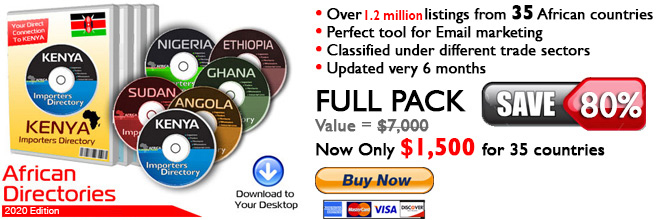
Email marketing lists of companies in Africa is now available at Africa Business Pages for those who are looking for a database of email database to conduct email marketing in Africa. Email marketing lists for Africa are in big demand specially for companies that are seeking to export to Africa and looking for a list email marketing list of importers in Africa in oder to improve their sales in the African markets. The Africa Business Pages has compiled a series of email lists of African companies that has proved very helpful for those looking for importers in Africa, buyers in Africa as well as wholesalers in Africa. The email list of African companies has helped many importers, exporters, manufacturers and traders find business partners in new and emerging markets of Africa. Launched in 1996, the Africa Business Pages has emerged as one of the leading B2B portals for Africa and has played an instrumental role in promoting trade and business to and from Africa by connecting African importers with international exporters. The database of email list of importers in Africa has served as a useful tool for international exporters to find importers in Africa and increase their export to Africa. The email database list at Africa Business Pages is available countrywide as well as sector wise so as to help exporters find the right buyers in Africa for their products and services. Some of the sector wise list of emails available in the database includes: List of Foodstuff Importers in Africa List of Auto Parts Importers in Africa List of Pharmaceutical Importers in Africa List of Tyre Importers in Africa List of Car Importers in Africa List of Rice Importers in Africa List of Cosmetics Importers in Africa List of Building Materials Importers in Africa List of Furniture Importers in Africa List of Hotels in Africa List of Hospitals in Africa Email marketing lists for Africa have proved to be a very useful tool for contacting companies in Africa, importers in Africa, buyers in Africa through email marketing campaigns targeted at the African markets. The database of emails of African companies compiled by Africa Business Pages is priced nominally and is available for immediate download in Excel format. You can download the African Importers Lists from: http://importers.africa-business.com/
Ethiopian Airlines Plans To Build New Airport
folder_open Articles , East Africa
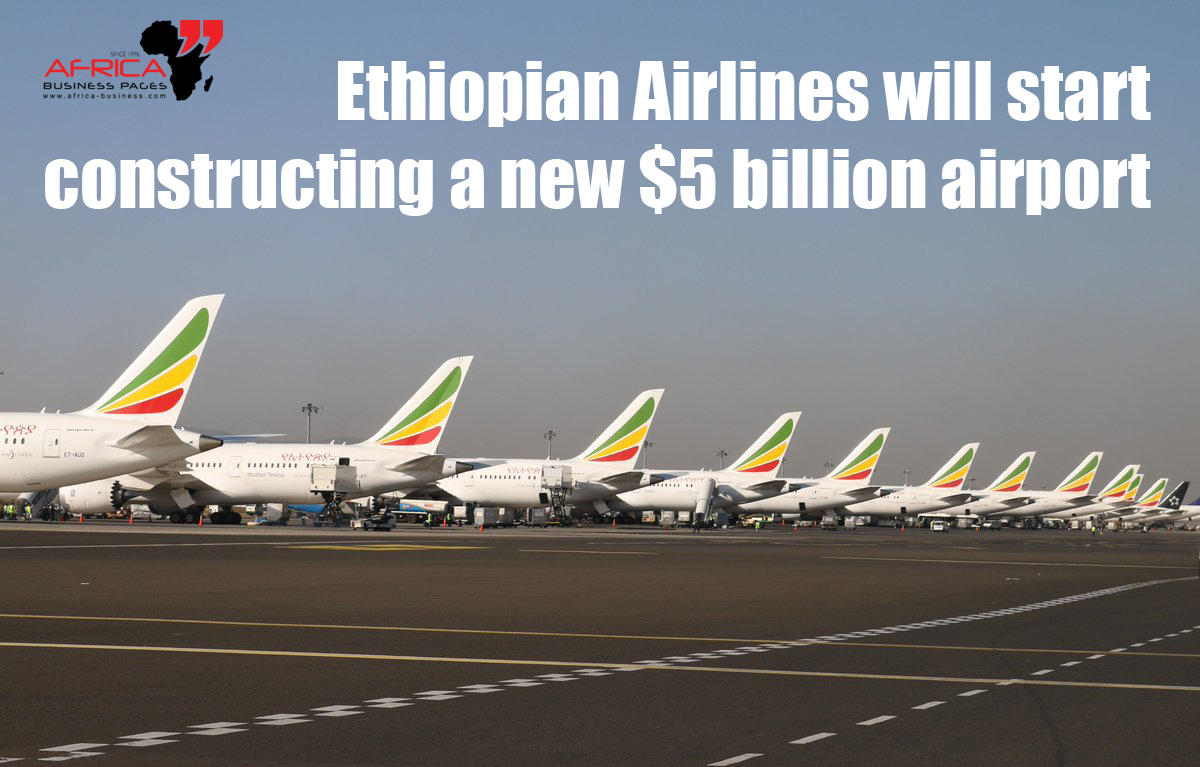
Ethiopian Airlines has announced that it will start constructing a new $5 billion airport later this year, its as the rapidly-expanding carrier outgrows capacity at its current base in Addis Ababa. The airport, which will cover an area of 35 square km, will be built in Bishoftu, a town 39 km south east of the capital, and have the capacity to handle 100 million passengers a year. Bole International Airport in Addis Ababa has a passenger capacity of about 19 million passengers annually. The state-owned Ethiopian Airlines, which competes with large Middle East carriers to connect long-haul passengers, has built a patchwork of African routes from its hub in Addis Ababa to fly customers towards expanding Asian markets. It has 116 aircraft in its fleet and its net profit rose to $260 million in its 2018/19 financial year from $207.2 million a year earlier. In 2018, Addis Ababa overtook Dubai as the top transit hub for long-haul passengers into Africa. In 2019 China funded the expansion of Bole Airport was, allowing it to accommodate 22 million passengers annually. Gebremariam has not said how the new airport — which will accommodate 100 million passengers — will be funded. In a region that has historically struggled in the aviation field, state-run Ethiopian Airlines is truly a success story, playing a key role in the country’s economic development and helping solidify its status as a tourist destination. A new airport takes it to the next level. The continent has been notoriously under-connected by air, and Ethiopian Airlines is changing that, with flights to more than 60 African cities. The company also owns stakes in several local airlines based in other countries. Ethiopian Airlines also has a special “Stopover Package” for passengers connecting through its Addis Ababa hub. The program officially launched in 2018 does not raise the cost of an airfare, caters to leisure travellers in order to promote tourism in Ethiopia.
Africa: The Business Hub of the Future
folder_open Articles
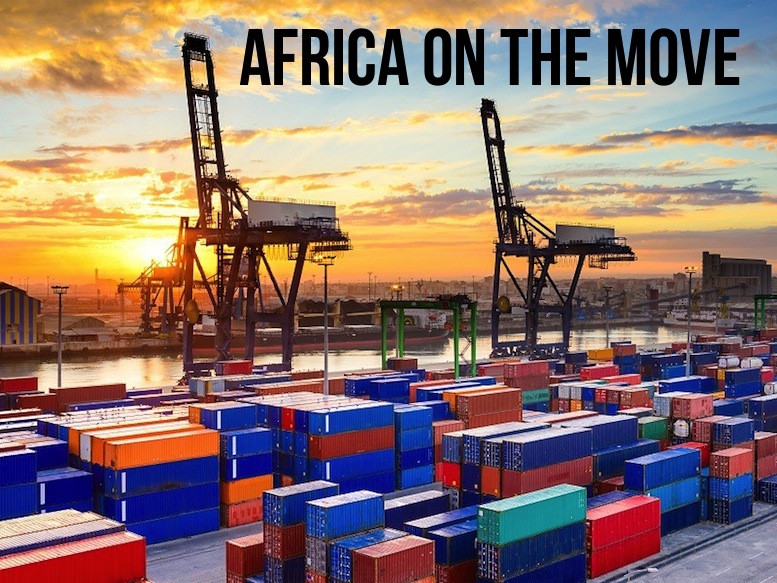
With 54 countries, Africa is a large continent with tremendous economic growth, investment, and rapidly rising living standards. Today Africa offers a host of opportunities for entrepreneurs and businesses across the world as it marches towards a better economic future. All across the African markets, national and regional economies are steadily accelerating their growth and attracting foreign investors from all across the world. This drastic change is driven by a number of factors, including more democratic and accountable governments; economic policies which increasingly favour and facilitate international trade; a new generation of policy-makers and business leaders; innovative information and communication technologies; an emerging spirit of entrepreneurship; and a growing middle class of relative prosperity with a taste for modern consumer goods. As a matter of fact, six of the world’s 10 fastest growing economies are in Africa, and the ease of doing business in Africa is improving to the extent that a good number of countries (including South Africa, Ghana, Mauritius and Tunisia) now outperform China, India, Brazil and Russia. FDI inflows to Africa have also registered year-on-year growth since 2010 and now amount to US$ 50 billion. Forecasts by industry experts are leading to optimistic outlooks among those early movers who have already identified the huge potential of the African continent with its one billion people spread across 54 countries. It is time for enterprising businesses to seize the opportunity and look at the African markets seriously. Key figures: The attractiveness of business in Africa: Population and demographics More than 50% of Africa’s population is under 20 years old, making it the world’s youngest continent – in comparison only 28 % of the population of China is under 20 years old Almost 40% of the global population growth will be in Africa by 2050 500 million Africans are between the age of 18 and 24. By 2040, the forecast is 1.1 billion — more than in China or India Markets and consumers Urban African consumers spend the largest share of their budgets (45%) on food and groceries –more than the average consumer in the BRIC countries Consumer expenditure is set to rise from USD 600 billion in 2010 to nearly USD 1 trillion in 2020 More than half of all African households are projected to have discretionary income by 2020 – corresponding to almost 130.000 households Consumer-facing industries (retail/wholesale, banking, telecommunication and tourism) in Africa are expected to grow by USD 400 billion by 2020, with apparel, consumer goods and food accounting for $185 billion Economic performance Average annual return on capital of African companies was 65-70% or higher than that of comparable companies in China, India, Indonesia, and Vietnam GDP growth for the continent is forecast at 5.4% in 2013 and 5.7% in 2014 6 of 10 of the world’s fastest growing economies are currently in Africa FDI inflows to Africa have increased by 13.6% and FDI outflows by 55.6% since 2010 Doing business in Africa Transparency International’s Corruption Perceptions Index 2012 ranks Botswana, Rwanda, Namibia, Ghana, South Africa, Liberia and Tunisia better than China and India in terms of the perceived corruption levels of public institutions The Doing Business 2013 Report ranks Mauritius, South Africa, Rwanda, Botswana, Ghana, Tunisia and Namibia above China (the best performing BRIC country), while Morocco, Zambia, Egypt, Kenya, Uganda, Ethiopia and Nigeria rank above India and Brazil African Economies: Marching Ahead Africa’s fundamentals appear strong, and the continent’s outlook remains positive. The belief remains unshakable among Africans that tomorrow will be better than today and that is the kind of infectious confidence in which investments thrive. Many African governments are now embracing the right reforms, building the right institutions, growing resilient economies and making the right policy choices, including diversifying their economies away from oil, gas and mining to the massive job-creating promise held by agriculture and small and medium-size enterprise creation. The global economy is to gain greatly from high-performing Africa that can be the next global growth pole and its next market. Global prosperity will expand if Africa grows and prospers. The message to any company or investor still not in Africa is that today is the day that business in Africa is made and it might already be too late tomorrow. Africa is the now, no longer the future. The Africa train has already left the station. You are either on it or you risk becoming irrelevant.
Export to Africa: How and What
folder_open Articles
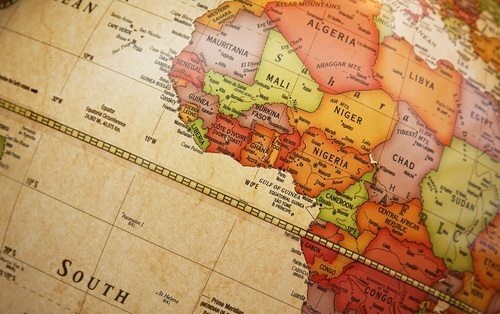
Africa is the second largest continent and demand for consumer and capital goods is always high in the local markets. Most African economies rely on imports to satisfy the needs and requirements of their large population. If you want to export goods and products to Africa, good research and knowledge of the legal regulations are a must for your success. Africa hosts the majority of the top ten fastest growing countries in the world. The IMF estimates that economic growth in sub-Saharan Africa will cross 6.5% in 2025. The World Bank believes that most African countries will reach “middle income” (at least US$1,000 per person a year) by 2025 if current growth rates continue. Nearly 65% of the labour force in Africa is expected to have some secondary-level education by 2025. Africa has around 125 million people with household incomes exceeding $5,000 – meaning they can direct more than half of their income towards discretionary spending. It’s expected that this figure will cross 150 million by 2025. Exporting to Africa looks a much rosier prospect than in the past and already countries such as the US, Brazil, China and India have increased their business dealings with the African continent. Main Products Exported To Africa If you are looking to break into the African market, there are many norms that you should consider as an exporter. Here, we will discuss the top products to export to Africa: Pharmaceutical Products Pharmaceutical products such as different medical drugs and vitamins as well as health supplements are in big demand in Africa. Since the industry of health and pharmaceutics is in constant development, investing in such goods is one of the best decisions to make nowadays. Also, African people suffer from a variety of conditions, especially in the rural environments where medical drugs are not so accessible. Iron and Steel When it comes to raw materials, exports of iron and steel which are much needed on the African market is indeed a profitable business. Africa can’t produce such metals due to lack of funds, and the demand is high especially in the urban areas of the continent. Automobile Spare Parts Automobiles and its components such as spare parts, tyres, batteries, lubricants and different mechanical pieces needed for repairs are also very much in demand in Africa. Many countries have been exporting a wide range of automobile spare parts to Africa and making a neat profit. Cars Exporting cars comes with a lot of new regulations and some of them keep changing. You have to consider the value of the car, the demand present on the market as well as the financial capabilities of African people. Used cars are also in big demand in African countries. Textiles Clothing One of the main exports to Africa is textiles and different clothing. Clothes will always be a must and a basic necessity which is why they are a great opportunity for those wanting to export to Africa. However, your best bet as an exporter is to supply clothes and textiles in urban areas of Africa because they will not sell so good in rural villages or undeveloped regions. Rice Rice is being imported into African in increasingly large quantities in recent years. Countries like Nigeria are big consumers of rice, and there is never enough on the market. Imports keep coming to support the demand which is a great opportunity for foreign exporters. Even if Africa started producing their rice, the quality is still not the same as the imported rice. That is why many African people prefer to consume rice from other countries like India, China, Thailand, Pakistan and Malaysia. Local production of rice is also still very low due to lack of financial possibilities and no investments. Some rice producers decided to set up a rice farm in Africa to produce such goods locally. It helps them skip the entire import-export process which can be time-consuming and even unprofitable in some occasions. Plastic Raw Materials Plastic raw materials are also a great category of goods to import in Africa because they are highly functional and tend to come at a fairly low price as well. The demand for plastic increased along with the urbanization process that took place in the past decades in Africa. More people live in cities, and the need for plastic materials and objects became a real struggle. Especially in countries like Nigeria where more than half of the population lives in urban areas. Even if other countries try to stay away from plastic since 2015, Africa still relies on this material mainly because it is affordable for all types of processes. Opportunities for Export to Africa There are enormous opportunities in Africa but you have to thoroughly research the market. If your business produces machinery and equipment, chemicals, petroleum products, scientific instruments or foodstuffs then exporting to Africa is a great idea. It’s important to have an agent who can travel to your target market on a regular basis and has established a network of customers there. This allows you to concentrate on supply and production. At some point though it’s important for you to get on that plane and travel to Africa. It’s important to meet people face-to-face and build proper relationships but make sure that you learn about their culture to avoid any potential embarrassing mistakes. Some countries such a Nigeria offer both complimentary and fee-based market research tools to help possible exporters from other countries to analyze the market and gain insight into specific sectors. Other advantages with Africa are lower salaries and rents, improving infrastructures and growth in those who have broadband. There are risks though as in any emerging markets. These include crime and corruption. Also in a country such as South Africa you have to respect laws that demand a certain percentage of employees, directors and shareholders are black. In Gabon there are strict rules that have to be adhered to. These protect the health, safety and environment of Gabon’s citizens from sub standard imported goods. Exporters need to provide a Certificate of Conformity for Customs clearance. It’s important to break into a growing market as early as possible. Make sure you do your research, employ agents to keep a close eye on your investments and make sure you comply with all the relevant laws in the country you are exporting to and exporting to Africa really can pay dividends. Increased Trade with Africa Exports from Africa totaled US$476.6 billion in 2018. That dollar amount reflects an -11.3% drop since 2014 but a 12.8% year-over-year upturn from 2017 to 2018. In comparison, global exports from all countries worldwide equaled $19.228 trillion in 2018, rising 1.2% in value since 2014 and appreciating by 8.5% from 2017 to 2018. Africa’s exports represent an estimated 2.5% of total world exports in 2018. Based on statistics from the International Monetary Fund’s World Economic Outlook Database, the total Gross Domestic Product for Africa calculated on a Purchase Power Parity (PPP) basis amounted to roughly $6.813 trillion in 2018. Therefore, exports account for about 7% of Africa’s total economic output. Given Africa’s population of about 1.264 billion people, the total $476.6 billion in 2018 exported goods originating from continental Africa translates to roughly $375 per African resident. Africa Import Directories Africa Business Pages has played an instrumental role in promoting direct B2B contacts between African buyers and international suppliers. As one of the leading B2B portals of Africa, the Africa Business Pages has compiled the Africa Importers Directories that help international suppliers identify and contact their business counterparts in key African markets. Available for download in Excel format the Africa Importers Directories list major importers in Africa. The directories are available countrywise as well as sector wise. You can download the Africa Pharmaceutical Directory of you are dealing in pharmaceuticals. Or the Africa Automotive Directory if you are an exporter of automobile spare parts and accessories. The Africa Foodstuff Directory will be specially useful for those exporting foodstuff items. The Africa Importers Directories provide a useful database of companies in Africa and helps international suppliers find buyers in Africa by promoting direct B2B contacts between buyers and sellers.

Boom Time for Africa's Aviation Industry
folder_open Articles , Business Outlook
Africa’s aviation industry is experiencing a boom time as the continent continues to increase airline frequency to the GCC and other destinations around the world. Undoubtedly, the potential for the aviation sector in Africa is immense as the African aviation industry continues to provide new opportunities for growth and expansion. The International Air Transport Association (IATA) projects that the African continent will become one of the fastest growing aviation regions within the next 20 years, with an average annual expansion rate of almost 5%. IATA predicts that Africa will become one of the fastest growing aviation regions in the world by 2040. Currently, there are 731 airports and 419 airlines on the African continent, with the aviation sector supporting around 7 million jobs and generating $80 billion in economic activity. In terms of passenger numbers, 47 million passengers departed from Africa’s top five airports, which included Cairo, Addis Ababa and Marrakesh in 2018, according to the latest ANKER report. “Emirates and Saudia were only responsible for 8 million of those passengers, highlighting the potential for new routes throughout the continent and between the Middle East and Africa. Furthermore, IATA reckons if just 12 key Africa countries opened their markets and increased connectivity, an extra 155,000 jobs and US$1.3 billion in annual GDP would be created in those countries. The international aviation industry has been monitoring developments in Africa closely, especially since the Single African Air Transport Market (SAATM) agreement was drawn up in January 2018. The aim of SAATM is to open up Africa’s skies, allowing airlines to fly between any two African cities without having to do so via their home hub airport, boosting intra-Africa trade and tourism as a result. To date, 28 countries out of 55 member states have signed up to SAATM representing over 80% of the existing aviation market in Africa. However, despite its rosy outlook, the sector still faces significant challenges, indeed, protectionist trends have resulted in a rather lacklustre response from many members, concerning competition rules, ownership and control, consumer rights, taxes and commercial viability. “These mechanics are integral to an open sky treaty and necessary to resolve existing differences between airlines and provide an equitable way forward. Sixteen countries in Africa are landlocked, so the pent-up demand for affordable air transport must be considerable,” said Karin Butot, CEO, The Airport Agency “These, as well as other salient issues, will no doubt be discussed at length between senior network planning teams and high-level executives representing the aviation and tourism industries, in Africa’s as well as the Middle East & Asia, through unlimited one-to-one pre-scheduled networking appointments,” added Butot.
Preliminary request for participation in the trade show
place
calendar_today
Preliminary request for visitor registration
Visitor Registration
place
calendar_today