
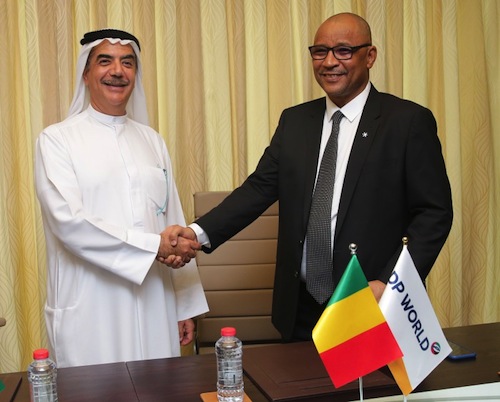
DP World to Build and Operate New Logistics Hub in Mali
folder_open Articles , Business Outlook , West Africa
Mali Logistics Hub to fuel trade in west Africa with simplified procedures and paperless transactions Global trade enabler DP World has signed a 20-year concession with an automatic 20-year extension with the Republic of Mali to build and operate a 1000-hectare modern logistics hub outside of Bamako, the capital and largest city of Mali. The multimodal logistics platform, Mali Logistics Hub (MLH), will have inland container depots (ICD) and Container Freight Stations (CFS) that will facilitate the import and export of goods. The Mali Logistics Hub will be located on the main road corridor from Dakar, Senegal to Bamako and close to the Dakar - Bamako rail line and will be capable of handling 300,000 TEU (twenty-foot equivalent unit), 4 million tons of bulk and general cargo. The first phase of the project, with an estimated initial investment of $50 million, will support the growth of the Malian economy by streamlining the import and export of goods. Construction is expected to start in 2019 and is to take approximately 18 months to complete. DP World will also provide the Republic of Mali with three locomotive trains to boost cargo & passenger traffic along the Bamako-Dakar rail system. Furthermore, the Mali logistics hub will significantly reduce processing times for products entering the Malian market as part of efforts to reduce obstacles to trade and economic development. DP World will also implement its online paperless facilitation platform to accelerate the movement of goods as part of the agreement. The concession agreement was signed in Dubai on Monday by Suhail Al Banna, Chief executive Officer and Managing Director, DP World Middle East and Africa and Moulaye Ahmed Boubacar, Minister of Equipment and Transport, the Republic of Mali, in the attendance of Malian and DP World officials. DP World Chairman and CEO Sultan Ahmed Bin Sulayem, said: "The Malian market is expected to grow over the next two decades and is driven by a robust economic and population growth. Thus, the Mali Logistics Hub is much needed and will provide the country with a logistics platform that aims to facilitate the import and export of goods via the Port of Dakar, which is operated by DP World. "DP World's investment will significantly cut processing times for goods and thus facilitate trade. We are committed to enabling trade in the region and helping local businesses and people prosper, and look forward to working together." Republic of Mali Minister of Equipment and Transport Moulaye Ahmed Boubacar said: "We are excited to partner with DP World on this project. The Mali Logistics Hub will dramatically improve the cost and time of trade for Mali. The project will provide us with a first-class logistics facility comparable to global standards and will be the largest in terms of capacity". "We are confident that with DP World as a partner we will be able to meet the expectations of our people, traders and exporters to have access to more markets and to bring more efficiency and cost effectiveness to international trade. The project also gives the Republic of Mali the opportunity to be connected to global trade lanes, and to speed up access and transport in and out of the country."

Top 10 Imports of Africa
folder_open Articles
Africa has emerged as an attractive market for export-oriented companies and manufacturers across the world as demand for consumer and capital goods in Africa has been growing at a steady pace in the last few years. The emergence of an affluent middle-class with disposable incomes in many African companies has contributed largely in the increased trade to Africa. If you are targeting the African buyers in new and emerging African markets, here is a list of 10 major African imports based on current Africa import and export statistics: Automobiles The automobile industry provides innumerable lucrative opportunities in this rapidly growing continent. The high rate of economic growth and urbanization has led to a subsequent rise in income levels. This implies that more and more people are now able to purchase vehicles both for personal and commercial purposes as they move from low income status and into the upwardly mobile middle class. However, the continent boasts very little output in terms of automobile manufacture. Additionally, the major import firms in Africa focus their business on high-end buyers who are in a position to afford expensive, brand new vehicle models. This leaves a gap in the market for inexpensive used vehicles for the bigger percentage of buyers. For a long time, Japan and Korea dominated this niché market but in more recent years, the US and China are also making inroads to grab a piece of the pie. The market is still ripe and opportunities are endless considering the fact that the percentage of vehicle ownership is still very low in most African markets. Computers and other IT Products Another vastly unexploited export opportunity to Africa is in the sale of IT products. This has largely been the result of an ongoing computerization trend that has taken a hold throughout the continent. Even though there a few manufacturers of IT equipment in Africa, they have been unable to keep up with the level of demand in the market and as a result most traders are forced to import. Africa has one of the highest rates of growth in the market for IT products worldwide. As a result, multi-national manufacturers have concentrated their efforts on the market, producing in great quantities items specifically targeting the African market. South Africa’s computer market for instance is valued at more than $1 billion. One of the factors behind the growth in the sector is the fact that many organizations are changing from the traditional desktops to the more personal and portable laptops and ultra-books. Furthermore, the rapid pace at which innovations are being introduced to the sector and the inversely proportional price reductions have also boosted demand. The UAE has the lion’s share of this market thanks to its strategic position relative to the African continent that implies low transportation costs. Furthermore, the regulatory requirements governing the trade over both countries have served to favour the cycles of demand and supply. There is very high competition in the IT business in this region and as a result, the prices are rated among the cheapest globally. Automobile Spare Parts Most of the African buyers are buying substantial quantities of automotive batteries, tyres, spare parts, ball bearings, water pumps and a host of automobile spare parts from overseas markets for selling them at a profit in their own countries. In addition to automobile spare parts, a major import to many African countries in recent years has been tyres, batteries and lubricants. Clothing and Fashion Accessories The fashion and textile industry provides another booming opportunity for export to Africa. New imported clothes have gained popularity as a status symbol and are a reserve of the continent’s wealth. In a bid to keep up with the ever evolving trends in the fashion world they do not spare a dime in purchasing the most exclusive labels from the world’s top fashion hotspots. Countries like China provide cheaper options of clothing for the general populace by taking advantage of its high levels of industrialization as well as the availability of cheap labor in the production process. Secondhand clothes are also in great demand in Africa amongst the low-income earners. The United States is the largest used clothing exporter globally selling almost $700 million annually – a large portion of which is exported to Africa. However, the used clothing business has encountered its share of challenges with some African countries planning to ban the importation of used clothes. Pharmaceuticals The world is ever in search of more affordable drugs and Africa is no exception to this rule. Healthcare is a big concern with a majority of Africans who are unable to afford expensive medical care. Moreover, there is a huge gap in the demand and supply chain as African does not have any major bulk manufacturers of pharmaceuticals. Pharmaceutical products constitute a big bulk of Indian exports to Africa. This is largely due to the fact that India has emerged as one of the world’s biggest manufacturing hubs for generic drugs India's pharmaceuticals trade with Africa is worth over $17 billion annually. Mobile Phones The African mobile revolution has taken the world by storm with the continent having the second biggest market for mobile devices after China. Africa has more mobile device users than land lines. By 2020, the number of devices in use in the African continent is projected to reach about 1.8 billion. Subsequently, the sale of mobile phones has been on a consistent rise every year with the figures soaring to unimaginable levels as manufacturers consistently introduce improved models into the market. Considering that the current use of mobile phones mostly centers on making calls and sending short messages, the figures are expected to continue rising as the cost of using the internet becomes lower in most African countries. For the past five years, the annual rate at which the number of mobile users increases has been about 65%. This makes Africa the ideal market for international traders looking to secure viable export opportunities in Africa. Nigeria is once again the continent’s leader in the mobile handset market followed closely by South Africa. However, even in less developed war-torn countries like Somalia the mobile telecoms industry continues to thrive. Mobile money platforms have particularly made a significant contribution to this growth by offering most of the services that were previously the reserve of banking institutions. The huge unbanked population in the continent now enjoys these features from the convenience of their mobile handsets. There is still so much potential for growth in this market creating an ideal investment opportunity for exporters. Stationery Enterprising traders have found a large market for stationery items in Africa. This rise in demand has been a result of the increased number of academic institutions and the importance African attach to education. Since there is a shortage in the manufacturing capabilities for these products, the demand for stationery in Africa is being met by overseas companies. Dubai has come to the fore as one of the most reliable suppliers in this sector giving competitive prices and a suitable environment for import export trade. Foodstuff While Africa was once a major exporter of agricultural products to other countries, there are a number of factors that have created a turn of events and it now accounts for a huge market share of the food importation market. These include the ever-expanding population, poor infrastructure, mismanagement of local agricultural industries, and the emergence of the middle class. While this may spell doom for its population, it is the best news an international trader would want to hear. With the middle-class expected to continue growing, the African food import market is bound to continue to grow for a while since there is a shortage on laborers to work in the agricultural sector. As always, Nigeria and South Africa take the lead in the region’s top importers and together with Angola, they account for almost half of all the imports made into the continent. Electronics The African market has not yet been able to achieve self-sustenance in the electronics sector and relies on external players in the industry to fill its growing need for home appliances and electronics. Electronic products from Asia have gained increasing popularity in the African markets thanks to their well-equipped production and assembly facilities as well as competitive pricing. Unlike European and American manufacturers, Asian manufacturers have easy access to electronic components and hence are able to provide cheaper prices. Machinery & Engineering Products Africa lacks the strong and diversified base that is necessary for the production of most engineering products. These refer to all materials needed for the manufacturing of other products. They form the base for such strong manufacturing countries as China and India and have turned these into the biggest exporters of the products into Africa. This is another important product on the list of items that can be imported into Nigeria by virtue of the dynamic nature and rapid rate of urbanization of the country. It has therefore worked out favorable bilateral trade agreements with these major manufacturers in order to maximize the opportunities for trade. Chemicals The demand for chemicals in the African market has exceeded its supply capabilities by far. The current rate of industrial growth and the general demand for products by its growing population necessitates the importation of these products. The agricultural sector is one of the areas of the African economy that has created a great need for the products. There is a growing trend in the use of modern agricultural methods that utilize organic chemicals to a greater degree than ever before. The cosmetics industry is also growing rapidly and there is increased need for raw material to manufacture soap, colognes, make up and various toiletries. How to Penetrate the African Market Reaching the right African buyers is a challenge for most international companies. The dearth of information and the unorganised nature of business in many African countries is indeed a challenge for those wanting to export to Africa. Buy the African Importers Database Africa Business Pages, the leading B2B portal connecting African buyers to international suppliers since 1996, has compiled a database of African companies. The database of African importers has helped many international companies identify potential business partners in new and emerging markets in Africa. Available for download from Africa Business Pages, the database of African companies lists importers in Africa and is available for download in excel format at https://importers.africa-business.com. Featured Listing on Africa Business Pages Many international companies have been able to find buyers in the African markets by listing their companies in dedicated African B2B portals like the Africa Business Pages. By listing your company under the relevant trade sector, many global suppliers have been able to generate useful sales leads from African importers. Advertise in Africa - Print & Digital Marketing in Africa Advertising has always been the preferred medium for reputed manufacturers, traders and suppliers to reach their target audiences around the world. By advertising in print magazines like Africa Business Pages you can get your company noticed amongst African buyers and importers. Digital marketing plans offered by Africa Business Pages have also been producing good results for advertisers. The digital marketing plan includes Email marketing to African buyers, banner advertising, content marketing, lead generation, business matchmaking as well as social media advertising.

African Business Email List | Africa Business List | Africa Business Database | Now available for download
folder_open Articles
Email marketing to reach African customer and African buyers is gaining popularity as more and more businesses look to expand in the African markets. However, there are very few reliable and authentic database providers that are able to provide accurate and authentic email marketing database for Africa. B2b marketing lists for Africa are mostly not as good as they claim to be. It is therefore a challenge for exporters across the world to find high-quality, authentic and authenticated email marketing lists for Africa. B2B marketing lists are easily available for most countries but not for most African countries. Reealising this, the Africa Business Pages, one of the leading B2B portals dedicated to African businesses, has released new email database of companies in Africa that it has collected since its inception in 1996. As one of the specialised B2B portal dedicated entirely to the African market, the email marketing database of Africa sold by the Africa Business Pages has helped many exporters, manufacturers, traders, service providers and merchants connect with their business counterparts in the African markets. The Africa Business Pages has now gone a step further and compiled all this useful data into well-organised Excel sheets that are easy to update and easy to distribute. Customers and now easily download the email lists database for Africa directly from the African Business Pages portal. This has come as welcome news by those businesses that were looking to export to Africa. By having access to authentic email database of companies in Africa, international businesses can now connect with importers in Africa, appoint agents in Africa and send their brochures and proposals to potential business partners in Africa. Email Marketing Database of Importers in Africa The Africa Business Pages has made available email marketing database of companies in Africa for the following countries: Algeria B2B Database - Complete email database with Company Name etc. Angola Importers Database - Email marketing database listing with emails etc. Benin Business Database - Authentic email database for Benin. Botswana B2B Email Database - Verified and registered email marketing list. Burundi Business Database - Full B2B email database for B2B email marketing. Burkina Faso Importers Database - Email marketing in Africa made easy. Cameroon B2B Email Database - Perfect email marketing list for email marketing. Cape Verde Email Database - Comprehensive B2B email marketing list for Africa. Chad B2B Email Database - For those looking for African email marketing database. Congo B2B Database - Email marketing list and database of importers in Africa. Djibouti Business Database - Database of companies in Africa for exporters. Egypt B2B Database - Export to Africa using this email marketing list for Africa. Ethiopia B2B Email Database - Email marketing list to reach importers in Africa. Gabon Business Email Database - The perfect way to launch your email marketing campaign. Ghana B2B Email Database - Useful B2B email marketing list and email database. Kenya Business Email Database - Business listings of companies in Africa in this database. Libya Business Database - List of importers in Africa with email addresses. Madagascar Email Marketing Database - Buy this authentic email database of importers in Africa. Malawi B2B Email Database - Buy this email database of importers in Africa. Mali Business Database - Contact list of companies in Africa for email marketing. Mauritania Email Marketing Database - Email database of companies in Africa for exporters. Mauritius Email Listings - African companies database for email marketing. Morocco B2B Email Database - B2B email database. Perfect for email marketing. Mozambique Email Database - List of companies in Africa with email addresses. Namibia Importers Database - Email marketing list of companies in Africa. Nigeria B2B Email Database - Business listings of importers in Africa. Rwanda B2B Email Database - Database of email addresses for email marketing. Senegal B2B Email Database - Buy email marketing lists to reach importers in Africa. South Africa B2B Email Database - Email database plus database of companies. Sudan B2B Email Database - Buy email database of companies in Africa. Somalia B2B Email Database - Database of companies in Somalia. Email database. Tanzania Email List - Tanzania business database for email marketing list. Uganda B2B Email Database - Email marketing list of importers in Uganda, Africa. Zambia B2B Email Database - Buy database of importers in Zambia, Africa. Zimbabwe B2B Email Database - Companies database of importers in Zimababwe. Each database is reasonably priced starting as low as $150. You can also buy the B2B email database of importers in Africa in bundles at discounted prices. Available for instant download at: https://importers.africa-business.com

Africa's internet problems: Google releases new search app for slow Internet connections
folder_open Articles
Google has released a new search app called Go in 26 African countries that would allow users to search the web faster, even with slow Internet connections. It will partner with pan-African wireless carriers such as MTN Group Ltd. and Vodacom Group Ltd. to preload the app on some of their low-end devices. The internet giant has also adapted the voice function to work better on slow connections, even as basic as 2G networks, according to Google Africa Chief Marketing Officer Mzamo Masito. “Weak data connectivity, high data costs and low storage space often make it hard for people to get the most out of the internet,” he told reporters on Thursday. “Google Go is built to handle these challenges.” U.S. tech giants see Africa as a relatively untapped market for smartphones and services such as web search and social media. Over the last few months, Google has been releasing lightweight operating “Go” systems of its popular apps for less capable phones including Gmail and Google Assistant. Last year, it launched YouTube Go in Nigeria, an “offline first” version of the video sharing platform, allowing users to preview and download videos, rather than stream, and essentially save on data costs. The app’s release is part of a recognition of how high data costs, inadequate digital infrastructure, geographical locations, and scarcity of content in local languages keep many Africans offline. By 2020, there will be 535 million unique mobile subscribers in sub-Saharan Africa, up from 420 million in 2016, according to the GSM Association – a subscriber base that is growing faster than any other region globally. Internet bandwidth capacity is also growing fast while mobile broadband connections are set to reach half a billion by 2020, becoming the driving force behind innovation, financial inclusion, and access to services ranging from solar power to education, and insurance. Younger consumers in sub-Saharan Africa are increasingly demanding quicker internet speeds and cheaper phones to go about their business, while MTN and Vodacom see the digital space as their fastest-growing market. The new app will be available in 26 countries in sub-Saharan Africa and will be pre-installed on all Android Oreo devices. The company also plans to make it available in other emerging markets, including India, Brazil and Indonesia.
DP World expands African footprint with new port in Democratic Republic of Congo
folder_open Articles , West Africa
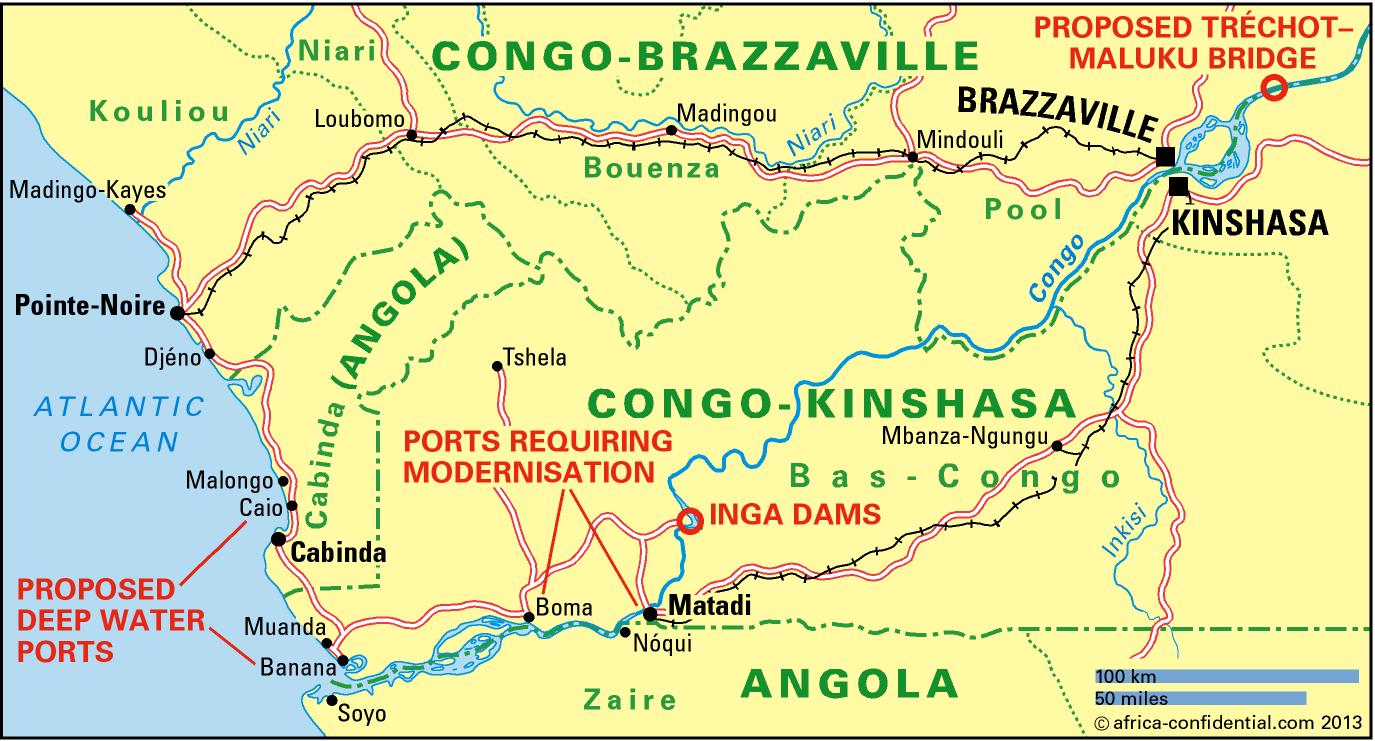
DP World wins a 30-year concession to develop the first deep-sea port in the Democratic Republic of Congo at Banana DP World's investment in the Port of Banana will have a major impact on the the Democratic Republic of Congo's trade and will significant reduce transportation costs and time, says Sultan Ahmed Bin Sulayem, Group Chairman and CEO, DP World. Currently, there is only the riverine port of Matadi positioned along the 37 kilometre coastline. DP World will set up a joint venture holding 70 per cent control while the government of DRC will hold a 30 per cent share to manage and invest in the port. The first phase of the $350 million greenfield project will include a 600-metre quay and 25-hectare yard extension with a container capacity of 350,000 TEU (twenty-foot equivalent units) and 1.5 million tons for general cargo. Construction is expected to start later in 2018 and is expected to take approximately tow years to complete. The investment will be spread over two years, but the total project cost of more than $1 billion over four phases will be dependent on market demand for the port, industrial and logistics zone infrastructure. The development gives the Democratic Republic of the Congo the opportunity to be connected into global trade routes and to reduce its dependency on the neighbouring countries’ ports. Sultan Ahmed Bin Sulayem, Group Chairman and CEO, DP World, said, “We are delighted to extend our African footprint further with a major investment in the Democratic Republic of the Congo, which is Africa’s third-most populous country but has no direct deep-sea port. Investment in this deep-water port will have a major impact on the country’s trade with significant cost and time savings, attracting more direct calls from larger vessels from Asia and Europe, and ultimately acting as a catalyst for the growth of the country and the region’s economy. Banana is a small seaport in the Bas-Congo province of the Democratic Republic of the Congo on the Atlantic coast. The port is situated in Banana Creek, an inlet about 1km wide on the north bank of the Congo River's mouth, separated from the ocean by a spit of land 3km long and 100 to 400m wide. The port is located on the creek side of the spit, which shelters it from the ocean. It is about 8km south-east of Muanda to which it is connected by a paved road running along the coast. “DP World has become a major player in Africa and the Port of Banana will contribute to our global network and continued growth in the developing markets. We are confident that this investment will deliver attractive returns to shareholders over the longer-term and we look forward to bringing DP World’s world class productivity-enhancing, security, safety and environmental best practices in container terminal development and operation to the Democratic Republic of the Congo.” Jose Makila Sumanda, Vice Prime Minister and Minister of Transport and Communications, Democratic Republic of the Congo, said, “We are excited to partner with DP World on this landmark project. The Port of Banana will offer the first deep-water port to the Democratic Republic of the Congo that will dramatically improve the cost and time of trade as the majority of the cargo is still handled by neighbouring countries. “The project will provide us with a first-class marine facility comparable to other African countries in terms of capacity, draft and ability to handle the latest generation of vessels.” “The country was waiting for this strategic and structural project for a long time. We are confident that with DP World as a partner, we will be able to meet the expectations of our people, traders and exporters to have access to more markets and to bring more efficiency and cost effectiveness to international trade.”

Nairobi to Have Flying Taxis
folder_open Articles , Automobiles Sector
Last year Uber promised flying taxis in several cities by 2020. But the company will be relying on variety of partners to provide the actual vehicles and systems required to have a working flying taxi service in a city. The cars will be efficient in fuel use, safe and no noise compared to helicopters. McFly, the company that intends to introduce the service in Kenya will use an initial production cost worth $120,000 per vehicle. However, that is expected to reduce to $30,000 once they start producing in bulk. The trip will cost $8 per minute. But pricing will depend on grid’s load. Passengers will be picked up at the nearest helipad or heliport and dropped at the nearest pad to their destination, and will take a 5-10-minute walk at either end. US-based tech firms Facebook and Uber have also requested permission from Kenya's aviation regulator to test drone activities following legalisation of the Unmanned Aerial Vehicles (UAVs). The Kenya Civil Aviation Authority (KCAA) says the tech giants have shown interest in use of drones in the country following adoption of regulations to guide operation of the devices. The move makes Kenya the third country on the continent after Rwanda and South Africa to have a legal framework in place for the remotely controlled aircraft. Meanwhile, at least 19 companies are also working on flying taxis. Amongst them are big names like Airbus and Boeing (who have completed initial flight tests of an electric unmanned cargo aerial vehicle prototype), as well as small startups like Kitty Hawk, owned by Google founder Larry Page. Dallas, Dubai and Los Angeles are the first three cities where Uber plans to launch a pilot service by 2020. Uber has signed a Space Act Agreement with NASA to create a brand-new air traffic control system. Dubai's Road and Transport Authority (RTA) hopes that airborne taxi services will make up a quarter of all transport in the city by 2030 and Singapore is also investing in flying, driverless drones to resolve traffic problems. Introducing flying taxi services in cities will be a complicated and cumbersome task, but given the rising traffic problems in urban areas all across the world, flying cars and taxis seem to the only viable solution.

The evolving and rising nature of crimes in Africa have seen many people relying on contemporary and effective ways to monitor their businesses, homes and events. Over the years, it has become evident that man guards, the most popular response to crime in many African countries have become inadequate, and newer ways are being sought to ensure a combination of electronics support to enhance the effectiveness of Man Guarding on the back of technology in creating solutions around different risk equation and demands for safety. This explains an increasing demand in African countries for electronic security, which is the use of technology and electronic devices to provide safety and security for lives, assets, and businesses, by preventing and unauthorized access to restricted premises, critical assets, and sensitive data. This is done, leveraging on contemporary electronic security systems, intrusion & panic sensors and alarms, electronic access control systems, and CCTV/Video surveillance systems and analytics. A case in point is the Nigerian market which has responded positively to the electronic security market. In Nigeria, many private individual commercial establishments and government bodies are now investing on improving the quality of safety. A major factor contributing to these improvements are the wave of terror, kidnapping, some basic regulations being implemented in some sensitive sectors like FSI, Manufacturing and Oil & Gas. In fact, security systems are also now adopted as a strong basics for quality certification. Commercial establishments have also adopted security systems/programs as a strategic value proposition. Security in the face of the optimism, the market is still faced with a major challenge of premature and poor infrastructure, like power, physical development and in proper planning and legislation. Influence of technology and the growth trend Since the creation of the ear-piercing burglar alarm systems, profound level of fear amongst the public and a demand for more cost effective and efficient measure has increased demand for electronic security. The advent of the Internet of Things (IoT) has simplified the approach and made technology a critical factor in combatting the risk management deficient in every society. Technology is therefore a critical enabler in creating a sustainable Security management framework. The developed society today have invested billions of dollars in cities counties, states communities, critical infrastructure, real estate sectors on electronic security systems such as CCTV surveillance systems, access control and other security and surveillance equipment and gadgets. Africa is still way behind in this regard. But few discerning countries like Nigeria, Kenya, South Africa are beginning to take steps in the right direction. The system integration capability in electronic security has tremendously helped law enforcement in several African countries in apprehending criminals and law breakers. Most evidences produced through the platform has proven reliable. As it is, the global Electronic Security System market is characterized by various factors. The United State of America is considered to be the largest market followed by Europe, Asia, Middle East and Africa and is expected to be worth US$80 billion by 2020. It is envisaged that there will be a huge demand in CCTV and Video Surveillance and critical need to restrict unauthorized access due to the rising global insecurity which is considered to be borderless. Also, knowing that the African market is still evolving towards a one-dimensional strategy, which is why the market is not growing at the appreciable ratio. After South Africa, Nigeria is the second largest market of video surveillance systems in the Sub-Saharan region and is expected to grow at an annual growth rate of 5.3 percent from till 2022. It is expected that the market for civil security technologies in Kenya and Tanzania will also register robust growth in the future. Industrial growth and the increase of urbanization in both countries open up additional market potentials for the use of security technologies. Both in the commercial and public sectors the demand for high-tech video and alarm systems, electronic access control and specialty equipment especially will be on a high level. In addition, the threat of terrorist attacks plays a significant role. Fields of application of electronic security technology are strategically important facilities, such as airports, railway stations or other urban infrastructure.

Construction Industry in Africa Bounces Back
folder_open Articles
The face of the African construction industry is changing. Construction projects on the continent are getting bigger and more complex. According to recent reports, this is owing to rapid urbanisation, strong economic growth, a rising middle class and regional integration in many of Africa’s 54 nations. All make for the ever-increasing demand in Africa’s construction industry, as big infrastructure projects get under way on the continent. This development leaves industry stakeholders with a lot of questions on how to best secure funding for a project, what is needed for successful project management, what projects have priority and how to access the African market place? Construction costs will rise due to materials and labour One of the most common concerns industry experts cited is the escalating cost of doing business. With rising building material and labour costs, firms will likely struggle to maintain their margins in the coming year. Contractors have been expecting an impending bump in building material costs after several years of relatively flat growth. The Associated Builders and Contractors called the most recent decline in material prices “the calm before the storm.” On the labour side, the skilled-worker shortage has led to employers raising average pay higher than the national average. Experts say that increasing workforce costs — which include recruiting and wage costs for current employees — will cut into contractors’ bottom lines. Most Africa countries spent a lot of money in the construction related projects in the last couple of years and growth of over 5% in the construction industry is expected in the next two years. Demand for Green Cement in Africa The global market for green cement is expected to grow to US$38.1 billion by 2024 from US$14.8 billion in 2015. Green cement reduces the carbon footprint of construction activities through the substitution of cementitious industrial wastes, such as fly ash from coal-fired power plants and slag from the steel and iron processing industry, as a replacement for traditional cement. Demand for green cement in Africa will provide an increasingly lucrative market over the next few years due to growing trends in sustainability and energy efficiency for both buildings and infrastructure. The coming years will witness an increase in demand from local African marketplaces for more sustainable products in the local built environment. Kenya: A Booming Construction Industry Currently, Kenya’s construction industry is going through boom. The government has invested heavily in the construction sector of Kenya in order to improve the infrastructure such as road networks, and at the same time provide new residencies for the locals (who are being supported by the banks to get loan to buy apartments/cars). According to the Kenya National Bureau of Statistics, the real estate and construction sectors continues to be some of the key drivers of economic growth in Kenya for the last five years. The Kenyan construction industry contributes 7 percent of the gross domestic product (GDP), which makes it clear that Kenya has a well-developed construction industry. With an increase in population, opportunities exist in the construction of residential, commercial and industrial buildings, including prefabricated low-cost housing. The economic outlook of the country indicates that the construction industry presents one of the key areas that would, and is, attracting investors to the country. Extensive opportunities for investment exists particularly in the area of upgrading slums and informal settlements, urban renewal, construction of middle and low income housing, and the manufacture and supply of building materials and components. Infrastructure development is a central pillar of Kenya's Vision 2030 and in 2015 the US$3bn construction sector contributed 4.8% to the Kenyan economy. The Economic Survey 2016 published by the Kenyan National Bureau of Statistics (KNBS) reported that approximately 148,000 people are formally employed in the domestic building and construction industry. Players operating in the sector range from indigenous micro-enterprises to foreign multinational civil engineering and construction giants. Although building and construction contractors are required to be registered with the National Construction Authority (NCA), a significant number of unregistered contractors operate in the informal sector. Kenya has the highest literacy rate in Africa and the workforce is well known for being educated and hard working. One advantage for foreign investors is that everyone speaks the common language English. This makes it easy for new people to understand and quickly adapt to the new country. Therefore, Kenya serves as a good starting point to begin business in Africa due its positive growing economy, natural reserves & a strong workforce who can easily be communicated with. A recent study by BMI Research shows that the local construction industry will grow by 8.7 per cent this year and remain steady up until 2026 with an annual growth of 6.2 per cent – which will see Kenya outperforming all Sub-Saharan countries. Kenya’s construction market is poised for significant expansion between 2018 and 2026. Significant support for the sector will stem from the Kenyan budget, backed by foreign investment into the country’s planned infrastructure development. Nigeria's Construction Industry Following a difficult 2016 the Nigerian construction sector showed signs of stronger growth from the first half of 2017 onwards. The uptick in activity comes on the back of a low base, however, as the country’s first recession in 25 years affected private investment in real estate building and oil companies had to scale back investment plans due to lower global oil prices. The stabilisation of the naira, the utilisation of new contract structures and an increase in local suppliers are now helping to provide fertile ground for activity. Local content, in particular, is playing a larger role in the market, with domestic companies active as both standalone contractors and as subcontractors for foreign firms. While public sector tenders – which have traditionally been the source of major works – remain limited compared to the booming years of the 2000s, the increase of private development in the residential and commercial building segments offers promise. Nigeria is often highlighted as one of the most attractive markets in Africa for construction works. In West Africa, of the nearly $120bn committed to infrastructure spending across 92 projects, 61% is earmarked for plans in Nigeria. The country currently has 68 major building projects with a total capital expenditure of approximately $73billionn, second only to South Africa on the entire African continent. Given the size of the Nigerian economy and traditional spend of other African states, however, these figures mask a historical underspend in gross fixed capital formation (GFCF), a category that includes infrastructure projects and land improvements. An average GFCF of 30% of GDP is considered optimal for creating a growth-conducive environment, but in recent years Nigeria has spent just 11.9% of GDP compared to a sub-Saharan Africa average of 21.5%. Ethiopia, the continental leader, spent an average of 32.8% of its GDP on infrastructure over the last decade.
Ethiopia has adopted a new system to tackle trade under-invoicing that costs the country an estimated $2 billion every year. Ethiopia Customs and Revenue Authority has linked its new Customs database to global price makers which updates itself automatically. The new system will help detect cases where importers under-invoice the value of their goods in order to reduce their import duties. “We are also identifying the major importers in the country for close follow-up by our intelligence unit. We also have a plan to pay up to 10 per cent of the recovered tax money to members of the public who inform us of tax fraud,” said Sisay Bikaru, director of Ethiopia Customs and Revenue Authority (ERCA). According to reports, Ethiopia loses $1.97 billion every year through trade under-invoicing, and a further $630 million every year through illicit financial flows. The losses constitute five to 10 per cent of the country’s GDP. Uganda, Tanzania and DR Congo lose about $720 million, $480 million and $225 million annually to illicit flows. In Africa, South Africa is ranked top at $20.9 billion lost through illicit flows annually, followed by Nigeria at $17.8 billion, Morocco at $4.1 billion, Egypt at $3.9 billion, Zambia at $2.8 billion and Cote d’Ivoire at $2.3 billion. Ethiopia’s tax to GDP ratio stands at 13 per cent, compared with 15 per cent for sub-Saharan Africa. According to recent reports developing countries lose $85 billion a year through trade under-invoicing, with China losing the most through illicit financial flows.

The 43-year-old tyre manufacturing firm, General Tyre East Africa (GTEA) will soon be revived following the Tanzania government decision to place it under the state-owned National Development Corporation, which will team up with the National Social Security Fund in the process. According to Zitto Kabwe, the chairman of the Parastatal Organisations Accounts Committee, the government stands to lose $20 million if the company is declared bankrupt and will have to pay $28 million to acquire shares of Continental AG. “It is a wise decision for the government to revive since it means job retention and creation and will also be a source of revenue for the government,” said Kabwe, adding that: “It is vital for the government to revive other companies which are under-performing and those that are about to be declared bankrupt for the sake of the country’s economic future.” Kabwe also noted that Tanzania needs to have its own manufacturing industries to stimulate the economy and provide for the needs and wants of the local and international market as well. In the early 1970s to the late 1980s, GTEA was one of the largest tyre maker in East Africa with a production capacity of about 1,000 tyres a day, supplying to the eastern and central African market. The company was established in 1969 under a partnership between the Tanzania government and General Tyre USA before it sold its shares to Continental AG of German. Continental AG acquired 38 per cent stake in the company in the mid 1990s leaving the government with a majority shareholding at 62 per cent. Information shows that productivity at the factory started to decline at the end of the 1990s when imported and second-hand tyres flooded the domestic market. In the year 2005, the firm acquired a loan of about $10 million from NSSF under the guarantee of the government to revitalise the factory but it failed to do so. The debt is said to have appreciated to $14 million due to accumulated interests. GTEA stopped production in 2007 when Continental AG demanded yet another $2 million loan from the government, which turned down the request. Minister for Industry and Trade, Cyril Chami says that Continental AG has apparently refused to discuss with the government on the way forward. “The government cannot therefore let the property remain idle. We have to bring the plant back to operation,” he said. “NSSF will acquire shares in GTEA as part of compensation for $10 million loan it advanced to the company in 2005,” said Dr Chami. TANZANIA'S TYRE MARKET Tanzania is in talks with six multinational companies over plans for a joint venture to revive General Tyre East Africa, the giant tyre manufacturing plant in Arusha. The state-run National Development Corporation (NDC) said that three Asian corporations and another three from America, Europe and Africa have approached the government, seeking a partnership to revive General Tyre, which used to supply tyres throughout East and Central Africa. “We are finalising our due diligence and talks to end a troubled partnership with Continental AG of Germany in a bid to transfer the General Tyre assets to NDC. After that, we will negotiate with prospective companies,” SAID NDC’s acting director of heavy industry Ramson Mwilangali. Continental AG, with 26 per cent shares, has since 2006 been embroiled in a dispute with the government over a poor supply chain and low production levels, which resulted in the closure of the company in 2009, locking out about 400 workers. In July 2008, the firm petitioned the Tanzania government, which owns 74 per cent of General Tyre, for a renewal of the contract. But reports said it failed to outline a concrete business plan on how to make General Tyre profitable. Continental AG was asked to explain how General Tyre’s debts amounting to $20 million by December 2008 would be settled. But Continental AG demanded to be paid an outstanding debt of $3.321 million. Records show that before its closure in 2009, the factory’s capacity was 320,000 tyres per annum. The firm is expected to employ nearly 400 workers and produce 1,000 quality, heavy-duty tyres a day. This means that, without interruptions, the plant could produce 250,000 tyres a year, earning the country $63 million if an average price per tyre is $250. General Tyre will first supply tyres for all government vehicles before it markets to the private sector in the country and in East Africa. Tanzania, East Africa’s second largest economy, has seen vehicle imports increase by nearly 70 per cent in a single year. Official government data, which does not include government, police, army and donor-funded vehicles, shows that 67 per cent of registered vehicles were light passenger vehicles with a carrying capacity of less than 12 passengers. The revival of General Tyre offers a much-needed alternative not only for the country, but also for East Africa in general, which imports the bulk of its tyres from China, Japan, India and Dubai. Many African countries prefer importing low-priced Chinese tyres rather than the expensive European and American brands. Gasper Mpehongwa, a lecturer at Tumaini University, said the revival of General Tyre will create competition for Sameer Africa Ltd — the only East African tyre manufacturer — leading to better quality at lower prices. Former General Tyre sales manager Phillip Mweta said the EAC tyre market is huge and even having two local manufacturers will not satisfy it. The state is preparing to pump in over $20 million to breathe life into the defunct General Tyre East Africa, whose production lines stalled in 2009 due to, among other factors, importation of cheap tyres. Chinese tyres The revival of General Tyre offers a quick fix, not only for the country, but also for East Africa in general, which imports the bulk of its tyres from China, Japan, India and Dubai. The cheap imports have been blamed for the increase in road accidents. In Tanzania, traffic police reports show that road accidents claimed the lives of 3,582 people last year. During the same period, over 1,000 bus passengers accounting for 18 per cent of the total deaths also perished. Police reports blame most of these road accidents on tyre bursts. Chinese tyres are gaining popularity in several African markets. Many African countries are price-sensitive markets and prefer to import low-priced Chinese tyres rather than the expensive European and American brands. As a result, China has emerged as a leading exporter of tyres to African countries like Tanzania. Analysts say most illegally imported tyres have a quality problem emanating from storage; some are poorly stored in hot godowns for months, which seriously compromises quality.
Preliminary request for participation in the trade show
place
calendar_today
Preliminary request for visitor registration
Visitor Registration
place
calendar_today